Ottawa Meeting Puts Federal Decisions in Focus as SCO Presses Health, Water, and Nation-Building Agenda
- TDS News
- Trending News
- Indigenous
- December 12, 2025
By: Donovan Martin Sr, Editor in Chief
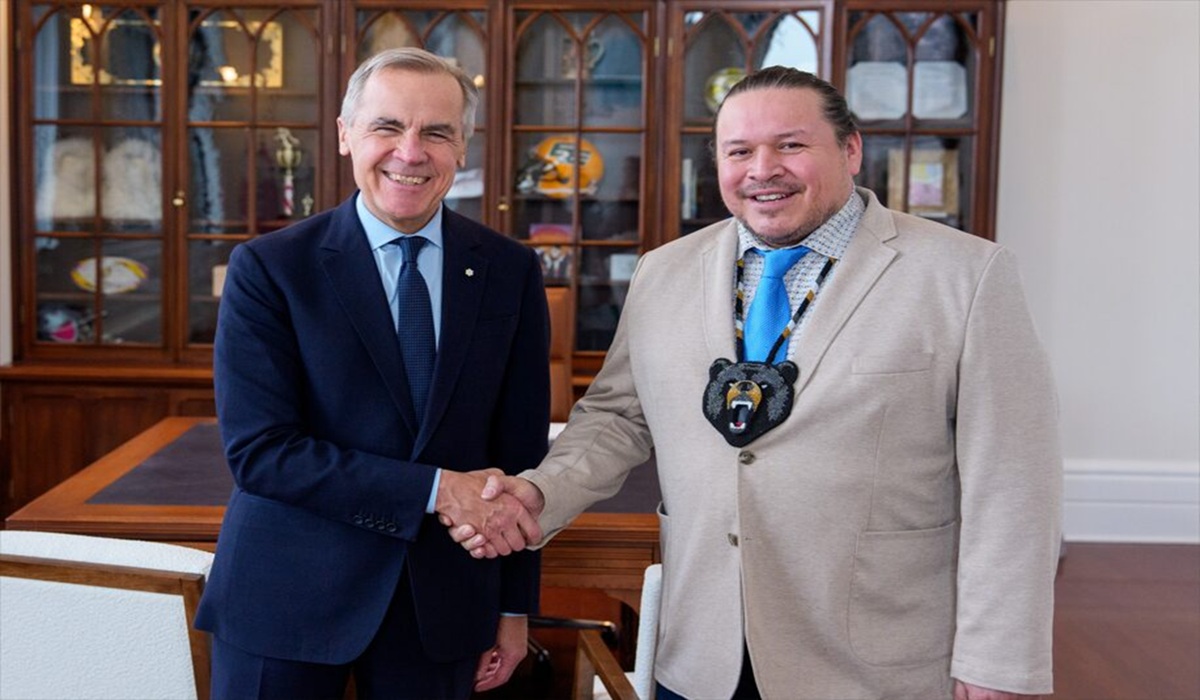
An Ottawa meeting this week between Southern Chiefs’ Organization Grand Chief Jerry Daniels and Prime Minister Mark Carney has placed several unresolved federal decisions back under scrutiny, as First Nations leadership continues to advance health, water, and infrastructure initiatives ahead of corresponding federal action. The meeting, which included senior federal officials, focused on First Nations-led health system reform, clean water governance, and continued support for large-scale nation-building projects already underway in Manitoba.
In a federal environment crowded with competing priorities and national organizations, direct face-to-face access to the Prime Minister remains limited. The meeting reflects ongoing pressure from SCO to move discussions beyond consultation and toward implementation, particularly as First Nations institutions increasingly operate at a pace that outstrips federal approval processes.
Health transformation featured prominently in the discussions, with Daniels pressing the need for improved diagnostic capacity, real-time access to health data, and the authority for First Nations to operate and govern their own health systems. Federal delays, he argued, continue to impede reform efforts despite the availability of modern diagnostic tools and data systems capable of addressing long-standing disparities, including an estimated eleven-year life-expectancy gap between First Nations citizens and non-Indigenous Canadians.
Artificial intelligence was raised not as a future concept, but as an immediately deployable tool. With Ottawa preparing to release its next national AI strategy, Daniels urged the federal government to prioritize First Nations in the deployment of AI-driven diagnostic systems and health data infrastructure. SCO emphasized that such technologies must be implemented in a manner that strengthens service delivery while fully upholding First Nations data sovereignty and governance.
Clean water governance represented another central focus of the meeting. Daniels reiterated that SCO and Indigenous Services Canada have already developed a framework for a First Nations-owned water authority. According to SCO, the remaining barrier is federal approval, placing responsibility for further delays at the federal level rather than within First Nations communities that have already completed the planning and governance work.
The meeting also addressed Wehwehneh Bahgahkinahgohn, the redevelopment of the former Hudson’s Bay Company building in downtown Winnipeg into a First Nations-led community and economic hub. With more than 77 per cent of its workforce identified as Indigenous, the project is being positioned as a national example of economic reconciliation in practice, moving beyond policy commitments to tangible outcomes in employment, training, and community infrastructure.
Daniels’ engagement with the Prime Minister reflects a broader shift in how First Nations leadership is approaching federal relations, with increasing emphasis on operational control, implementation timelines, and measurable outcomes rather than symbolic commitments. SCO maintains that its Nations are no longer waiting for systems to be built for them, but are actively building institutions capable of delivering services at scale.
What follows the meeting may prove more consequential than the meeting itself. With health systems, water governance structures, and major urban redevelopment projects already advancing under First Nations leadership, the next phase hinges on whether federal decisions align with timelines on the ground. For Ottawa, the question is no longer whether viable Indigenous-led frameworks exist, but whether federal processes can adapt quickly enough to support them without reasserting control.
As Canada advances its national artificial intelligence strategy and continues to publicly commit to closing infrastructure and health gaps, southern First Nations are positioning themselves as system builders rather than pilot participants. That shift carries implications beyond Manitoba, presenting a governance model that could be applied nationally if supported through timely federal action.
For SCO and its member Nations, the focus now turns to implementation: securing approvals, formalizing authorities, and moving initiatives from policy discussion into operational reality. The direction is established. What remains unresolved is the federal response — and whether future engagements translate into decisions that reflect the pace and scale of the work already underway.
About The Author