Cygnus XL Cargo Craft Launches to Space Station Carrying First Space Crop System
- TDS News
- Space
- November 29, 2026
By Editorial Board
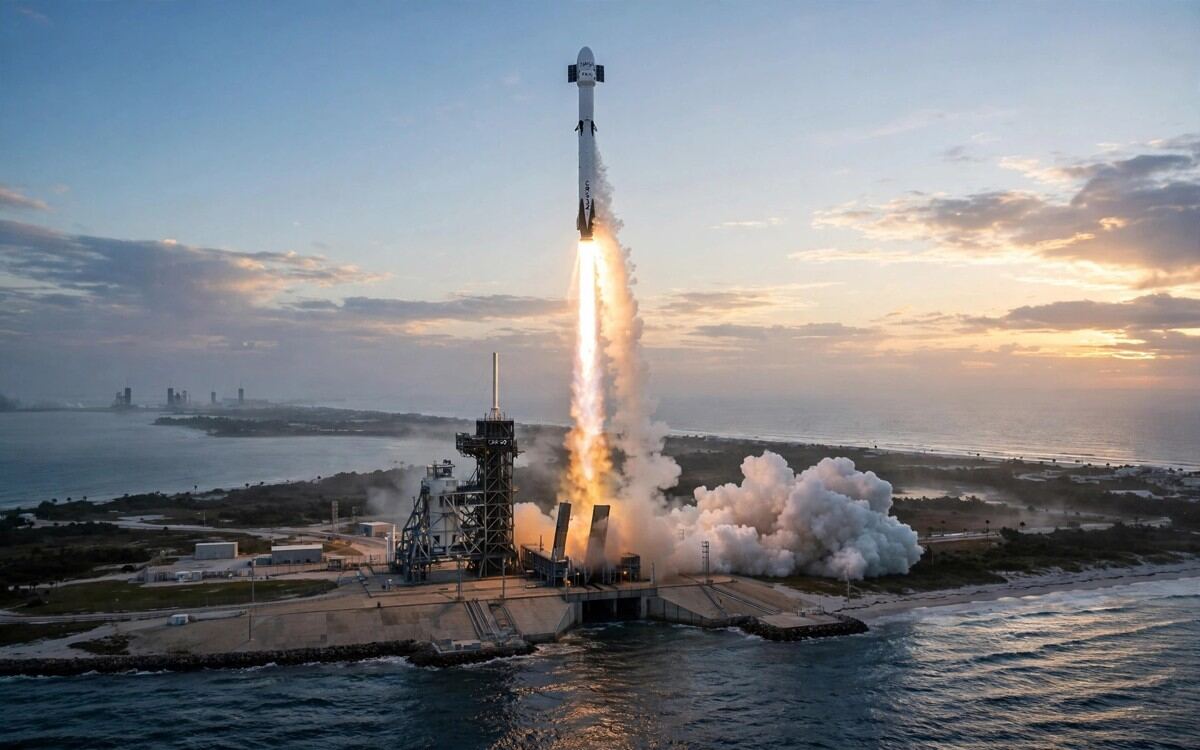
A Northrop Grumman Cygnus XL cargo spacecraft launched to the International Space Station on Sunday morning carrying about 11000 pounds of scientific investigations and cargo for the crew living and working in orbit. NASA said the spacecraft lifted off at 10:47 a.m. EST on November 29 2026 aboard a SpaceX Falcon 9 rocket from Space Launch Complex 40 at Cape Canaveral Space Force Station in Florida. The flight is the company Commercial Resupply Services 25 mission for NASA and it continues a program in which commercial spacecraft deliver food and equipment and research material to the station.
NASA said Cygnus XL would reach its preliminary orbit about ten minutes after launch and was expected to deploy its solar arrays about one hour and forty five minutes later. The spacecraft is now travelling toward the station on a journey that will end on Tuesday December 1 when it arrives in range of the orbital laboratory. Live coverage of the arrival will begin at 1:10 a.m. that day and NASA astronauts Jessica Watkins and Luke Delaney will capture the spacecraft using the station Canadarm2 robotic arm at approximately 2:35 a.m. Ground controllers will then guide the craft to installation on the Earth facing port of the Unity module where the crew will begin unloading its cargo.
This Cygnus XL spacecraft carries the name S.S. James Jim A. Lovell in honour of the astronaut who flew Gemini and Apollo missions and commanded Apollo 13. Northrop Grumman said it has delivered more than 169000 pounds of supplies and experiments and equipment to the station since 2013. NASA said the spacecraft is scheduled to remain at the station until May 2027 and will later depart with several thousand pounds of disposal items before burning up during its return through the atmosphere.
Among the most closely watched items aboard is Ohalo III which NASA describes as a prototype space crop production system and the first operational style system of its kind flown to the station. The chamber has been developed at Kennedy Space Center since 2019 and is designed to grow several crops at the same time while recycling water and exchanging air with limited involvement from the crew. Imagery of the unit has shown red romaine lettuce growing alongside tomato and basil and mustard varieties and researchers plan to test its water delivery and how well it uses the volume available inside the station.
NASA said the work with Ohalo III is intended to give researchers insight into safe and nutritious and reliable crop production for future Moon base habitats and missions to Mars. The agency said lessons from the system could also inform vertical farming and indoor growing on Earth where water and space and energy must be managed with care.
The cargo also includes a precision health investigation that will test a small fluid handling system built to support models of human brain tissue grown in a laboratory and known as miBrains. NASA said the study is a next step toward longer studies of human brain tissue in space. Other investigations aboard include work on muscle loss and on particles for medicine delivery according to mission summaries published before launch.
Sunday launch followed final preparations in Florida during the last week of November. NASA announced the science payloads on November 27 and mission teams reviewed the weather forecast and remaining work before giving approval to continue toward liftoff. With Cygnus XL now in orbit the focus shifts to the Tuesday arrival and capture which will bring fresh food and research and equipment to the station crew ahead of the holiday season.
About The Author