Buy Canadian Is Not a Slogan — It’s an Economic Stress Test
- Kingston Bailey
- Trending News
- December 18, 2025
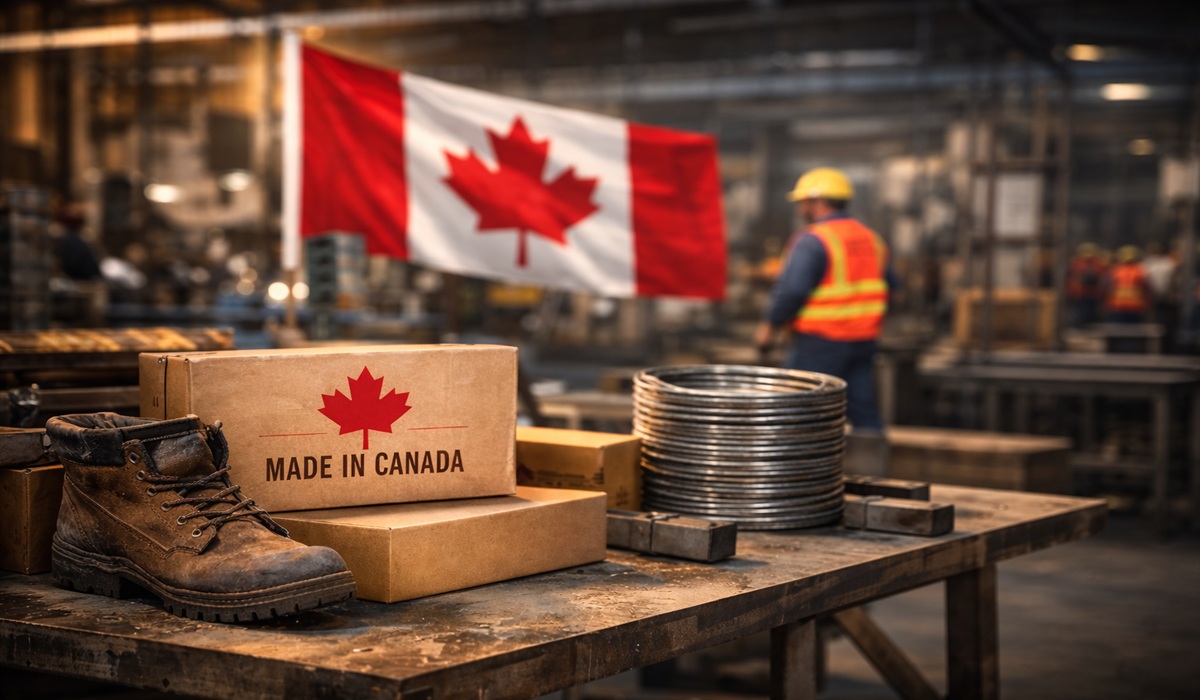
For decades, “Buy Canadian” has lived comfortably as a slogan. It appeared during election cycles, trade disputes, and moments of patriotic urgency, only to quietly fade once supply chains normalized and prices stabilized. What’s different now is that the phrase is no longer symbolic. It is being asked to function as policy, practice, and protection at the same time.
The global economy has entered an era defined by fracture. Trade routes that once felt permanent are being questioned. Strategic goods are being reclassified. Energy, food, technology, and even pharmaceuticals are no longer just market products but national security considerations. Against that backdrop, Canada’s move to prioritize domestic suppliers is less about nationalism and more about resilience.
At its core, the Buy Canadian policy is an admission. It acknowledges that efficiency alone cannot be the guiding principle of procurement. For years, governments chased the lowest bid, often at the expense of domestic capacity. Manufacturing hollowed out. Skilled trades aged out. Entire regions became dependent on imports for essentials they once produced themselves. When global shocks hit, whether from pandemics, wars, or trade disputes, the vulnerability became undeniable.
For small and medium-sized businesses, this shift carries both promise and pressure. On one hand, companies that employ Canadians, pay taxes locally, and invest in domestic operations finally gain a measurable advantage in federal procurement. That is not charity. It is recognition that economic ecosystems matter. Money spent domestically circulates differently. It creates secondary employment, sustains training pipelines, and stabilizes communities in ways offshore contracts never can.
On the other hand, many Canadian firms have spent years competing in a system that discouraged scale. They learned to survive without long-term government contracts, often lacking the capital reserves or administrative infrastructure needed to respond quickly when procurement doors open. If Buy Canadian becomes policy without parallel support for capacity building, it risks benefiting only the largest domestic players while smaller firms remain locked out by complexity rather than quality.
There is also the question of enforcement. Policies fail quietly when they rely on goodwill instead of metrics. If Canadian content thresholds are vague, easily gamed, or inconsistently applied, the policy becomes performative. Re-labeling imported components or routing contracts through shell entities undermines the very rationale of the shift. Transparency matters here. Canadians need to know not just that money is being spent, but where it ultimately lands and who benefits downstream.
Consumers, too, play a role in this transition, whether they realize it or not. Government procurement influences markets far beyond Ottawa. When domestic suppliers receive stable contracts, they are better positioned to compete in the private sector. That can lead to price stability, improved quality, and innovation that spills into everyday consumer goods. But the reverse is also true. If Buy Canadian is treated as a shield rather than a standard, complacency can creep in. Protection without accountability breeds inefficiency.
The policy also forces a broader national conversation about what Canada actually wants to be good at. Not everything can or should be produced domestically. Strategic focus matters. Food security, energy infrastructure, critical minerals, transportation manufacturing, and digital systems all carry different risk profiles. A serious Buy Canadian approach requires prioritization, not blanket sentiment.
Perhaps the most important shift is cultural. For years, globalization trained governments to think of themselves as shoppers rather than stewards. Buy Canadian challenges that mindset. It reframes procurement as an economic lever, not just a budget line. Whether this moment becomes a turning point or another missed opportunity depends less on the slogan itself and more on whether Canada is willing to do the harder work of rebuilding the systems behind it.
About The Author