Becoming Chinese: A Lifestyle Choice Across Cultural Boundaries
- Contributor
- Trending News
- China
- East Asia
- April 3, 2026
Image credit: Wei Guo
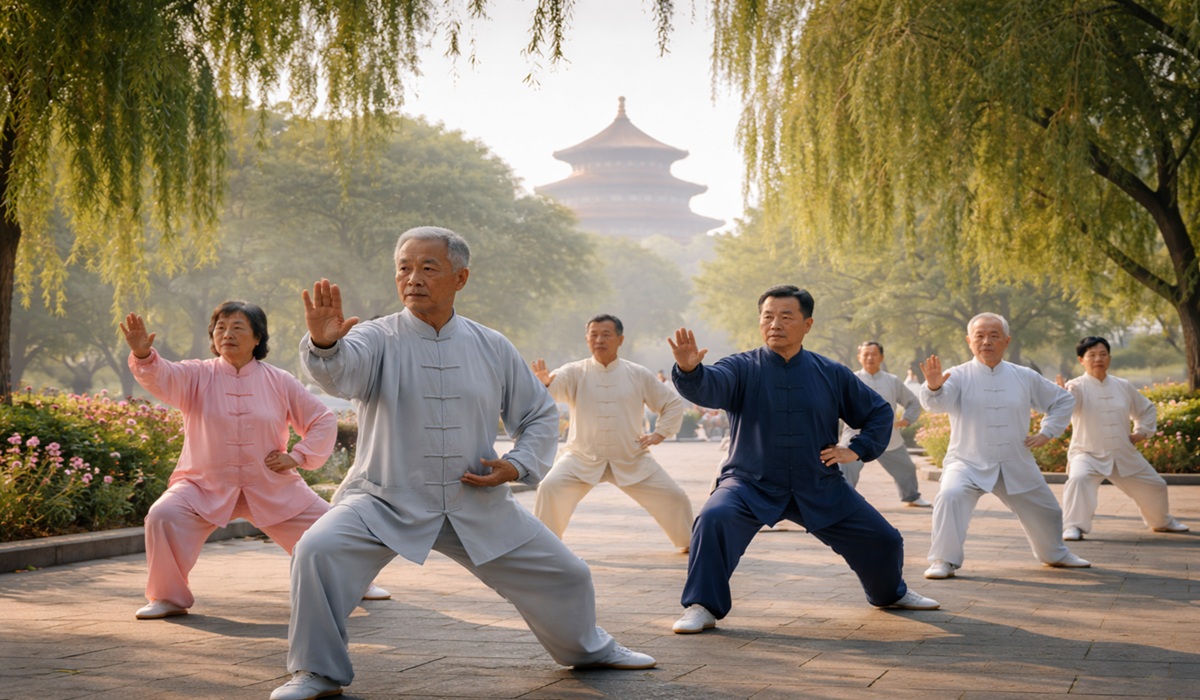
【Betty Gu/Red Maple】 In recent years, the phrase“becoming Chinese”has quietly gained traction across overseas social media. What began as young people sharing habits like drinking warm water or practicing Tai Chi has gradually evolved into a broader trend, with more individuals experimenting with Chinese-style diets and daily routines.
At first glance, this may seem like just another fleeting online fad. But a closer look reveals something more substantial.“Becoming Chinese”is not merely about imitation—it represents a conscious choice that transcends cultural boundaries.
At its core, this phenomenon reflects the practical appeal of Chinese ways of living.
For a long time, cultural exchange often remained at the level of symbols—festivals, clothing, or artistic expressions. What is different this time is that the elements gaining global traction are deeply embedded in everyday life: balanced and moderate eating habits, routines aligned with natural rhythms, and a focus on maintaining harmony between body and mind. These practices are simple, accessible, and require no special conditions—yet they offer tangible improvements to daily well-being.
It is precisely this quality—being both experiential and verifiable—that has transformed aspects of Chinese culture from abstract ideas into practical lifestyle options. When a culture moves beyond admiration and becomes something people can integrate into their own lives, it acquires a vitality that naturally extends beyond borders.
At the same time, this trend reflects a broader search for stability in an increasingly uncertain world.
Across the globe, rising economic pressures, accelerating life rhythms, and an unpredictable future have led many to reassess existing ways of living. In this context, a philosophy that emphasizes balance, rhythm, and long-term sustainability resonates deeply.
Traditional Chinese thought—rooted in ideas of harmony, moderation, and adapting to change—offers a steady point of reference. Rather than pursuing extremes or constant confrontation, it seeks equilibrium within movement and uncertainty. Far from rejecting modern life, it provides a way to recalibrate and complement it.
Moreover, the growing popularity of“becoming Chinese”signals a shift toward a more open and balanced form of cultural exchange.
In the past, cultural influence often flowed in one direction. Today, with the rise of digital platforms, individuals have become active participants in shaping cross-cultural understanding. By sharing lived experiences, people from different backgrounds engage with one another directly. Culture, in this sense, is no longer something passively received—it becomes something practiced, adapted, and shared.
Within this process, the inclusiveness and adaptability of Chinese culture are increasingly translating into real-world influence. It does not rely on forceful promotion or deliberate branding. Instead, it gains recognition through repeated validation in everyday life. This practice-based mode of cultural transmission is quietly reshaping how the world perceives China.
Of course,“becoming Chinese”does not imply a change in identity, nor does it suggest cultural replacement. Rather, it represents an open process—one in which individuals incorporate new elements into their existing lives, shaping a way of living that suits them best.
Yet it is precisely through this process that the value of Chinese culture becomes more visible. Ideas centered on rhythm, balance, and long-term thinking are no longer seen as merely traditional or contextual—they are increasingly recognized as forms of wisdom that can be shared globally.
From this perspective,“becoming Chinese”is not just a cultural trend. It reflects the natural outward reach of a civilization’s influence. When a way of life can cross boundaries of geography, language, and systems—and be voluntarily embraced by people of different backgrounds—it demonstrates a capacity to resonate with the realities of the present.
This capacity is rooted in the deeper strengths accumulated through China’s long-term development.
For this reason, the rise of“becoming Chinese”is not an accidental or superficial phenomenon. It is, in many ways, a response to shifting global dynamics. It signals that China is moving from being an object of observation and discussion to becoming a point of reference and inspiration.
In a world defined by uncertainty, the ability to offer stability, continuity, and practical pathways forward is itself a form of value. And as more people begin to engage with these approaches in their daily lives, that value gains its most direct and authentic validation.
Perhaps, over time,“becoming Chinese”will fade as a phrase. But what it represents—the recognition, the curiosity, and the adoption of these ideas—will not disappear. Instead, it will continue to deepen and evolve within the ongoing exchange between cultures.
And that, in itself, is a sign of a civilization growing into maturity and confidence.
About The Author