Moon Landing Denial Endures Decades After Apollo Astronauts Walked On The Moon
- TDS News
- Conspiracy Theory?
- November 29, 2026
By Editorial Board
One of the most discussed conspiracy theories in modern history is the claim that the Apollo Moon landings did not happen. Supporters of the theory say the United States government and its space agency staged the landings to appear to win the space race. Historians and scientists who have examined the record say the landings did happen, pointing to physical and independent evidence.
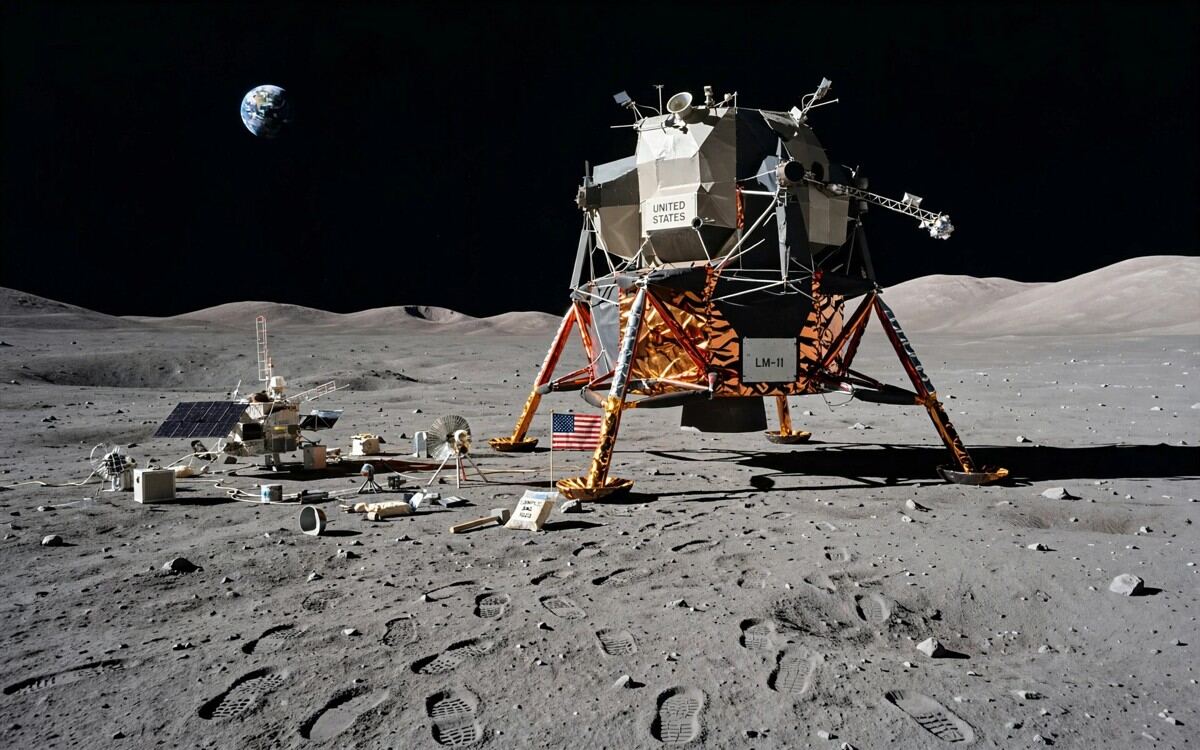
The verified historical record is clear about what Apollo accomplished. Between July 1969 and December 1972, six Apollo crews landed on the Moon and twelve astronauts walked on its surface. Apollo 11 landed first, on July 20 1969, and Neil Armstrong and Buzz Aldrin walked on the surface while Michael Collins remained in orbit. Five further landings followed, ending with Apollo 17 in December 1972.
Doubts appeared early, but the theory took organised shape in the middle of the 1970s. A former technical writer named Bill Kaysing self published a book in 1976 titled We Never Went to the Moon. Kaysing had worked in a publications role for a company that built rocket engines, and he left that work in 1963, before the landings. In his book, Kaysing claimed that a successful crewed landing was extremely unlikely and that faking the missions would have been easier than completing them.
Believers make several recurring claims, and each claim is attributed here to those who make it. Some theorists say the flag planted by Apollo 11 astronauts appears to move in footage and claim that movement proves the scene was filmed on Earth. Some theorists say surface photographs show no stars and claim that absence proves the images were made in a studio. Some theorists say shadows fall in differing directions and claim that pattern proves artificial lighting was used. Other theorists claim astronauts could not have passed safely through regions of radiation around Earth known as the Van Allen belts.
Researchers address each point with documented explanations. Scientists explain that the flag had a horizontal rod to hold it out, and that its movement came from handling by the astronauts and from momentum in an environment with no air to slow it. Photographers explain that cameras on the bright surface were set for daylight exposure, too short to record faint stars. Imaging specialists explain that shadows can appear to diverge because the ground is uneven and because perspective changes how parallel lines look. Radiation experts note that Apollo routes passed through the belts quickly and that recorded crew doses were within documented limits.
The strongest verified evidence, according to scientists and historians, is physical and independent. Apollo crews brought back about 382 kilograms of Moon rock and soil, which laboratories in many countries have studied and identified as lunar in origin. Astronauts placed reflective devices on the surface, and observatories in several countries still bounce laser pulses off those devices to measure the distance to the Moon. Spacecraft built decades later, including the Lunar Reconnaissance Orbiter and missions from Japan and India, have photographed the landing sites and recorded landers, tracks, and disturbed soil where Apollo records place them. Tracking stations outside the United States, including Jodrell Bank in England, followed the missions as they happened, and Soviet officials publicly acknowledged the landings at the time.
Historians say the theory spread because it arrived when public trust in government had fallen after the Vietnam War and the Watergate scandal, and because television and the internet later gave the claims a larger audience. Polls taken between 1994 and 2009 found that between six and twenty percent of Americans surveyed said they believed the landings were faked. Experts regard the claims as unsupported, while the theory continues to circulate online.
About The Author