Farmers March One Hundred Kilometres Against High Speed Rail
- Kingston Bailey
- Eastern Canada
- November 12, 2026
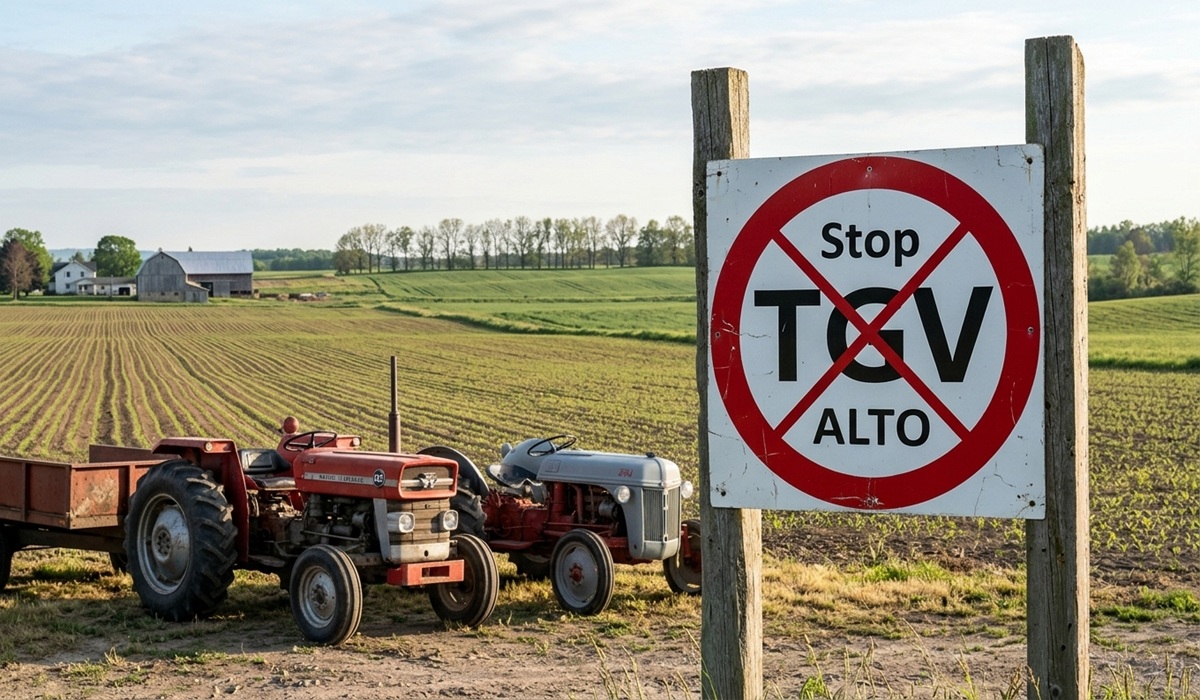
Along the rural concessions and county roads stretching west from the United Counties of Prescott and Russell toward downtown Ottawa, a determined group of eastern Ontario residents and farmers completed a one-hundred-kilometre protest march on November twelfth to oppose the federal government’s proposed Alto high-speed rail corridor. Carrying banners and a formal petition signed by hundreds of rural families, the marchers walked over several days through agricultural communities east of the national capital, culminating at Parliament Hill in Ottawa to demand a halt to land expropriations and a reassessment of the multibillion-dollar rail alignment.
The protest reflects escalating tension across eastern Ontario and southern Quebec over the Alto project, a planned one-thousand-kilometre passenger rail line designed to run electric trains at speeds up to three hundred kilometres per hour between Toronto, Ottawa, Montreal, and Quebec City. In December of the previous year, federal Transport Minister Steven MacKinnon and Alto chief executive officer Martin Imbleau confirmed that the Ottawa to Montreal leg would be constructed first, promising one-hour downtown-to-downtown travel times between the two cities. Earlier in November, the federal government signalled its intention to introduce new legislation aimed at accelerating construction timelines ahead of a targeted twenty-twenty-nine groundbreaking.
While federal officials and urban transit advocates hail the project as a transformative nation-building investment, residents in villages such as Navan, Vars, Limoges, Casselman, and Hawkesbury say their communities are being asked to bear permanent disruption without receiving a single local station stop. Because true high-speed rail requires sweeping, straight alignments with no level road crossings, the proposed corridor demands a sixty-metre-wide right-of-way enclosed on both sides by ten-foot-high security fencing. Organizers with the grassroots coalition United Against Alto warn that this fenced barrier will slice diagonally across multi-generational dairy, corn, and soybean farms in Prescott-Russell, severing tile drainage networks, isolating livestock pastures, and forcing farmers to drive heavy machinery kilometres out of their way to reach provincial overpasses.
Andrew Barton, a multi-generational dairy and crop farmer in Prescott-Russell, has emphasized in regional farm publications that the county contains some of the most productive agricultural soil in eastern Ontario. Local landowners point out that recent federal legislative changes under Bill C-15 expanded expropriation powers, allowing the government to designate the corridor early and restrict property renovations or private sales before full environmental and agricultural impact assessments are even published. In Ottawa’s east end near Navan, residents have also raised alarms after Alto crews began flying survey drones over residential lots and farmland to map out the final sixty-metre alignment scheduled for release this month.
Provincial politicians in eastern Ontario have increasingly echoed the frustration of their constituents, pressing federal transport officials for transparency on total project costs, which critics estimate could climb between sixty billion and ninety billion dollars. Rather than carving a brand-new fenced corridor through prime farmland and wetlands, marchers arriving in Ottawa urged the federal government to redirect funding toward upgrading existing VIA Rail tracks and improving regional passenger service. As Alto prepares to release the results of its public consultations and unveil the narrowed Ottawa to Montreal route later in November, the footsteps of Prescott-Russell residents along the highway into Ottawa have made clear that the battle over rural land rights in Eastern Canada is only intensifying.
About The Author