CFIA Revises Livestock Traceability Plan After Industry Feedback, Shelves New Cattle Reporting Requirements
- Ingrid Jones
- Canada
- June 3, 2026
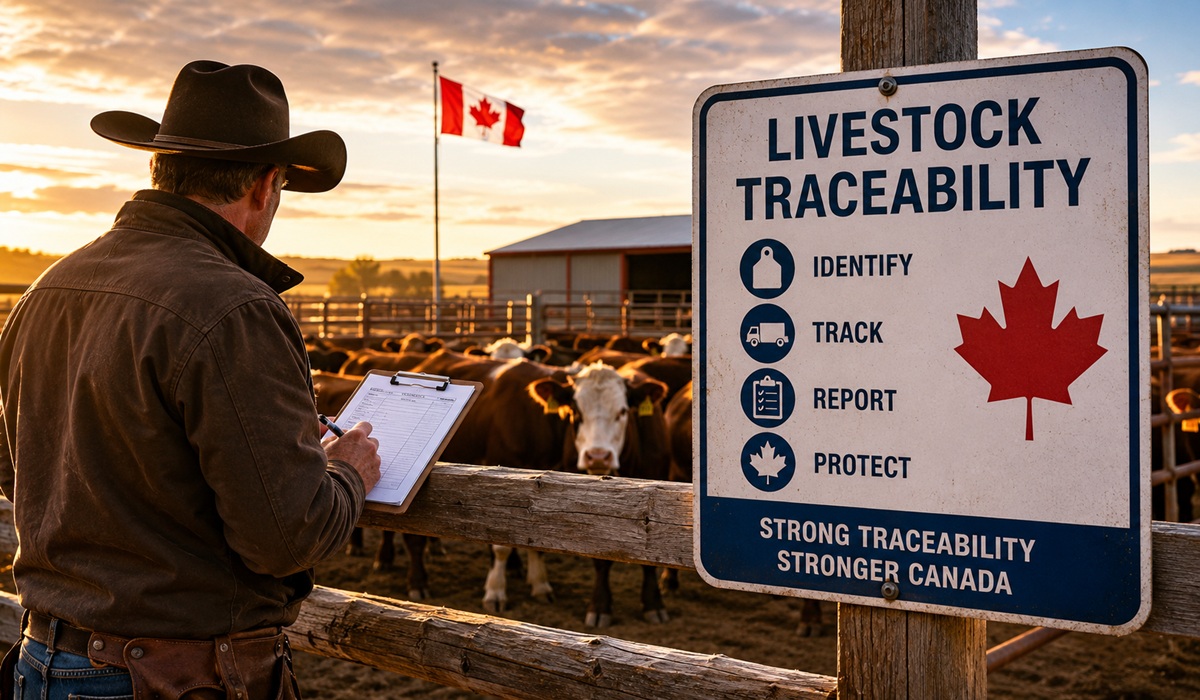
The Canadian Food Inspection Agency has revised its proposed livestock traceability regulations following months of consultations with producers, industry organizations and provincial governments. While several new requirements for sheep, goats, cervids and pigs are moving forward, the federal agency has decided not to proceed with proposed movement reporting requirements for cattle and bison at this time.
The decision marks a significant adjustment to the original proposal and reflects concerns raised by Canada’s cattle sector. Traceability systems are designed to help officials quickly identify, track and contain animal disease outbreaks by providing accurate information about where animals have been located and moved. Maintaining that capability is considered essential for protecting animal health, preserving consumer confidence and maintaining access to domestic and international agricultural markets.
The most notable change is the decision to pause new cattle and bison movement reporting requirements. Although the CFIA did not release a detailed breakdown of industry concerns, producer groups have long expressed reservations about additional reporting obligations, administrative costs and the practical challenges of tracking large volumes of livestock movements across Canada’s extensive cattle industry. Many operations involve animals moving between ranches, auction marts, feedlots, community pastures and processing facilities, creating concerns about the amount of paperwork that could be generated under expanded reporting rules.
Rather than advancing the full package, regulators have chosen to move ahead with measures that received broader support during consultations. Under the revised proposal, goats and cervids, including farmed deer and elk, will be subject to identification requirements similar to those already in place for other regulated livestock species. These animals will also become subject to reporting requirements for events such as slaughter, disposal, imports and exports, providing authorities with more complete information if a disease investigation becomes necessary.
Sheep producers will also see changes under the proposal. New requirements would require slaughter and export reporting, bringing sheep in line with traceability standards already applied to several other livestock sectors. Officials say consistent reporting across species improves the speed and accuracy of disease response efforts and strengthens Canada’s overall biosecurity system.
Another significant change involves reporting timelines. Abattoirs and carcass collection or disposal facilities would be required to report traceability events within seven days instead of the current 30-day period. Supporters of the change argue that faster reporting could prove critical during a disease outbreak, where delays of even a few days can affect containment efforts and increase economic risks for producers and processors.
The revised package also addresses privacy concerns raised during previous consultations. Producers would be given the option of using provincial premises identification numbers rather than personal contact information when purchasing identification tags or reporting traceability events. The change is intended to maintain the integrity of the tracking system while reducing concerns about the handling of personal information.
Transporters of regulated livestock species would be required to carry documentation accompanying animals while they are being moved. In practice, many producers and transporters already comply with similar requirements through existing livestock manifests and provincial transportation systems, meaning the change is not expected to create significant operational challenges for most businesses.
While the latest announcement provides greater certainty for sheep, goat, cervid and pig sectors, questions remain about the future of cattle traceability requirements. The CFIA has indicated it will continue discussions with producers and industry groups through ongoing forums and consultations before considering additional measures. The agency has also not indicated whether financial assistance or implementation support may be available should future reporting requirements be introduced.
For now, the federal government appears to be taking a more targeted approach, advancing measures where industry consensus exists while continuing discussions on more contentious proposals. Once consultations on the revised package are complete, the amendments are expected to move toward final publication in Canada Gazette, Part II, with implementation timelines to be announced at a later date.
About The Author