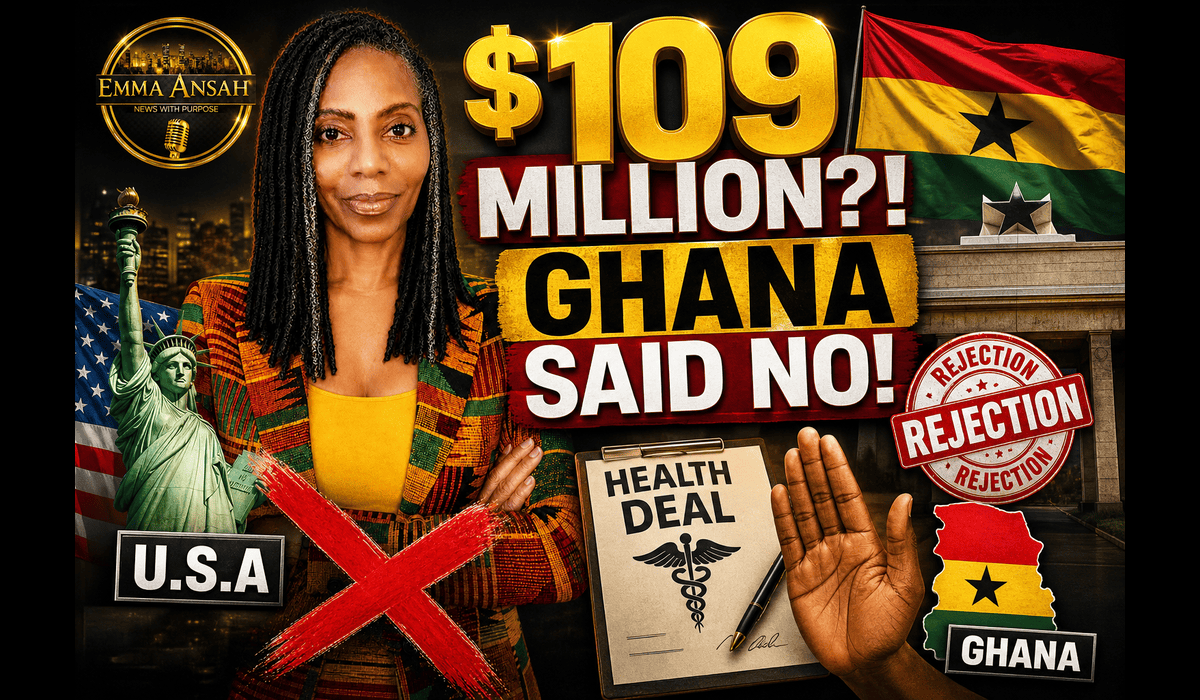
When a country turns down over one hundred million dollars in health funding, people start asking questions. Is it pride. Is it politics. Is it mismanagement. Or is it something deeper.
Ghana’s decision to walk away from a proposed United States backed health deal is not about rejecting support. It is about protecting control. It is about understanding the long game. And more importantly, it is about refusing to hand over the keys to one of the most sensitive systems any nation has, its health data.
At the center of this deal was not just money for hospitals, technology, or infrastructure. Buried within the agreement were provisions that would allow external access to Ghana’s health data systems. That includes patient records, national health trends, digital infrastructure, and analytics tools that shape how healthcare is delivered across the country. This is not just information. This is power.
Ghanaian officials raised serious concerns that the agreement would allow foreign entities to access and potentially use this data without the kind of oversight or approval that protects national interest. In a world where data is often described as the new oil, handing over that level of access is not a small decision. It is a strategic one with long term consequences.
There were also legal concerns that could not be ignored. The structure of the agreement raised questions about whether it aligned with Ghana’s own data protection laws. Even more troubling was the possibility that parts of the deal could fall under foreign legal authority, meaning disputes or enforcement might not even be handled on Ghanaian terms. For a sovereign nation, that is a line that cannot be crossed lightly.
Then there is the financial reality that many people missed in the headlines. The one hundred and nine million dollars was not simply a grant handed over with no expectations. Ghana would have been required to contribute a significant amount of its own funds into the program. Meanwhile, the United States portion of the funding was not fully guaranteed and would depend on political processes outside of Ghana’s control. In simple terms, Ghana’s obligations were locked in while the other side’s commitment was not.
The agreement also opened the door for pharmaceutical and regulatory influence that could weaken Ghana’s existing systems. There were concerns that certain medical products or approvals could bypass local regulatory processes, effectively sidelining Ghana’s own health authorities. That is not just a technical issue. That is about who decides what enters the healthcare system and under what standards.
So when Ghana stepped back from the deal, it was not a rejection of partnership. It was a rejection of imbalance.
What this decision means for Ghana goes far beyond one agreement. It signals a shift in how the country is choosing to engage with global powers. It sends a message that partnership must come with respect for sovereignty, not quiet concessions hidden in complex contracts. It shows that Ghana is not desperate for funding at any cost and is willing to walk away when the price is too high.
There is also a broader continental implication. Other African nations are watching closely. Similar deals have already sparked resistance in countries like Zimbabwe and scrutiny in places like Kenya. Ghana’s stance adds weight to a growing conversation about how African nations navigate foreign aid in a digital age where control over data can shape entire economies.
For Ghanaians at home and across the diaspora, this moment carries a different kind of significance. It is about ownership. It is about self determination. It is about refusing to repeat patterns where short term relief leads to long term dependency or loss of control. It reflects a country that is thinking beyond immediate gain and asking who benefits ten years from now, not just today.
This is not a simple story of aid accepted or rejected. This is a story about boundaries. It is about a nation saying that development cannot come at the expense of autonomy. It is about understanding that the true value of a deal is not just in the dollars attached to it, but in the control it requires you to give up.
Ghana looked at one hundred and nine million dollars and saw the fine print. And in that moment, the country made it clear that its future is not for sale.
For more news and insightful commentary subscribe to my YouTube channel
https://youtube.com/@emmaansahnewswithpurpose?si=HLff5NQcjQKn2uF9
Follow me on Instagram
https://www.instagram.com/emmaa_ansah?igsh=MWl3cXh6dms2dmkzZg%3D%3D&utm_source=qr
Follow me on TikTok
https://www.tiktok.com/@eanewswithpurpose?_r=1&_t=ZS-95lcG4vVzjZ
About The Author