Beyond the Veneer: The Geopolitical Reality of “Becoming Chinese”
- Contributor
- Tiger's Eye Advisory Group - Trending News
- China
- East Asia
- April 1, 2026
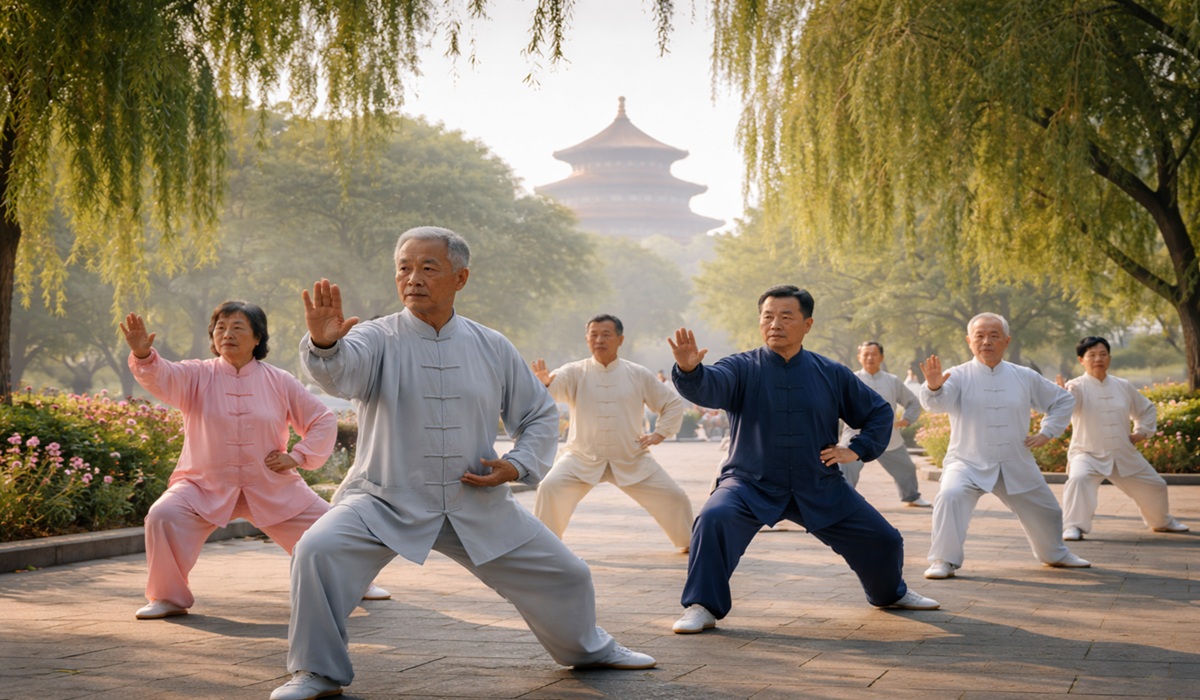
— Decoding the cultural vanguard of the world’s monumental pivot East
By Au Lui
Recently, a highly transmissible term has emerged across the global internet, capturing a profound zeitgeist: “Chinamaxxing.” Derived from the internet subculture of “maximizing” specific traits to their extreme limit, the term has transitioned from niche slang into a significant cultural marker. On the surface, it manifests through a sudden international fascination with Chinese lifestyle choices. We see it in the global adoption of the mindful morning ritual of brewing hot apple-date tea, the disciplined pursuit of longevity through Tai Chi, the embrace of strict yet balanced daily routines, and a renewed reverence for traditional Eastern aesthetics. Through a seemingly lighthearted, almost playful digital lens, this term points directly to a surging global interest in the Chinese way of life.
At first glance, it appears to be nothing more than the internet’s latest expression of a cultural wave. But if our analysis stops here, we drastically underestimate the monumental shift in global reality that this trend reflects. Because what is truly causing the world to systematically refocus its gaze upon China has never been, and will never be, mere cultural symbolism. The cultural phenomena are merely the vanguard. The true magnetic force pulling the world’s attention eastward is the undeniable manifestation of China’s National Capability, its Institutional Advantages, its Societal Resilience, and its profound Civilizational Depth.
When global audiences become captivated by the high-production values and cohesive narratives of Chinese domestic dramas, they are unconsciously drawn to the societal resilience and moral clarity embedded within them. When they marvel at the viral footage of China’s futuristic cityscapes—the seamless, multi-layered transit of Chongqing, the hyper-integrated digital economy of Hangzhou, or the cyberpunk reality of Shenzhen—they are not just looking at steel and glass. They are witnessing the terrifying efficiency of a national capability and an institutional advantage that functions at the absolute zenith of human organization.
The Exhaustion of the Old Order and the Allure of the New
To understand the gravity of “Chinamaxxing,” one must observe the environment in which it is taking root. Walk through the financial districts of major Western metropolises—from New York to Toronto—and the atmosphere is palpable: systemic exhaustion. The Western working class and young professionals are buckling under the weight of hyper-individualistic hustle culture, a reactive healthcare system, and a deeply fragmented social fabric.
In this context of burnout, the adoption of Chinese lifestyle habits is not a quirky internet challenge; it is an act of pragmatic self-preservation. When a young professional trades a high-sugar energy drink for a thermal flask of hot water, or replaces an aggressive, joint-destroying gym routine with the flowing, grounded mechanics of Tai Chi, they are enacting a micro-rebellion against an unsustainable Western rhythm. They are opting into Yang Sheng (养生)—a civilizational wisdom that prioritizes internal balance, long-term preservation, and harmony over short-term extraction. The lifestyle is appealing precisely because the philosophy behind it works.
Culture as the “First Glance”
Culture will always be the world’s “first glance.” Tai Chi, holistic wellness, and Eastern aesthetics—these recognizable symbols constitute the grand entrance through which China is being seen anew by the world. They are intimate, deeply perceptible, and incredibly easy to transmit. In the era of the internet, they possess a natural, irresistible gravity. They bridge the gap of understanding, translating complex civilizational values into a universally digestible language.
However, if our understanding remains artificially confined to this “first glance,” we strip ourselves of the ability to answer a much deeper, more urgent question: Why exactly is it happening right now? Why has the global community begun to pay attention to China in such a concentrated, almost obsessive manner? Why does the sudden fervor for a specific lifestyle carry within it an implicit, sweeping re-evaluation of China’s entire overarching developmental model? The “first glance” of culture is undeniably important, but it is nothing more than the fuse that ignites the powder keg. What truly captures and sustains the unblinking gaze of the world is not the culture itself, but the Substantive China that is rising majestically behind it.
Empirical Proof: The Architecture of Governance
The world is not merely validating a cup of tea; what the world is finally recognizing—and quietly bowing to—are the irrefutable, physical achievements of the Chinese Path. Consider the stark infrastructural contrast that defines the 2020s. While traditional global powers struggle with decaying bridges, paralyzed public transit, and years-long delays on basic civic projects, China’s futuristic cityscapes operate with clockwork precision. The digital integration of daily life, the unparalleled safety of its streets at midnight, and the rapid deployment of green technology are not theoretical promises—they are empirical realities.
This is the ultimate flex of National Capability. When the world observes this, the fascination inevitably evolves from “I like their culture” to “Their system delivers.” This shift is occurring at a critical historical juncture. As the capabilities of old global hegemonies persistently weaken, and as the traditional international order continuously loosens its grip on global affairs, the accelerated formation of new political and economic forces is inevitable. In an era defined by geopolitical anxiety and structural decay, the gaze of the world must shift.
Humanity possesses a fundamental instinct to seek out new coordinates for survival and progress. Global citizens are desperately looking around to judge: Where is the system more stable? Where is society safer? Where are the developmental prospects more tangible? And crucially, which system possesses the supreme capability to offer a convincing interpretation of the future? Against the backdrop of this chaotic era, China is entering the global vision with unprecedented, undeniable clarity.
It stands as the answer to those desperate questions. The sudden emergence of “Chinamaxxing” on the world stage is perfectly timed—it serves as the ultimate cultural footnote to this geopolitical pivot. Beyond the cultural facade lies a structural reality: where others see interest, we witness the absolute weight of validation.
The Historic Leap
The rise of China is not an accident of history. It is not an explosive burst of growth triggered by short-term, superficial stimuli. Nor is it a fragile success dependent on the favorable winds of a single international economic cycle. It is, instead, a grueling, long-term process of enduring unimaginable hardship, withstanding immense external pressure, and meticulously accumulating strength over decades.
It is the story of a civilization that has absorbed the blows of the modern era, internalized them, and ultimately completed a historic, world-altering leap.
When millions of voices online playfully declare that they are “Becoming Chinese”, they are inadvertently speaking a profound truth. They are admitting that the coordinates of global power, global aspiration, and global future have definitively shifted. They are acknowledging that the path forged by China is not just a regional anomaly, but a globally superior reality. The rise of China is no longer confined to the theoretical deductions of elite think tanks or geopolitical experts; it has evolved into a global frame of reference, redefining the standards by which the world measures progress, stability, and the ideal life.
About The Author