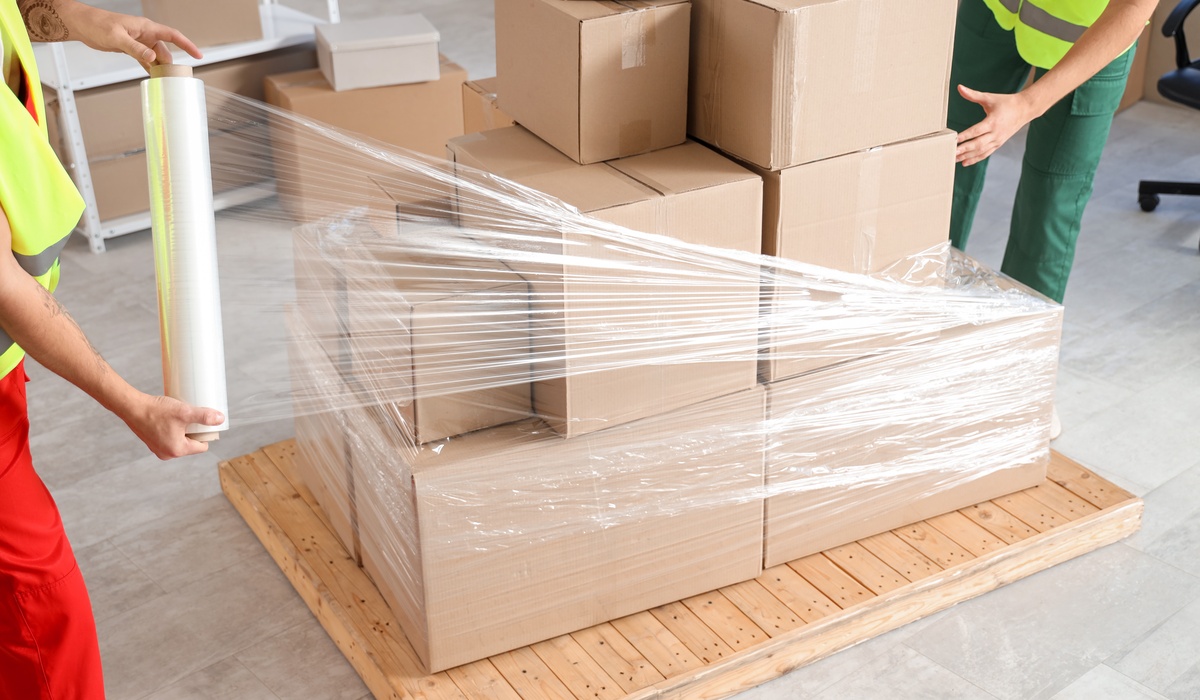
Shipping pallets securely is non-negotiable for manufacturers and distributors. While automation exists, many businesses still rely on human labor to get the job done. Manual stretch wrapping involves an operator walking around a pallet with a handheld dispenser, securing the load layer by layer.
It seems straightforward, but whether it makes financial sense for your operation warrants examination. In this guide, we’ll examine the pros and cons of manual stretch wrapping to help you decide what’s right for your business.
Manual wrapping remains popular for specific reasons, primarily centering on cost and flexibility. The most significant advantage lies in the price tag. Purchasing an automated wrapper requires a substantial capital expenditure, typically costing thousands of dollars, whereas a manual dispenser costs a fraction of that amount. For small businesses or startups with limited capital, this low barrier to entry allows them to start shipping products immediately without breaking the bank.
There’s also the benefit of simplicity and ease of use. Technicians do not need to perform complex maintenance on a hand dispenser, program software, or troubleshoot electrical components. An operator grabs the tool and starts walking. This simplicity eliminates downtime from machine failure and allows shipping operations to continue even during power outages.
Versatility is another notable strength. Machines frequently require standard pallet shapes to function correctly, but a human operator can adapt instantly to odd-shaped loads, heavy items, or fragile goods. This flexibility makes manual wrapping an excellent choice for businesses with irregular product lines or low-volume, high-mix shipping schedules.
While there are pros to manual stretch wrapping, there are also cons. One of the most significant drawbacks is inconsistent load containment. Humans cannot replicate the same motion perfectly every time. One of the benefits of automatic stretch wrappers is their uniform consistency—wrapping pallets with the same tension and quality every time. One operator might wrap a pallet tightly in the morning but loosely in the afternoon as fatigue sets in, creating unstable loads.
Physically demanding labor is another drawback. Wrapping pallets by hand takes a physical toll, requiring operators to bend, reach, and walk in circles repeatedly. This physical strain can cause workplace injuries, particularly back strain and dizziness. As a result, businesses frequently face higher workers’ compensation claims and lower employee morale in warehouses that rely solely on manual labor.
Material waste is an additional concern. Hand wrapping consumes significantly more plastic than automated solutions. Machines pre-stretch the film, maximizing usage and securing loads with less material, but a human operator cannot generate enough tension to stretch the film to its full potential. Over time, paying for additional rolls of film reduces profit margins.
Ultimately, the choice between manual and automated wrapping depends on production volume and budget. Manual wrapping suits low-volume operations where flexibility and low upfront costs are most important. However, as production scales up, the hidden costs of labor, injury risks, and film waste frequently justify an investment in automation. Careful analysis of daily shipping numbers is necessary to determine which method will best support your business’s long-term growth.
About The Author