Carney’s Speech in Davos, Still Reverberating Amongst World Leaders
- Naveed Aman Khan
- Tiger's Eye Advisory Group - Trending News
- January 26, 2026
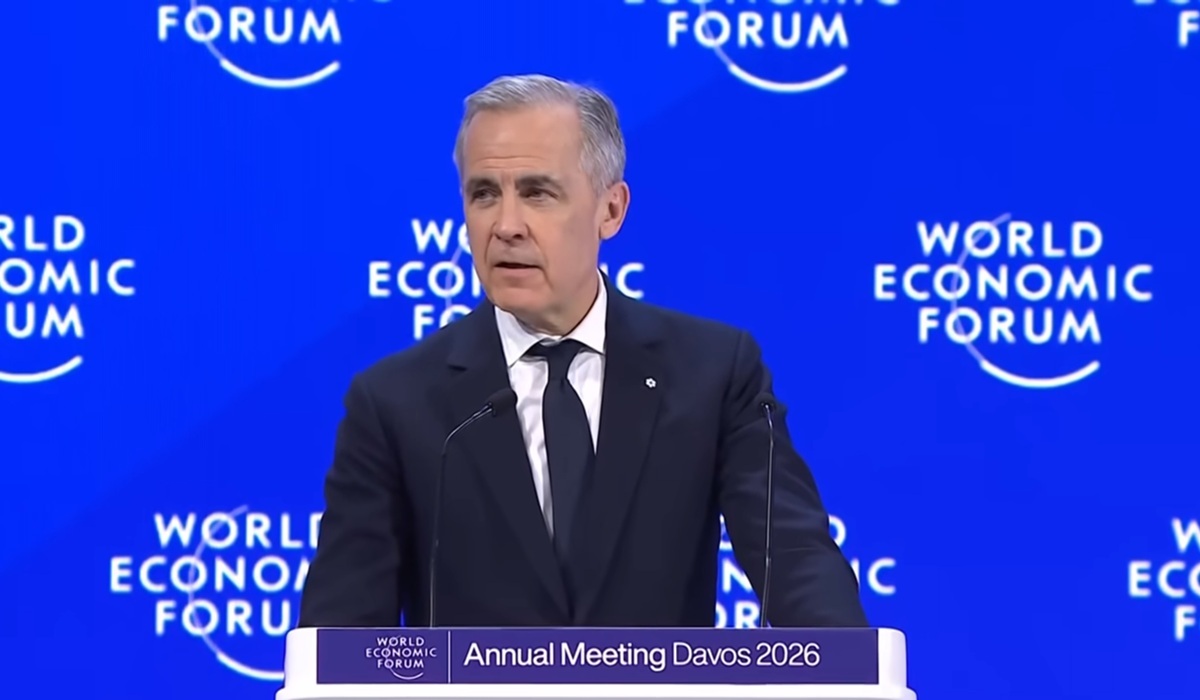
Global politics has once again entered a critical phase where the balance between power, geography, and state interests appears increasingly unstable. The international order established after the Second World War, built on the principles of the United Nations, international law, and state sovereignty, is now facing a serious new test. Pressure, coercion, and expansionist ambitions by major powers serve as a reminder that history has not fully receded into the past. In this uncertain environment, Canadian Prime Minister Mark Carney’s speech in Davos emerged not merely as a political statement, but as an intellectual and principled intervention. It can justifiably be described as a classic address.
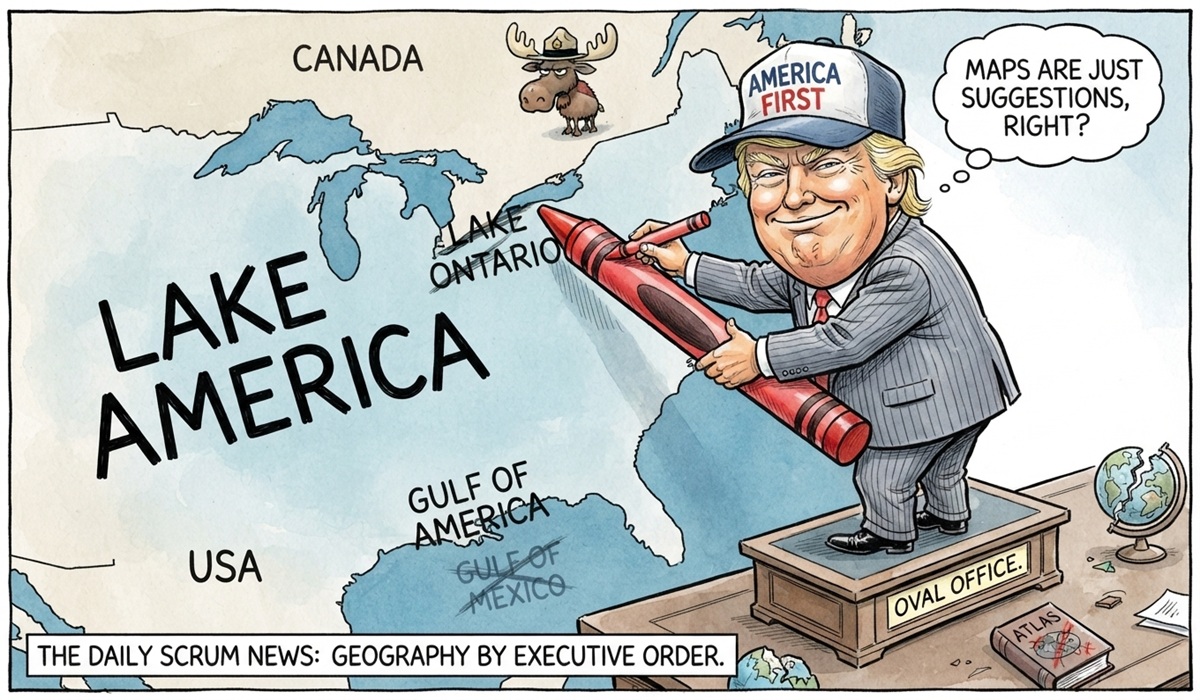
The true significance of Mark Carney’s speech lies in the fact that it was not confined to a single event or a single country. Although it appeared in the context of remarks related to Greenland and Canada, in reality, it was a clear, reasoned response to a dangerous mindset gaining ground in the twenty-first century, one in which powerful states such as the United States increasingly view geography as a commodity to be bargained over, pressured, or traded. This mindset directly contradicts a fundamental principle of international law: that a state’s borders, sovereignty, and political independence are not for sale.
President Donald Trump’s remarks about “buying” Greenland were dismissed as political humor or unserious rhetoric. Yet such statements reflect a deeply troubling concept embedded in state behavior. Language is not merely a collection of words; it is also a signal of power. Mark Carney understood this reality and responded not with emotion, but with logic, principles, and reason. This is precisely why his speech stands out as an intellectual achievement.
The question naturally arises: can a speech alone prevent potential aggression? From a purely military perspective, the answer may be no. However, at the diplomatic and ideological level, its impact is far from insignificant. Global public opinion, moral pressure, and diplomatic isolation significantly increase the cost of aggression for any major power. By placing the Greenland issue within the broader framework of NATO, Europe, and global security, rather than treating it as a limited dispute between the United States and Denmark, Carney effectively raised the political price of any unilateral action.
A strong academic dimension of Carney’s speech was its emphasis on collective security. He implicitly challenged the post–Cold War illusion in the West that the era of power politics had ended. The war in Ukraine, tensions in the Middle East, and now growing American geopolitical interest in the northern regions have shattered that illusion. Carney’s message to global leaders was clear: security cannot be left at the mercy of others.
Europe, which for years followed the United States unquestioningly, remaining criminally silent on American and Israeli attacks in Afghanistan, Iraq, Libya, Syria, Lebanon, Iran, and Palestine, now finds in Carney’s speech a profound intellectual warning. Europe remained America’s junior partner as long as U.S. aggression was directed at Muslim countries. But the moment American behavior began to threaten Europe’s own integrity, sovereignty, and survival, European leaders abruptly awoke from their hypocritical complacency. Just as Arab states realized, after U.S. silence over Israeli attacks on Qatar, that outsourcing their security to Washington was an illusion, Europe has now understood—through U.S. actions against Venezuela and statements regarding Greenland, that entrusting its defense entirely to the United States was a grave strategic mistake.
For decades, Europe relied on American military power for its security. In today’s changing global environment, that dependence has become a liability. Mark Carney made it clear that unless Europe takes its own defense capabilities, political unity, and strategic autonomy seriously, it will remain an easy target for pressure and blackmail. This was not merely a political suggestion but a practical application of realist theories of international relations.
From a Canadian perspective, Carney’s speech redefined the concept of state dignity and sovereignty. He presented Canada not as a weak or fearful neighbor, but as a responsible, principled, and self-confident state. His argument emphasized that in the modern world, sovereignty is safeguarded not only through military strength, but through strong institutions, economic stability, the rule of law, and proactive diplomacy.
Carney’s tone was particularly noteworthy. At no point did he resort to direct confrontation, provocation, or personal attacks. Instead, he grounded his argument in international law, the United Nations Charter, and the principle of sovereign equality. In doing so, he constructed a narrative that naturally pushed aggressive politics onto the defensive. It was a demonstration of the power of principles over brute force.
He also reframed the concept of balance in the global system. When international equilibrium rests solely on power rather than on principles, it cannot endure. Such systems inevitably lead to confrontation and war. For this reason, Carney described expansionism not merely as a political problem, but as a civilizational and security threat.
Mark Carney did not play on fear or beat the drums of war, but he did clearly outline the consequences of the erosion of principles. His logic was straightforward: when agreements lose meaning, laws are ignored, and the sovereignty of weaker states is treated as secondary, the use of force becomes inevitable. That is the moment when the global system descends into instability.
Carney’s speech should not be seen as an immediate or revolutionary victory, but as the setting of a long-term intellectual direction. He not only challenged expansionist politics but exposed it at the political and diplomatic level. True leadership in today’s world is not measured by aggressive rhetoric, but by the defense of principles. At a time when the world appears to be drifting back toward the language of power, Mark Carney’s message is a reminder that sustainable security is born not from force, but from law, cooperation, and shared values. In an increasingly uncertain global environment, such leadership is not only admirable, it is essential for global stability.
About The Author