Zohran Mamdani’s First Day: A New Moral Imagination for New York
- Naveed Aman Khan
- U.S.A
- January 3, 2026
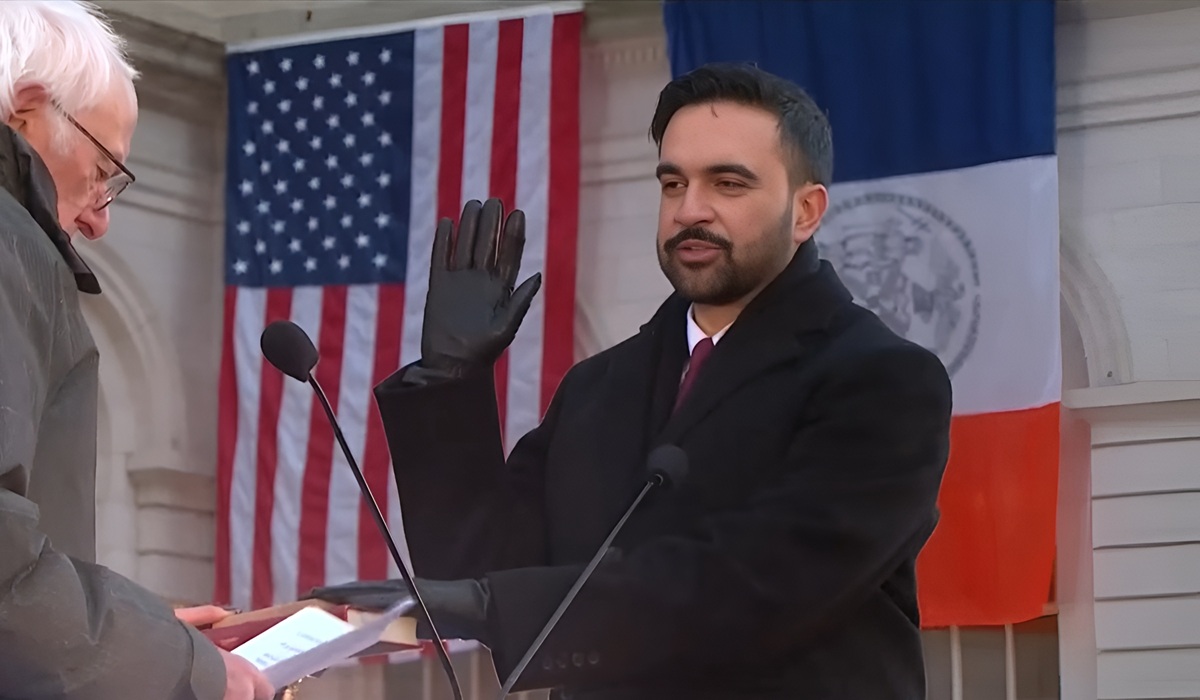
The sworn-in ceremony of Zohran Mamdani as mayor of New York City was not merely a transfer of power; it was a transfer of imagination. In a city exhausted by inequality, unaffordable living, political cynicism, and leadership that often feels distant from ordinary lives, Mamdani’s first day in office carried a deeper resonance. It suggested that leadership can once again feel human, grounded, and ethically driven. From the words he spoke to the way he chose to arrive at City Hall, his first day signaled a conscious effort to redefine what power looks like in the twenty-first century.
Zohran Mamdani represents a break from the traditional mold of urban political leadership. His rise is not rooted in elite political dynasties or corporate patronage, but in grassroots organizing, moral clarity, and an unambiguous commitment to working people. For many New Yorkers, especially immigrants, young voters, renters, and those historically sidelined from power, Mamdani’s victory felt personal. He did not win merely because of clever messaging; he won because he articulated frustrations people had lived with for decades and offered solutions grounded in dignity rather than rhetoric.
What makes Mamdani a great hope for New Yorkers is not just his policies, but his posture. In a city where leadership often feels insulated by motorcades, gated residences, and donor-driven priorities, Mamdani has deliberately positioned himself as accessible. He speaks the language of everyday struggle—housing insecurity, rising transit costs, student debt, healthcare anxiety—not as abstract problems, but as lived realities. His credibility comes from alignment between words and life, something voters increasingly value in an era of political performance.
The moment that captured national attention on his first day was not inside City Hall, but on the subway. Mamdani’s decision to use public transportation to reach his office was a calculated, symbolic act—and a powerful one. In a city where millions depend on buses and subways every day, often enduring delays, overcrowding, and underinvestment, the mayor choosing the same commute was not a publicity stunt. It was a statement of accountability. The message was clear: leadership should experience the systems it governs.
This deliberate choice conveyed several layers of meaning. First, it challenged the culture of privilege that separates decision-makers from consequences. Second, it affirmed respect for public infrastructure and the people who rely on it. Third, it suggested a governing philosophy rooted in shared experience rather than hierarchy. Mamdani did not say, “I stand with you.” He demonstrated it. In modern politics, symbolism matters, and this symbolism was both simple and profound.
Mamdani has won the hearts of a majority of New Yorkers because he has refused to reduce them to voting blocs. He speaks to people as citizens with agency, intelligence, and moral worth. His campaign and early leadership emphasize listening rather than lecturing, coalition-building rather than polarization, and justice rather than transactional compromise. In a deeply diverse city—racially, economically, culturally—this approach has resonated across communities that rarely find themselves united behind a single political figure.
There is also something generational about Mamdani’s leadership. He embodies a new political ethic shaped by climate anxiety, economic precarity, and disillusionment with performative governance. Yet he is not cynical. Instead, he channels urgency into hope and activism into policy. That balance—between idealism and pragmatism—is what makes him compelling not only to progressives, but to many moderates who are tired of stagnation disguised as stability.
The question now being asked beyond New York is whether Zohran Mamdani can become a role model for the world. The answer lies not in whether he governs perfectly, but in whether he governs honestly.
If he maintains transparency, resists capture by entrenched interests, and measures success by improvements in ordinary lives rather than approval ratings, he may indeed offer a template for ethical urban leadership globally. Cities across the world are facing similar crises: housing shortages, climate vulnerability, inequality, and eroding trust in institutions. Mamdani’s approach suggests that solutions begin with moral courage.
From Lahore to Karachi, from Mumbai to Lagos, mayors of major metropolitan cities can draw meaningful lessons from Mamdani’s first day. The most important lesson is that authority does not require distance. Leaders in cities like Lahore and Karachi often operate behind walls—literal and metaphorical—disconnected from public transport, public schools, and public hospitals. Mamdani’s example challenges this norm. It suggests that credibility is built not through power displays, but through proximity to people’s realities.
Another lesson is prioritization. Instead of megaprojects designed for headlines, Mamdani’s focus on everyday systems—transport, housing, cost of living—highlights what truly shapes urban life. South Asian cities, plagued by governance failures and elite capture, could benefit from leaders who choose functionality over spectacle. Using public services personally is not a gimmick; it is a mechanism for accountability.
There is also a lesson in humility. Mamdani’s first day was not about asserting dominance, but about setting tone. Leaders in developing-world megacities often confuse authority with invincibility. Mamdani demonstrates that leadership can be firm yet empathetic, decisive yet self-aware. That balance is desperately needed in cities where power is often exercised without responsibility.
On a personal note, it is not difficult to understand why one might wish to meet Zohran Mamdani. He represents something increasingly rare in global politics: a sense that leadership can still be worth believing in. In an age when many politicians manage decline rather than confront injustice, Mamdani’s rise suggests that values still matter, and that courage can still win elections.
Zohran Mamdani’s first day as mayor was not about policies enacted or orders signed; it was about the moral direction he set. The true test of his leadership will come with time, resistance, and crisis. But the moral of his beginning is already clear: leadership gains legitimacy when it shares the burdens of the people it serves. For New York, Mamdani offers hope that government can once again feel responsive, ethical, and humane. For the world, he offers a reminder that power need not corrupt if it is grounded in conscience. And for mayors everywhere, especially in the Global South, his example delivers a simple but transformative message: to change a city, a leader must first walk among its people, not above them.
About The Author