WHEN THE CHURCH DOORS CLOSE: The Secrets, Power Plays and Truths Behind Sundays After Church
- Emma Ansah
- U.S.A
- April 3, 2026
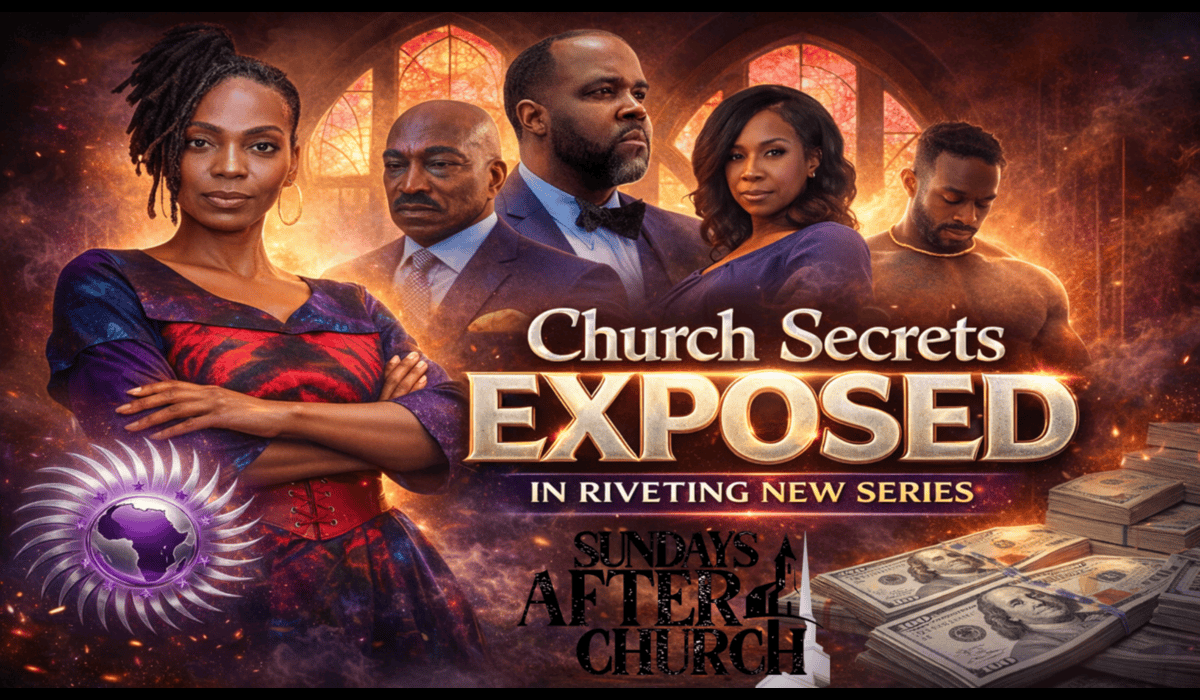
There are shows that entertain, and then there are shows that hold up a mirror so clear it almost makes you uncomfortable to look away. Sundays After Church does the latter. And when I sat down with the outstanding, star-studded cast behind this gripping new series, one thing became crystal clear: this is not your typical faith-based story. Not even close.
This is the story they don’t usually tell.
In an unfiltered and deeply revealing conversation, the cast opened up about the inspiration behind a series that dares to explore the complicated intersections of faith, family, power and corruption. The kind of conversations that happen in whispers after service, in parking lots, in living rooms… but rarely ever make it to the screen.
At its core, Sundays After Church pulls back the veil on a church community that, on the surface, embodies righteousness, unity and devotion. But beneath that polished image lies something far more complex. Something far more human. And yes, at times, something far more dangerous.
Leading us through this layered narrative is First Lady Sandra Clayton, a character who immediately resonates. She is kind-hearted, loyal, and deeply committed to her faith. But she is also, in many ways, walking into a reality she does not yet fully understand. As the story unfolds, Sandra begins to uncover the hidden agendas operating within the very institution she has devoted herself to.
And that is where things get real.
Because this series does not shy away from the uncomfortable truth that faith spaces are still made up of people. And where there are people, there is ego, ambition, control and, sometimes, manipulation. The cast spoke candidly about how important it was to portray these dynamics with honesty rather than perfection.
This is not about tearing down the church. It is about telling the truth about what can happen inside it.
As faith collides with ambition, each character is forced to make choices that challenge not only their beliefs but their morals and their loyalty to one another. The lines between right and wrong begin to blur. Intentions become questionable. And the question becomes less about who is good or bad, and more about who is willing to go how far… and for what reason.
What makes Sundays After Church especially powerful is that it reflects conversations already happening in communities across the diaspora. Conversations about accountability. About leadership. About the difference between serving God and serving power.
And the cast? They understood the assignment.
Their performances are layered, authentic and, at times, emotionally heavy. You can tell this is not just acting. This is storytelling rooted in lived experiences, observations and truths that many people will recognize immediately.
During our conversation, there was also a shared understanding of the responsibility that comes with telling a story like this. Because while it is gripping and, yes, at times dramatic, it is also deeply reflective of real-life dynamics that impact families and communities every single day.
And that is why this series hits differently.
Sundays After Church forces viewers to ask hard questions. What does faith really look like when no one is watching? Who holds power accountable? And how do you stay grounded in your beliefs when everything around you is shifting?
Because sometimes, saving souls comes with a cost.
And sometimes, the biggest battles are not fought outside the church… but within it.
One thing is certain: this is a series that will spark conversation. The kind of conversation that does not end when the credits roll.
And honestly? It is about time.
Watch the teaser interview: https://www.youtube.com/live/lQSn-teFu8Y?si=GHb5J5hkNmLKBDak
About The Author