When Power Forgets Its Reflection: Blockades, Precedent, and Trump’s Dangerous Mirror
- TDS News
- U.S.A
- December 17, 2025
By: Donovan Martin Sr, Editor in Chief
There are moments when a political statement is not merely rhetoric, but a window—an unguarded glimpse into how power imagines the world should work. The post circulating under President Trump’s name about Venezuela reads like that kind of window. It is sweeping, absolute, and emotionally charged. It also leans heavily on familiar techniques: exaggeration dressed up as certainty, accusations offered in place of evidence, and a moral narrative built to make escalation feel like inevitability.
If the goal of foreign policy is stability, credibility, and the protection of citizens, then language like this does the opposite. It sharpens danger. It raises the temperature. It invites the world to see the United States not as a steward of order, but as a nation willing to bend international norms when convenient—and then demand everyone else respect those norms when America is on the receiving end.
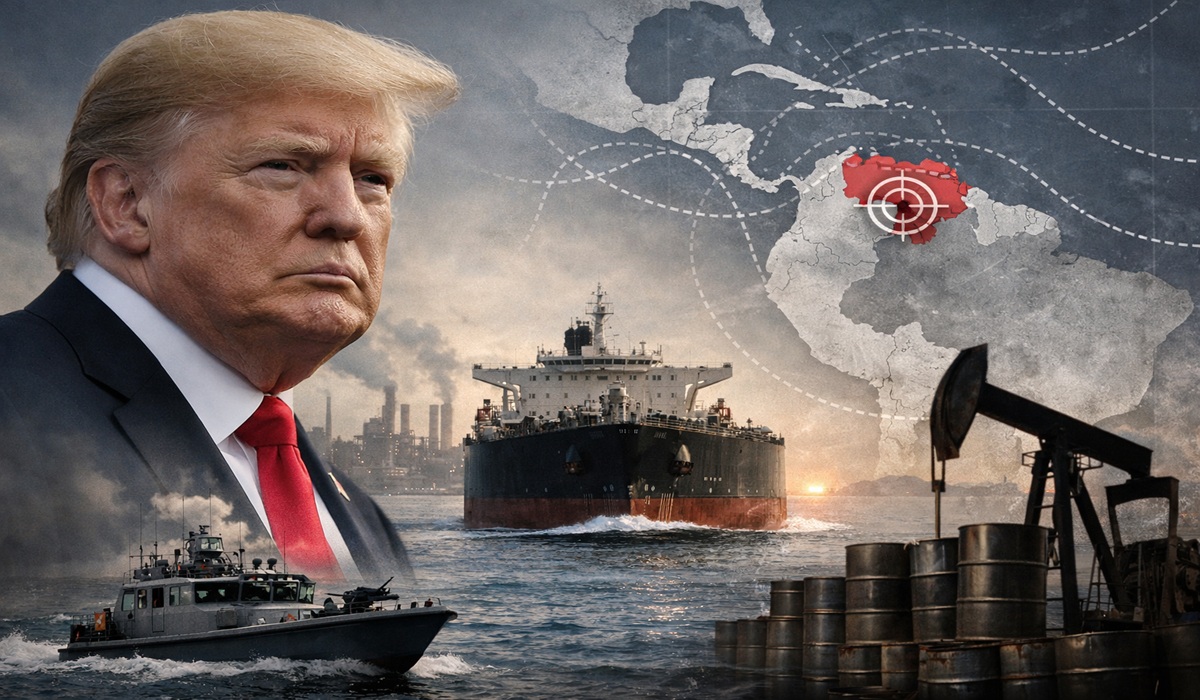
The post begins with spectacle: a claim that Venezuela is “completely surrounded” by the “largest armada ever assembled” in the history of South America. This is the first tell. When leaders lead with maximalist imagery—total encirclement, unprecedented naval force—they are not informing; they are staging. Hyperbole here functions as psychological warfare, designed to overwhelm nuance and pre-empt questions. It also sets up a narrative trap: if the situation is already framed as historically extreme, then extreme responses begin to sound “proportionate,” even when they aren’t.
Then comes the promise of escalation—“it will only get bigger”—paired with a vow that the “shock” will be unlike anything seen before. This is not diplomacy. It is intimidation. And intimidation has a cost, because it paints the United States into a corner. When you publicly describe your next move as bigger and more shocking, you reduce your own flexibility. You also heighten the risk of miscalculation. In geopolitics, miscalculation is how limited pressure turns into uncontrollable conflict.
The next assertion is more revealing still: that Venezuela must “return” to the United States “all of the oil, land, and other assets that they previously stole from us.” This is not just an allegation; it is a worldview—one that treats another country’s resources as if they can be retroactively claimed by American declaration. It quietly erases the central principle that sovereign nations control their territory and natural wealth. Even if there are legitimate disputes—over expropriations, contracts, sanctions evasion, corruption—those disputes are not resolved by announcing ownership over another people’s land and oil. When that line is crossed rhetorically, the world hears what it sounds like: imperial entitlement.
Labeling Maduro “illegitimate” is also a loaded move, because it is presented not as a contested political argument but as a settled fact that authorizes everything that follows. Words like “illegitimate” are not neutral descriptors in international affairs—they are accelerants. Once a leader is defined as illegitimate, coercion becomes easier to sell. Negotiation becomes framed as weakness. And regime change becomes implied even when not explicitly stated.
From there, the post piles on a string of grave crimes—drug terrorism, human trafficking, murder, kidnapping—presented in one breath, without distinction, without standards of proof, and without separating state responsibility from the actions of criminal networks that often thrive precisely in collapsed or sanctioned economies. This is a classic propaganda construction: stack the most morally repulsive allegations together so that the reader stops asking for specificity. The problem is that foreign policy built on unsourced moral stacking tends to collapse into policy built on rage. Rage is not strategy.
The post then takes a particularly consequential step: asserting that the Venezuelan regime “has been designated a FOREIGN TERRORIST ORGANIZATION.” Whether or not one agrees with Venezuela’s leadership, terrorism designations are not rhetorical toys. They carry legal and diplomatic consequences that can widen conflict, punish third parties, and harden positions on all sides. If such a designation is made or threatened casually, it becomes a tool of political theater rather than a carefully weighed national-security judgment. And when national-security tools become theatrical props, credibility dies a little each time they’re used.
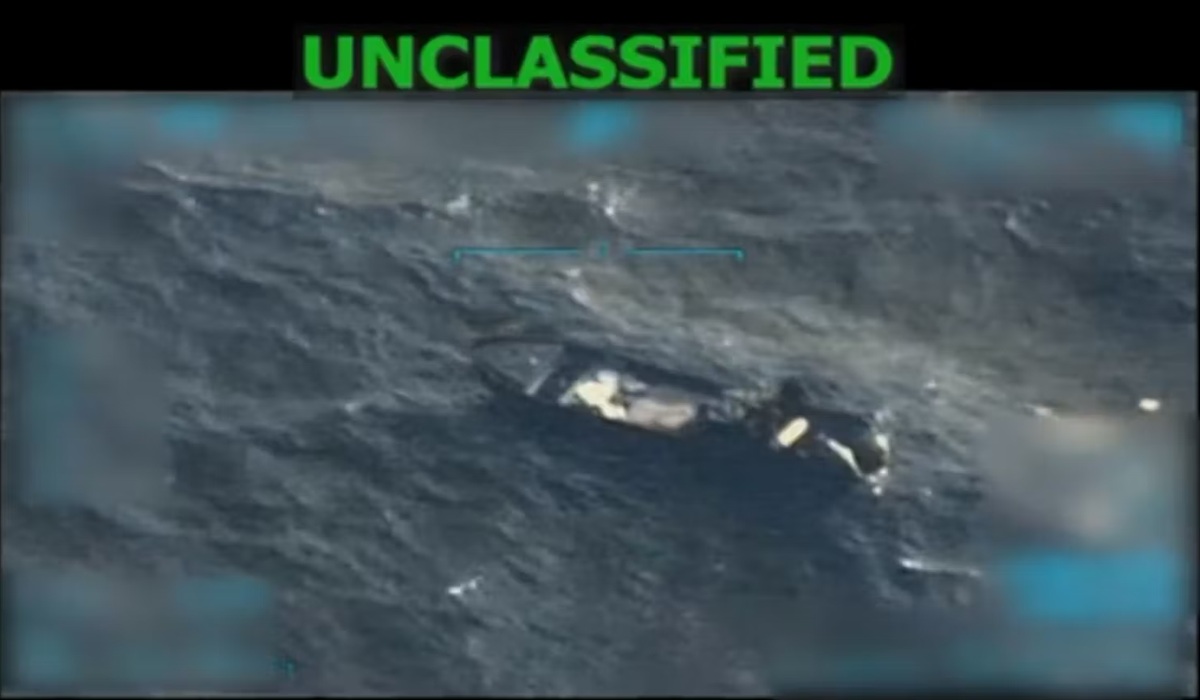
Then we reach the centerpiece: ordering “a TOTAL AND COMPLETE BLOCKADE OF ALL SANCTIONED OIL TANKERS going into, and out of, Venezuela.” A blockade is not a strongly worded letter. It is not even “just sanctions.” Historically and legally, blockades are among the clearest signals of coercive force. They are often understood as acts of war or steps toward war because they involve the attempted control of maritime movement, the risk of interdiction, and the implicit threat of confrontation. And importantly: blockades do not primarily harm “regimes.” They harm economies, supply chains, and civilians—workers, families, hospitals, farmers—people who have no vote in the decisions of the men trading threats across borders.
This is where the danger becomes more than theoretical. A blockade does not occur in a vacuum. It invites response. It shifts risk into shipping lanes. It forces third countries—buyers, shippers, insurers—to choose sides under pressure. It increases the chance of incidents at sea. Even if no shot is fired, the political consequences are immediate: the United States looks less like an advocate of rules-based order and more like an enforcer willing to punish an entire nation to bend its politics.
The post then pivots to immigration, claiming the Maduro regime “sent” illegal aliens and criminals into the United States, and that they’re being returned “at a rapid pace.” This is another rhetorical shortcut: blaming a foreign government for a complex reality shaped by economics, criminal networks, regional instability, and domestic policy. It also merges two separate issues—migration and oil—into one moral storyline designed to justify escalation. When leaders do this, it is rarely because the issues are genuinely inseparable. It is because combining them multiplies fear, and fear multiplies consent.
Near the end, the post claims America will not allow “other Countries” to “rob, threaten, or harm” the nation, and likewise will not allow a “hostile regime” to take “our oil, land, or any other assets,” all of which must be returned “IMMEDIATELY.” The moral language—protection, threat, harm—tries to position coercion as self-defense. But the assets being demanded are not on U.S. soil. They are not in U.S. custody. The “immediacy” is not about security; it is about dominance. And the world can tell the difference.
There is also a deeper hypocrisy embedded in this posture. America has spent generations condemning foreign interference, warning about other nations undermining sovereignty, and insisting that rules must govern the behavior of states. Yet this post’s framing—America is owed another country’s oil; America may encircle and blockade; America may declare legitimacy and illegitimacy as if by decree—invites the very scrutiny America claims to resist. It teaches adversaries how to justify their own coercion. It gives cynical regimes a script: “We learned it from you.”
And that scrutiny does not stay abroad. It comes home. Markets react to instability. Energy prices ripple. Investors price in risk. The average American doesn’t experience geopolitics as a debate—they experience it as higher costs, heightened tensions, and a growing sense that the world is becoming more dangerous. If policymakers gamble with escalation, it is ordinary citizens who pay the first bill and the final bill.
This is why the Nobel Peace Prize fantasy—this desire to be seen as a peacemaker while speaking the language of siege—rings hollow. Peace is not a trophy you claim while threatening “shock” and “total blockade.” Peace is a practice. It requires restraint. It requires precision. It requires the humility to recognize that coercion often produces the opposite of what it promises: more instability, more resentment, more risk of blowback.
A future-thinking, scholarly view of this moment is not simply “is Trump right or wrong about Maduro?” That question is too small for the stakes. The larger question is what kind of precedent America is normalizing. Because once the world accepts that the strongest country can declare another country’s resources “ours,” encircle it, and blockade it toward political goals, then the global order moves one step closer to raw power as the only law.
That is not peace. That is prelude.
If the United States wants to be safer, it must understand a hard truth: you do not reduce danger by manufacturing it. You do not protect citizens by turning diplomacy into theater and sanctions into siege. You do not earn moral authority by borrowing the logic of the very meddling you claim to oppose.
The most troubling part of the post is not any single claim. It is the architecture of the argument: the construction of a moral emergency to justify extreme action; the casual ownership language; the merging of unrelated fears into one storyline; the insistence that force is the only credible tool. That architecture is how wars are sold before they are fought. And history is not kind to nations that confuse dominance with security, or spectacle with strategy.
America does not need another drumbeat. It needs a mirror—and the courage to look into it without flinching.
About The Author