US-Israel attacks on Iran: Global politics, Energy & China
- Naveed Aman Khan
- Trending News
- Middle East
- March 11, 2026
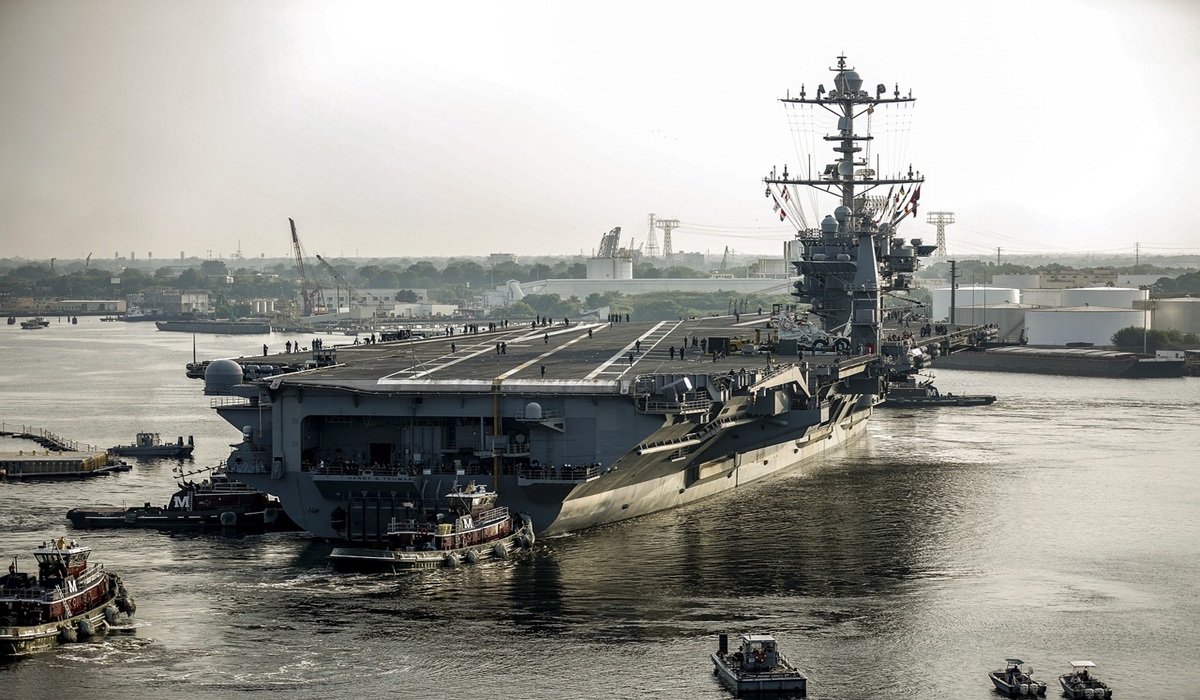
Image Credit: Military Material
The recent American and Israeli attacks on Iran have pushed global geopolitics into a highly volatile phase. While the official justification centers on Iran’s nuclear ambitions and Israel’s security concerns, the deeper dynamics of the conflict are far more complex. Strategic rivalry among major powers, global energy politics, and China’s expanding economic influence are all intertwined with the unfolding confrontation. What appears on the surface as a regional military escalation is increasingly being viewed as part of a broader geopolitical contest shaping the international order.
One of the central motivations behind American and Israeli pressure on Iran is the desire to contain Tehran’s expanding regional influence. Over the past two decades, Iran has emerged as a major geopolitical actor in the Middle East. Following the 2003 US invasion of Iraq and the political transformations triggered by the Arab Spring, Iran steadily expanded its influence across several regional theaters. It developed close political and military ties with governments and non-state actors in Iraq, Syria, Lebanon, and Yemen. For Israel, Iran represents the most serious long-term security challenge because of its ballistic missile program, advanced drone capabilities, and its support for regional groups that oppose Israeli policies. From Washington’s perspective, Iran has long been a persistent challenger to the US-led global order and to the sanctions system the US has used to limit Tehran’s economic and military power.
Beyond security concerns, energy geopolitics plays critical role in shaping current tensions. China, the world’s largest crude oil importer, relies heavily on foreign energy supplies to sustain its industrial expansion and economic growth. As China’s economy has grown over the past three decades, its dependence on imported energy has also increased dramatically. Today, Beijing imports millions of barrels of crude oil each day from a diverse group of suppliers across Middle East, Latin America, Africa, and Russia.
Recent global energy assessments indicate that Russia has become China’s largest oil supplier, accounting for roughly 20 percent of its crude imports. Saudi Arabia follows with 14 percent, while Iraq contributes 10 percent. Iran is estimated to supply around 10–11 percent of China’s crude oil imports, despite Western sanctions aimed at limiting Iranian exports. Venezuela, another country facing heavy US sanctions, provides 2–4 percent of China’s oil imports. Other important suppliers include Brazil, Angola, Oman, and the UAE.
Taken together, Russia, Iran, and Venezuela account for one-third of China’s total oil import mix. These countries often sell crude oil at discounted prices because Western sanctions restrict their access to global markets. As a result, Chinese refiners have been able to purchase large volumes of oil at relatively lower costs compared with international benchmark prices.
This discounted energy supply has played an important role in supporting China’s manufacturing sector and maintaining the competitiveness of its industrial economy.
This reality has led to argue that American pressure on Iran and Venezuela cannot be understood solely through the lens of nuclear proliferation or regional security. Instead, it is also linked to the broader strategic competition between the US and China. By restricting or destabilizing oil exports from these sanctioned producers, Washington could potentially disrupt China’s access to discounted energy resources. Such a development might force Beijing to rely more heavily on oil supplies from countries aligned with Western geopolitical interests, thereby indirectly shaping China’s long-term energy security.
Iran’s role in China’s energy strategy is particularly significant. Despite sanctions, Iran exports around 1.3 to 1.4 million barrels of crude oil per day to China. Much of this trade occurs through complex shipping arrangements and indirect channels designed to bypass international restrictions. For Beijing, Iranian oil represents not only a reliable supply but also a relatively inexpensive one.
If the current conflict escalates into a prolonged war, the consequences for global energy markets could be profound. Iran sits near one of the most strategically important maritime chokepoints in the world—the Strait of Hormuz. Nearly one-fifth of the world’s seaborne oil trade passes through this narrow waterway connecting the Persian Gulf to international markets. Any disruption in this corridor could trigger a major global energy shock. Oil prices could surge sharply, affecting economies across Asia, Europe, and North America.
China would likely be among the countries most affected by such a disruption. A reduction in Iranian exports or instability in the Strait of Hormuz could force Chinese refineries to turn to alternative suppliers at significantly higher prices. This would increase production costs across China’s industrial sectors and potentially slow economic growth at a time when Beijing is already facing structural economic challenges.
In response to the conflict, China has adopted a cautious diplomatic posture. Beijing has publicly condemned military escalation and called for restraint from all parties. However, it is unlikely to intervene militarily in the crisis. Instead, China appears to be positioning itself as a potential diplomatic mediator while quietly seeking to protect its economic and energy interests. This approach reflects China’s broader foreign policy strategy of avoiding direct military entanglement while expanding its global influence through economic partnerships and diplomacy.
Russia, meanwhile, could benefit economically from the situation. If Iranian exports decline due to war or stricter sanctions enforcement, China may increase its reliance on Russian oil supplies.
Such a development would further deepen the already strong energy partnership between Moscow and Beijing. Since the imposition of Western sanctions on Russia after the Ukraine conflict, Moscow has increasingly turned toward Asian markets, particularly China and India, to sell its energy exports.
For countries like Pakistan, the crisis presents both challenges and opportunities. Pakistan shares a long border with Iran and maintains complex relationships with both Western powers and regional actors. Islamabad’s approach has largely focused on advocating regional stability while maintaining balanced diplomatic relations.
Pakistan has also emphasized the importance of avoiding a broader regional war that could destabilize trade routes and economic connectivity projects across South and Central Asia. As for the possibility of Iran being defeated militarily, the outcome remains highly uncertain. Iran possesses one of the largest missile and drone arsenals in the Middle East and has developed a sophisticated network of regional partners and allied groups. While sustained airstrikes could damage Iran’s infrastructure and weaken parts of its economy, achieving a complete military defeat of Iran would be extremely difficult. Such an attempt could trigger a wider regional conflict involving multiple state and non-state actors.
The American and Israeli attacks on Iran cannot be understood merely as a regional military confrontation. They are part of a broader geopolitical struggle involving energy security, regional power balances, and the growing strategic rivalry between the United States and China. The outcome of this confrontation will not only shape the future political landscape of the Middle East but may also influence the stability of global energy markets and the balance of power in international politics for years to come.
About The Author