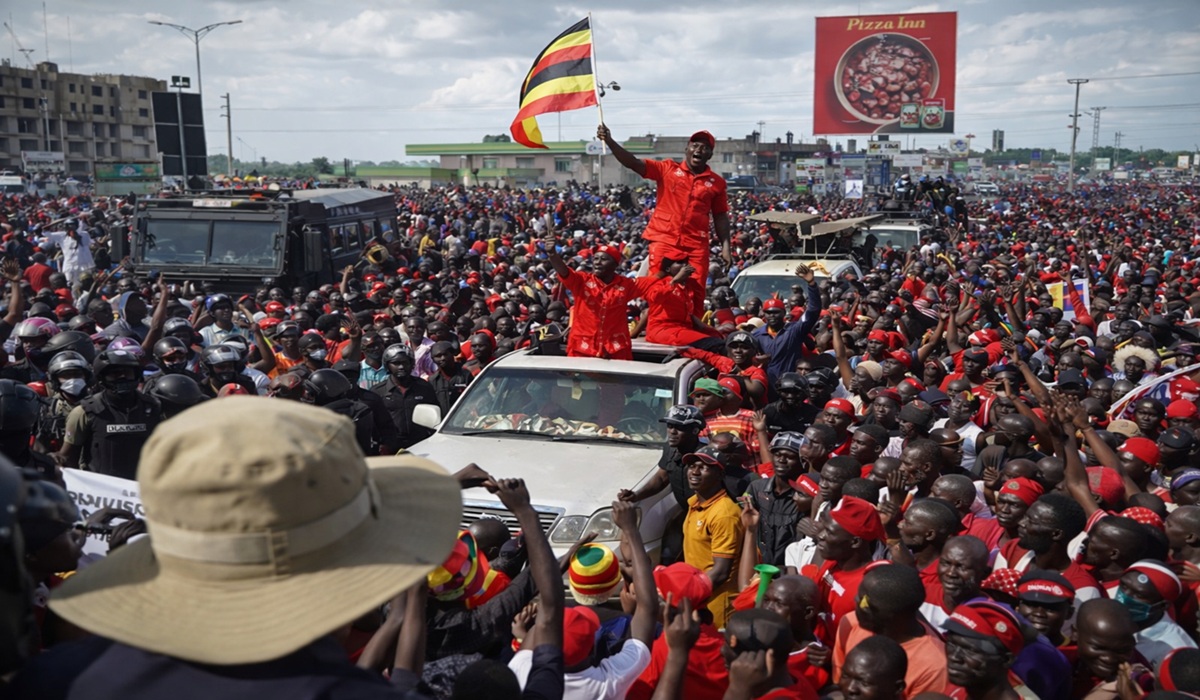
Uganda goes to the polls this Thursday at a moment that feels both familiar and uncertain. Voters will choose their president and elect a new parliament, decisions that will shape the country’s direction at a time when questions about leadership, resources, corruption, and the future weigh heavily on public life. At the centre of it all is President Yoweri Museveni, an 81-year-old veteran leader seeking a seventh consecutive term after nearly four decades in power.
Museveni has ruled Uganda since 1986, when he came to power after a brutal civil war that followed years of political instability. For many Ugandans, his early years remain associated with relative stability, the rebuilding of state institutions, and a sense of national recovery after the chaos of the 1970s and early 1980s. He presented himself as a reformer, a liberation leader who would move the country away from cycles of coups, ethnic violence, and economic collapse. In those early years, there was broad regional and international support for his leadership.
Over time, however, that legacy has become more complicated. Museveni is now one of Africa’s longest-serving leaders, and his continued hold on power has come to symbolize a wider struggle across the region between political continuity and democratic renewal. Although he has repeatedly stated that this will be his final campaign, similar assurances in the past have been followed by constitutional changes that removed term limits and age caps, allowing him to remain in office.
As campaigning ends and voting approaches, attention is shifting from rallies and speeches to the integrity of the electoral process itself. Uganda’s elections have historically been contentious, with opposition parties and civil society groups frequently raising concerns about voter intimidation, restrictions on media, arrests of political opponents, and the heavy presence of security forces. The government insists that the vote will be free and fair, while critics argue that the playing field has long been tilted in favor of the ruling National Resistance Movement.
Beyond the mechanics of the election lies a deeper conversation about Uganda’s future. The country has one of the youngest populations in the world, with a majority of citizens under the age of 30. This demographic reality creates enormous pressure on the economy to deliver jobs, education, and opportunity. Many young Ugandans feel disconnected from a political system dominated by leaders who came of age decades before they were born. For them, the election is not just about who wins, but whether the system can meaningfully respond to their aspirations.
Uganda is also a nation rich in resources. Fertile land, significant agricultural potential, and newly developed oil reserves position the country for economic growth. Yet resource wealth has long been a double-edged sword across Africa, often linked to corruption, inequality, and conflict rather than shared prosperity. In Uganda, concerns persist about how oil revenues will be managed, who will benefit, and whether transparency and accountability will be strong enough to prevent elite capture.
Corruption remains one of the most persistent issues shaping public trust. Despite repeated anti-corruption pledges, scandals involving public funds, procurement, and misuse of state resources continue to surface. For ordinary Ugandans, corruption is not an abstract concept; it shows up in underfunded hospitals, struggling schools, poor infrastructure, and the everyday costs of accessing basic services. Elections become moments when frustration with these realities is voiced, even if meaningful change feels elusive.
Regionally, Uganda plays an important role in East Africa and beyond. It has been a key security partner in regional conflicts and peacekeeping missions, which has helped Museveni maintain strong relationships with international allies. This geopolitical importance has often softened external criticism of Uganda’s internal politics, even as concerns about democratic backsliding grow. The election therefore also carries implications for how Uganda positions itself on the regional and global stage in the years ahead.
For supporters of the president, continuity is seen as a virtue. They argue that Museveni’s experience provides stability in a volatile region and that gradual reform is preferable to abrupt change. They point to infrastructure projects, expanded access to education, and Uganda’s relative security compared to some neighbors as evidence of progress. For critics, however, the same continuity represents stagnation, a closing of political space, and a missed opportunity to prepare the country for a post-Museveni era.
As Ugandans prepare to cast their ballots, the stakes are clear. This election is about more than a single term or a single leader. It is about whether Uganda can reconcile its past with its future, whether its growing population will feel represented and heard, and whether its natural and human resources can be governed in a way that benefits the many rather than the few. The outcome may be widely anticipated, but the questions it raises will not be resolved on election day.
Whatever the result, Uganda stands at a crossroads. The promise of stability that once defined the Museveni era now competes with demands for accountability, renewal, and inclusive growth. How the country navigates this moment will shape not only its political landscape, but the lived reality of millions of Ugandans in the years to come.
About The Author