Trump Just Turned on MAGA’s Own Architects — and the Republican Fallout Could Get Brutal
- TDS News
- U.S.A
- April 10, 2026
By: Donovan Martin, Sr
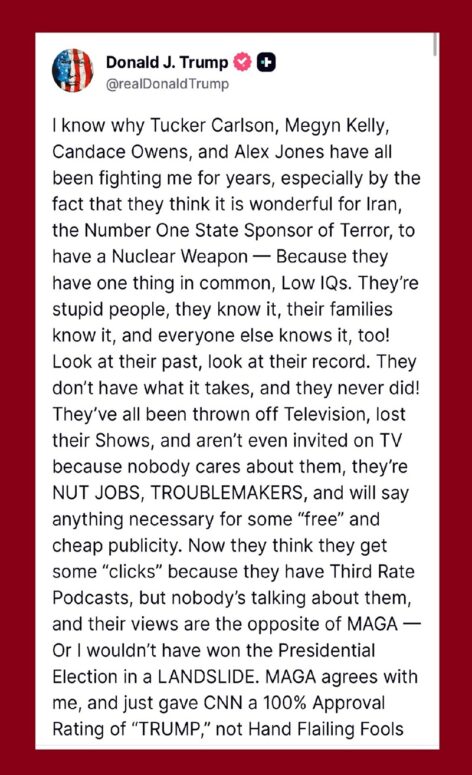
Donald Trump’s latest Truth Social eruption was not a routine tantrum aimed at Democrats, legacy media, or the usual outside enemies he has long used to rally support. This time, he turned inward, targeting figures who helped build and sustain the MAGA movement for years: Tucker Carlson, Megyn Kelly, Candace Owens, Alex Jones, and, in a parallel rupture, Marjorie Taylor Greene. In the post, Trump mocked several of them as having “low IQs,” dismissed them as “stupid people” and “losers,” and framed their criticism as betrayal rather than legitimate disagreement.
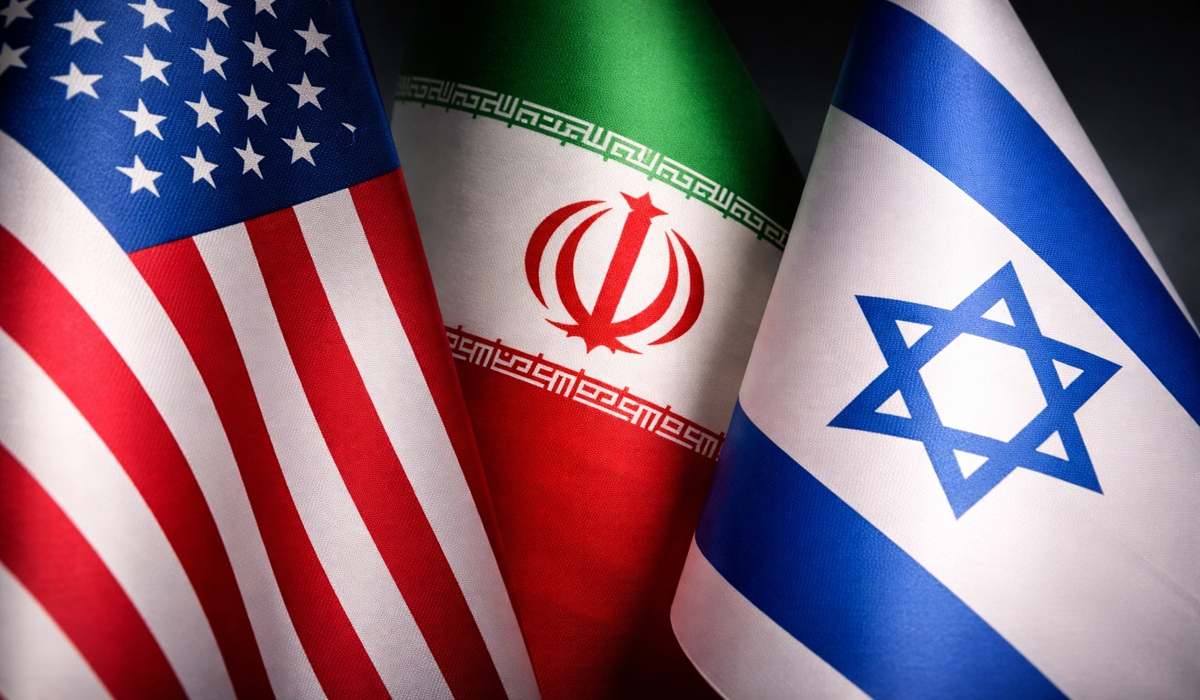
That shift matters because Trump was not just defending himself. He was redefining the boundaries of his own political movement. His message was unmistakable: if you oppose him on foreign policy, tone, or judgment, you no longer belong. Trump attempted to reframe MAGA as being singularly about “winning” and stopping Iran from obtaining nuclear capabilities, but the subtext was more revealing than the policy. Loyalty to Trump now outweighs ideology, consistency, or even past allegiance.
The problem for Republicans is that the individuals he attacked are not fringe figures operating on the margins. Carlson played a central role in shaping the intellectual tone of Trump-era populism, translating it into something broader than campaign rhetoric. Kelly, despite a complicated relationship with Trump, has remained a major voice among conservatives seeking sharper analysis without abandoning the base. Owens helped energize younger, digitally native supporters, while Jones, controversial and widely criticized, still amplified the anti-establishment sentiment that fueled the movement’s rise. Greene, meanwhile, became one of the most visible elected embodiments of Trump-style politics, carrying that combative tone directly into Congress.
These were not outsiders. They were part of the machinery that expanded Trump’s reach and influence. The immediate trigger for this rupture appears to be Trump’s rhetoric surrounding Iran, including statements that many—even within his own coalition—viewed as dangerously escalatory. The backlash from these figures was not subtle. Kelly openly condemned his language as reckless. Carlson warned against blind obedience to potentially catastrophic decisions. Owens and Greene questioned both the moral and strategic direction. Even Jones, who has defended Trump through numerous controversies, began openly raising concerns.
This is where the situation shifts from internal disagreement to something more serious. For years, the Republican Party managed to hold together a fragile coalition of competing ideologies under the umbrella of Trump’s leadership. That coalition included hawks, isolationists, populists, libertarians, and media personalities with wildly different priorities. What kept them aligned was not consistency, but a shared sense of grievance and a belief that Trump represented their interests in some form.
Now that balance is breaking. Trump’s attack on Greene underscores how far this has gone. After her criticism, he publicly branded her a “traitor,” mocking her political standing and attempting to diminish her relevance. That kind of direct confrontation with a high-profile loyalist signals that no one within the movement is immune. Loyalty is no longer cumulative; it is conditional and constantly tested.
For the Republican Party, the risk is not immediate collapse but slow internal decay. The figures Trump attacked command large, loyal audiences. When they fracture, those audiences do not simply disappear or realign overnight. Instead, they splinter, disengage, or turn their energy inward. That creates a political environment where messaging becomes inconsistent, grassroots enthusiasm weakens, and internal disputes overshadow external opposition.
This kind of division rarely shows up instantly in polling numbers. It emerges over time in reduced turnout, fractured primaries, and a base that spends more time questioning itself than confronting its opponents. Candidates are forced into increasingly difficult positions, trying to balance unwavering loyalty to Trump with the need to appeal to a broader electorate that may be growing fatigued by constant internal conflict.
Trump appears to be betting that he can survive another purge, just as he has done before. He may be right about his ability to retain a core base. However, the broader movement may not be as resilient. External criticism can strengthen a political coalition by reinforcing its sense of identity. Internal disillusionment, especially from trusted voices, does the opposite. It introduces doubt, erodes trust, and forces supporters to reconsider assumptions they once held without question.
What makes this moment particularly significant is that the criticism is not coming from political opponents. It is coming from individuals who helped define the movement itself. When figures like Carlson, Owens, Kelly, Jones, and Greene begin publicly challenging Trump’s direction, it transforms the issue from a political disagreement into a question of legitimacy.
This is no longer just another Trump controversy. It is a turning point within the Republican ecosystem. The tensions between loyalty, ideology, and strategy that have existed beneath the surface for years are now fully exposed. Trump has not just responded to criticism; he has escalated it into a direct confrontation with his own coalition. And once a movement begins to fracture over who the “real” believers are, it rarely emerges unchanged.
About The Author