Today Marks The 5th Anniversary of The January 6, 2021, Deadly Insurrection
- Kingston Bailey
- U.S.A
- January 6, 2026
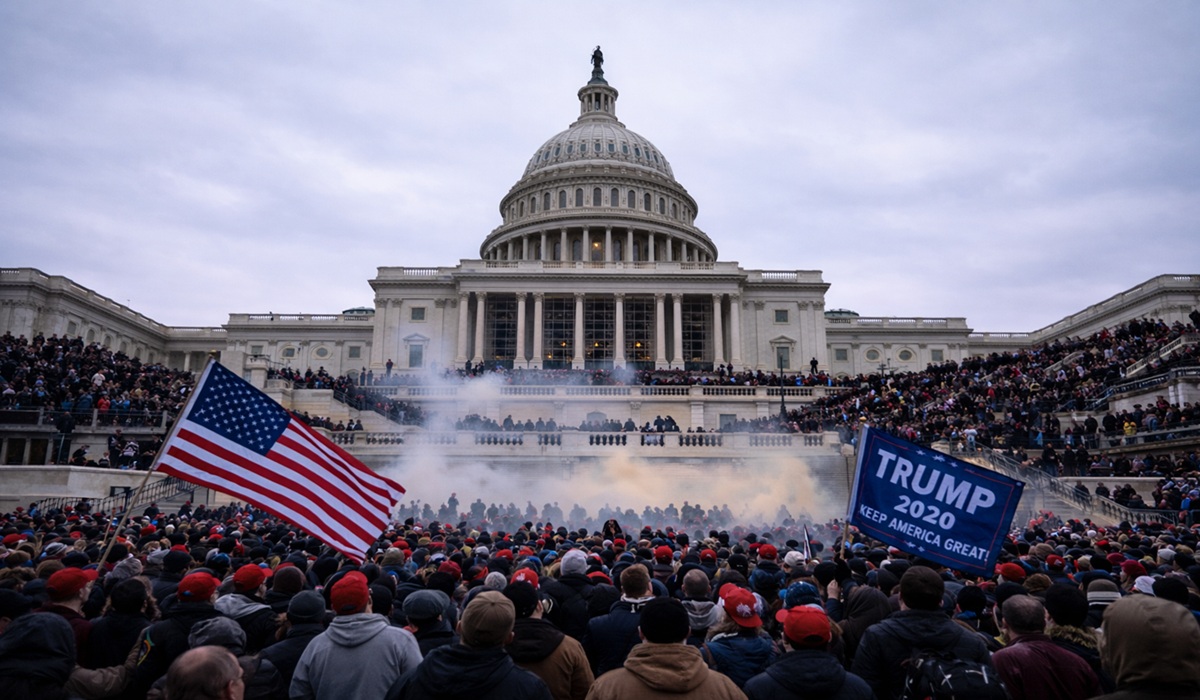
January 6th is no longer just a date on the calendar. This year marks the fifth anniversary of the events of January 6, 2021, a day that exposed how fragile the American experiment had become and how deeply divided the country already was.
What happened is now part of the historical record. As Congress gathered to certify the results of the 2020 presidential election, a large crowd of then-President Donald Trump’s supporters converged on Washington, D.C. Many believed, sincerely or otherwise, that the election had been stolen from them. That belief did not appear overnight. It was fueled for weeks by repeated claims from Trump and his allies that the vote was fraudulent, that institutions had failed, and that only direct action could stop what they described as an illegitimate transfer of power.
After a rally near the White House, portions of that crowd moved toward the U.S. Capitol. Security was overwhelmed. Barriers were breached. Lawmakers were evacuated or sheltered in place. The certification process was interrupted for hours. For the first time in modern American history, the peaceful transfer of presidential power was physically obstructed by citizens acting on political grievance.
Five years later, the argument over what that day “was” has never really ended. To many Americans, it was a clear attempt to overturn an election by force, driven by false claims and encouraged by a sitting president unwilling to accept defeat. To others, it was a protest that spiraled out of control, exploited by bad actors, or exaggerated for political purposes. Those competing interpretations are not a side issue — they are the core of the division January 6th left behind.
Context matters because January 6th did not come out of nowhere. It was the culmination of years of escalating distrust: in media, in government, in elections themselves. Trump’s supporters who showed up that day did so believing they were defending democracy, not attacking it. That belief, however flawed, is central to understanding why the day remains so polarizing. It also explains why accountability afterward — arrests, trials, congressional investigations — hardened opinions instead of resolving them.
The deeper damage was not just to a building or a process, but to a shared understanding of reality. Americans stopped arguing only about policies and began arguing about facts. Once that line was crossed, compromise became nearly impossible. Political identity hardened into something closer to allegiance, and disagreement increasingly felt existential rather than civic.
Five years on, the consequences are still visible. Elections are viewed with suspicion by large segments of the population. Institutions are trusted selectively, depending on who is in power. Political rhetoric has become more absolute, more accusatory, and less forgiving. January 6th accelerated all of it.
The day changed America not because it was the first time people protested or even turned violent, but because it struck at the core assumption that elections settle disputes. Once that assumption weakens, everything else becomes unstable.
Anniversaries are supposed to offer clarity, but this one still offers discomfort. The fifth anniversary is less about revisiting the chaos of that day and more about confronting what led to it — a political culture where losing is unacceptable, truth is negotiable, and loyalty often matters more than law.
Whether January 6th becomes a lesson learned or a turning point missed depends on whether Americans can confront not just what happened, but why so many believed it had to happen at all. Five years later, that reckoning remains incomplete.
About The Author