The U.S. Boards Tankers — and Bombs Boats, Call It What It Is, Murder!
- TDS News
- U.S.A
- December 13, 2025
By: Donovan Martin Sr, Editor in Chief
The United States did not confront a tactical dilemma in Venezuelan waters.
It confronted a decision point — and chose the most destabilizing option available.
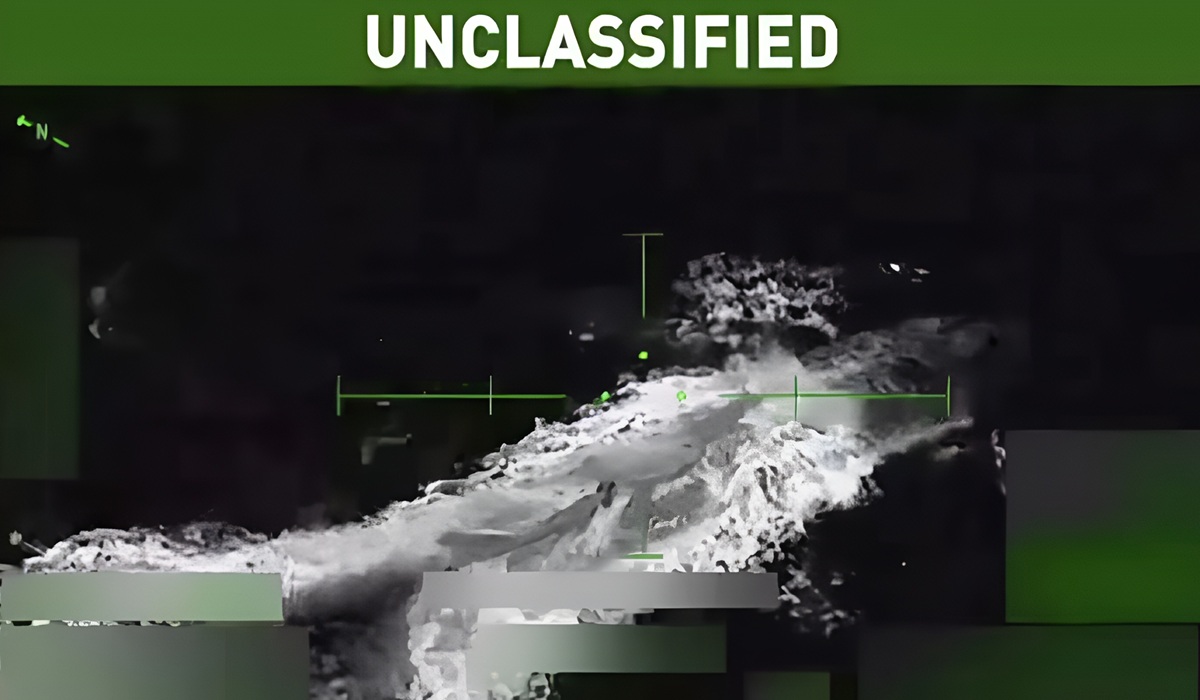
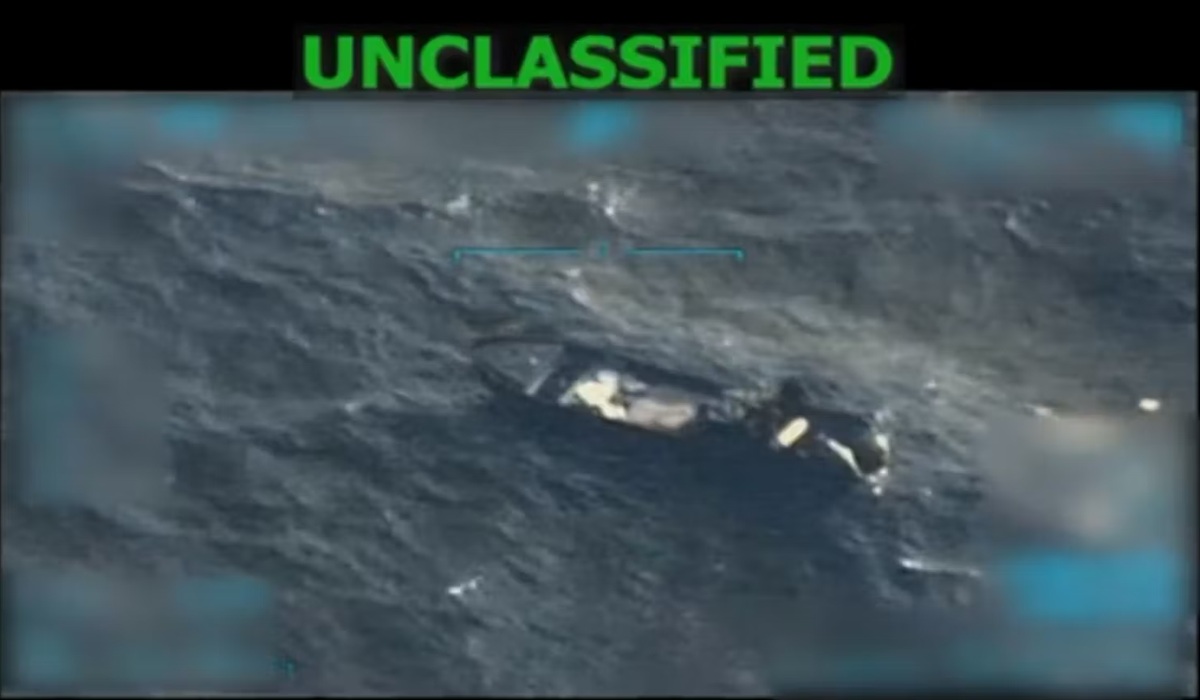
Small vessels were destroyed. The people on them were murdered. This occurred despite the United States possessing unmatched maritime surveillance, interception, and detention capabilities. This is not conjecture. The same apparatus routinely boards drug boats intact. Crews are arrested. Cargo is seized. Evidence is preserved. Prosecutions follow. The system functions — when it is chosen.
It was not chosen here.
When the United States seized an oil tanker carrying millions of barrels of fuel, it demonstrated restraint, process, and patience. No explosions. No deaths. No urgency. That contrast is not incidental. It is instructive.
One category of target is absorbed into law.
The other is eliminated outside it.
At that moment, the discussion is no longer about drugs, borders, or enforcement. It becomes a question of governance philosophy: when does a state decide that due process is optional, and for whom?
International maritime law exists precisely to prevent this threshold from being crossed. Boarding protocols exist to ensure force remains proportional and reversible. Detention exists to preserve accountability. When a state bypasses all three — not under duress, not under threat, but by choice — the act is not enforcement. It is liquidation.
This raises a more consequential issue than morality: predictability.
Global stability does not depend on goodwill. It depends on predictability. States tolerate one another not because they trust intentions, but because they can anticipate behavior. When a government demonstrates it will oscillate between courts and missiles depending on who is involved, predictability collapses.
And when predictability collapses, risk multiplies.
Now consider the precedent being set.
If another country were to destroy a vessel carrying American citizens because those citizens were smuggling drugs, there would be no prolonged analysis. The legal status of the passengers would be irrelevant. The act would be classified immediately as an act of war. Retaliation would not be debated — only calibrated.
This is not a theoretical comparison. It is how power systems actually respond.
So the question becomes unavoidable: why is the United States assuming others will accept what it itself would never tolerate?
That assumption is not confidence. It is gamble.
What the Trump administration has done here is open a door that does not close cleanly. For decades, the United States has selectively bent international norms. That reality is not new. What is new is the clarity of the signal now being sent: if power permits it, force replaces process.
That signal does not remain confined to state actors.
It becomes permission. Permission for adversarial governments. Permission for proxy forces. Permission for militias, insurgents, and individuals who no longer require ideology to justify violence — only precedent. “We are doing what you did” is the most dangerous sentence in geopolitics, because it flattens hierarchy into symmetry.
This is Pandora’s box, not because violence has never existed, but because the boundary between enforcement and execution has now been deliberately blurred. Once that boundary dissolves, it cannot be selectively restored. Others will not ask whether America intended to set this precedent. They will only ask whether it exists.
And now it does.
This is where the timeline matters.
Trump will not remain in office indefinitely. There are roughly two years left in this term. The effects of these decisions will outlive him by decades. In his first administration, he left behind a country diplomatically strained, internally fractured, and externally distrusted. This time, the damage is being embedded deeper — into norms, assumptions, and response calculations that future administrations will inherit but not control.
What is being handed forward is not policy.
It is exposure.
Exposure to retaliation that does not announce itself.
Exposure to disruptions that do not look like war.
Exposure to consequences that arrive without flags, uniforms, or attribution.
Tourism, investment, alliances, intelligence cooperation — all of these systems operate on perceived stability. When a nation demonstrates that lethal force is discretionary rather than exceptional, it is quietly reclassified. Advisories change. Risk models adjust. Routes are reconsidered. Trust erodes not dramatically, but systematically.
This is how a country becomes less safe without a single missile ever landing on its soil.
And then there is the final contradiction.
The United States maintains roughly 800 military installations across the globe, many positioned directly beside other nations’ borders. This posture is described as stabilizing. Yet proximity elsewhere is labeled provocation. Resistance is framed as aggression. Response is treated as escalation. The asymmetry is structural — and visible to everyone.
Visibility matters.
Strip this down to its essence and the remaining questions are not rhetorical. They are operational:
What behavior has now been normalized?
What responses have now been legitimized?
And how much accumulated risk is being deferred — deliberately — to the future?
A state that can arrest but chooses to murder is not asserting authority.
It is redefining the acceptable use of violence.
And once violence becomes policy rather than exception, it stops being precise.
It spreads laterally.
It mutates.
It returns indirectly.
The most chilling part of this moment is not what has already happened. It is what has now been authorized — not by decree, but by demonstration. The world learns from what states do, not what they say.
Americans should be asking themselves a question that is uncomfortable precisely because it is rational:
If this is how power is used abroad, how long before instability follows it home?
Not as invasion.
Not as spectacle.
But as consequence.
History is not subtle about this. When a nation abandons restraint, it does not control where the fallout lands. It only controls the moment it lets go.
That moment has passed.
What comes next will not ask permission.
About The Author