By Donovan Martin Sr, Editor in Chief
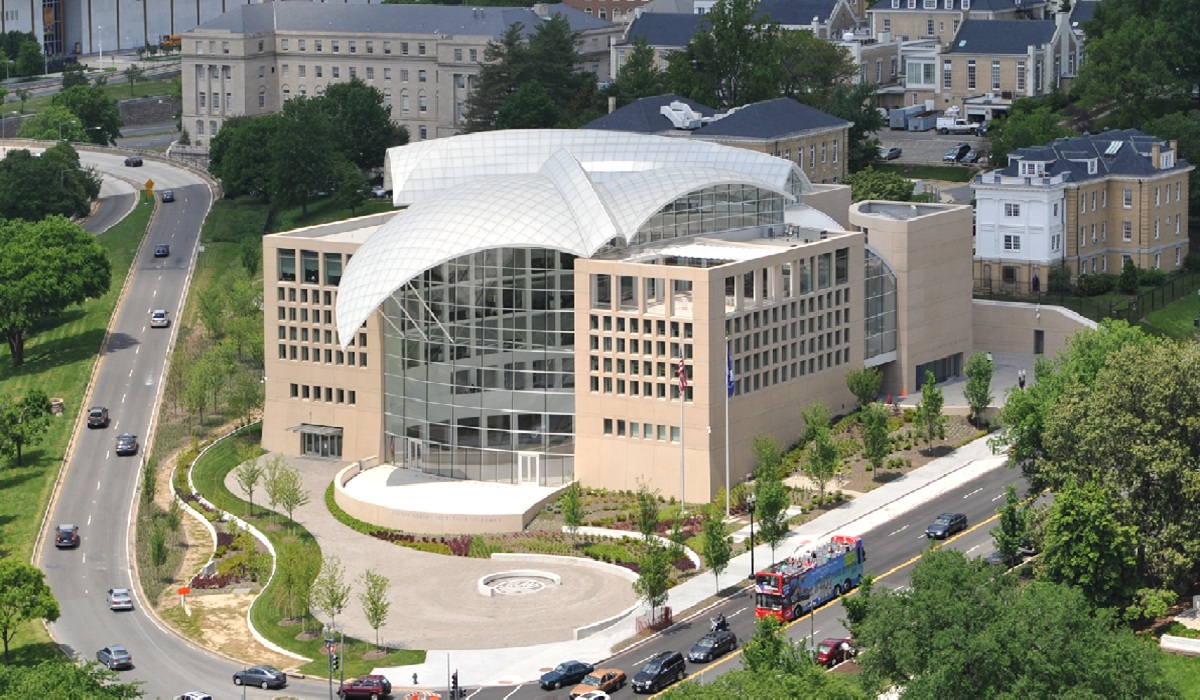
Some stories disappear almost as quickly as they unfold. Earlier this year, one of those stories slipped past most Americans with barely a whisper: the United States Institute for Peace—an agency long held up as a symbol of diplomatic restraint—was quietly renamed the Donald J. Trump Institute for Peace. No national debate. No congressional hearing. Not even a serious public conversation. Just a bureaucratic flicker that, in any other political era, would have sparked outrage or disbelief.
Instead, it passed like a shrug.
On its own, the renaming was odd enough. But the deeper irony cuts much sharper. The institution being rebranded has spent decades struggling to prove it was ever actually about peace. Critics argued it produced papers and held panels but rarely prevented a single conflict. Supporters admitted its influence was limited. Entire regions unraveled while the agency drafted frameworks that gathered dust. So when its new namesake became a president whose policies have fueled some of the worst humanitarian disasters of our time, the contradiction became impossible to ignore.
Donald Trump built a political identity around the promise of keeping America out of “endless wars.” Yet his actions—past and present—tell a much different story. Gaza stands as the most devastating example. Under his leadership, Israel was granted unprecedented financial and military backing. Oversight disappeared. Boundaries dissolved. The result is a tragedy whose scale will haunt history books: neighbourhoods leveled, families annihilated, and a region destabilized beyond recognition. That alone contradicts the image of a president of peace.
But the next front is already forming—Venezuela.
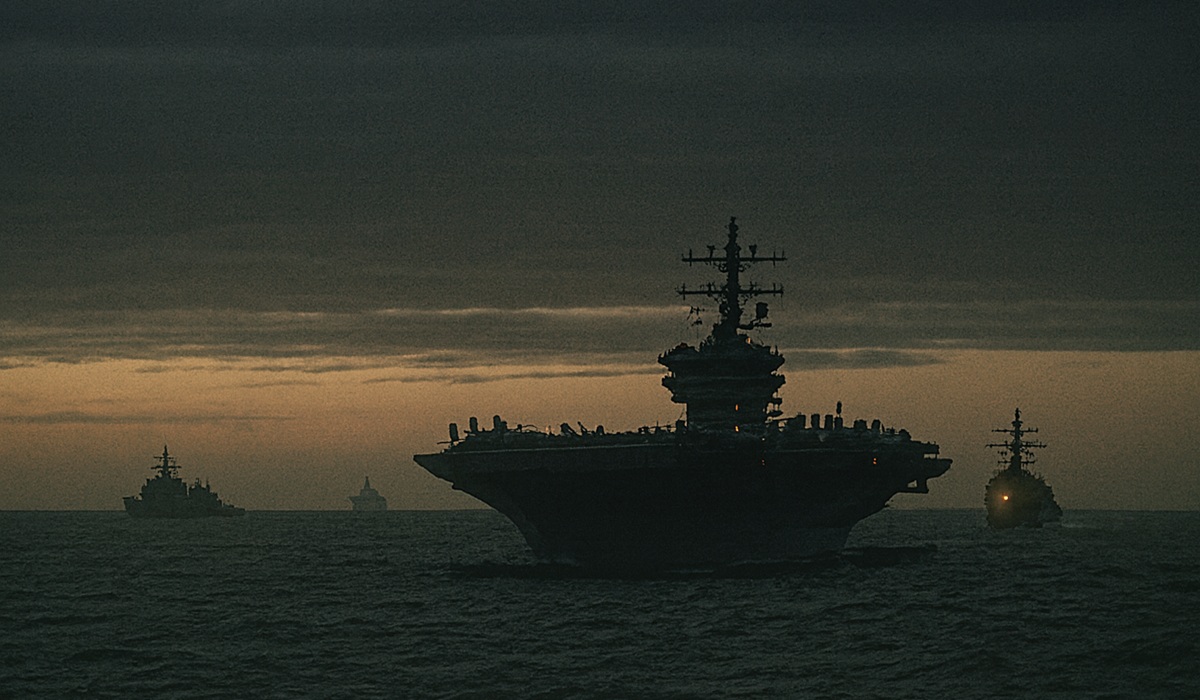
The deployment of carriers, submarines, and strike groups toward the region signals a familiar pattern: the slow, deliberate staging of another long conflict sold under the language of “liberation,” “rescue,” or “restoring democracy.” Americans have heard this chorus before. Afghanistan. Iraq. Syria. Libya. Each time, the script was nearly identical: go in quickly, leave slowly, spend endlessly, and sacrifice the lives of young American soldiers in the name of ideals Washington rarely practices.
These wars were always framed as moral imperatives. Yet each ended with the same grim outcome—collapsed infrastructure, looted natural resources, destabilized governments, and years of chaos that created power vacuums no one could control. It is a pattern so predictable it has become a geopolitical reflex.
And now Venezuela stands at the edge of becoming the next “forever war” that the public never asked for and that history warns Americans cannot afford.
Should the U.S. enter another long-term conflict in the region, taxpayers will inevitably pay the price—trillions more added to a national debt already suffocating future generations. The operations alone—fuel, munitions, logistics, naval deployments, aerial patrols—will cost tens of millions per day. And if the war stretches into years, as they always do, the price tag becomes its own kind of generational wound. Not to mention the human cost: thousands of American soldiers who will return with injuries, trauma, or not at all.
For a president who insists he is a champion of peace, the cognitive dissonance is startling.
Trump recently went even further by symbolically renaming the Department of Defense the Department of War—a move that strips away the diplomatic veneer and exposes what many already suspected: that peace, in this political chapter, is little more than a slogan. A word to decorate speeches and buildings, not a principle to shape policy.
So what does it mean when the man who has overseen catastrophic destruction abroad and now positions the U.S. for another costly intervention in Venezuela also has his name atop America’s official peace institute?
Perhaps it is not about peace at all.
Perhaps it is about legacy—Trump creating, piece by piece, the accolades the world has refused to give him. The Nobel Peace Prize, coveted and never achieved, now substituted with a federally funded institution bearing his name. If the international community won’t acknowledge him as a peacemaker, he can at least engrave the title onto stone.
But even stone erodes. Political names come down. Buildings are renamed. History rarely preserves vanity.
What lingers instead is the contradiction: a president who claims to prevent wars while preparing the next one; an institute meant for peace renamed after a leader who has supported mass destruction; a government that insists it stands for diplomacy while deploying the machinery of conflict across the world.
Americans understand this pattern now. They have lived through decades of it. They know another war will drain their economy, bury their young, and destabilize another nation that will spend generations recovering from U.S. intervention. They know it will be sold to them as necessary, noble, and urgent. And they know, deep down, that none of those words ever match the aftermath.
This is the quiet tragedy of the renaming. It was not merely the rebranding of a building. It was a mirror held up to a country that has become numb to its own contradictions—a nation comfortable calling war peace and calling destruction liberation, as long as the language feels familiar.
The strangest part is not that the Institute for Peace now carries Donald Trump’s name. The strangest part is how little surprise it generated. In that silence lies the real story: a public so accustomed to political absurdity that even the rebranding of peace itself barely registers anymore.
And if Venezuela becomes the next chapter in America’s long book of forever wars, this moment—the quiet, unchallenged renaming of a peace institution—may be remembered as the year the symbolism finally matched the reality.
About The Author