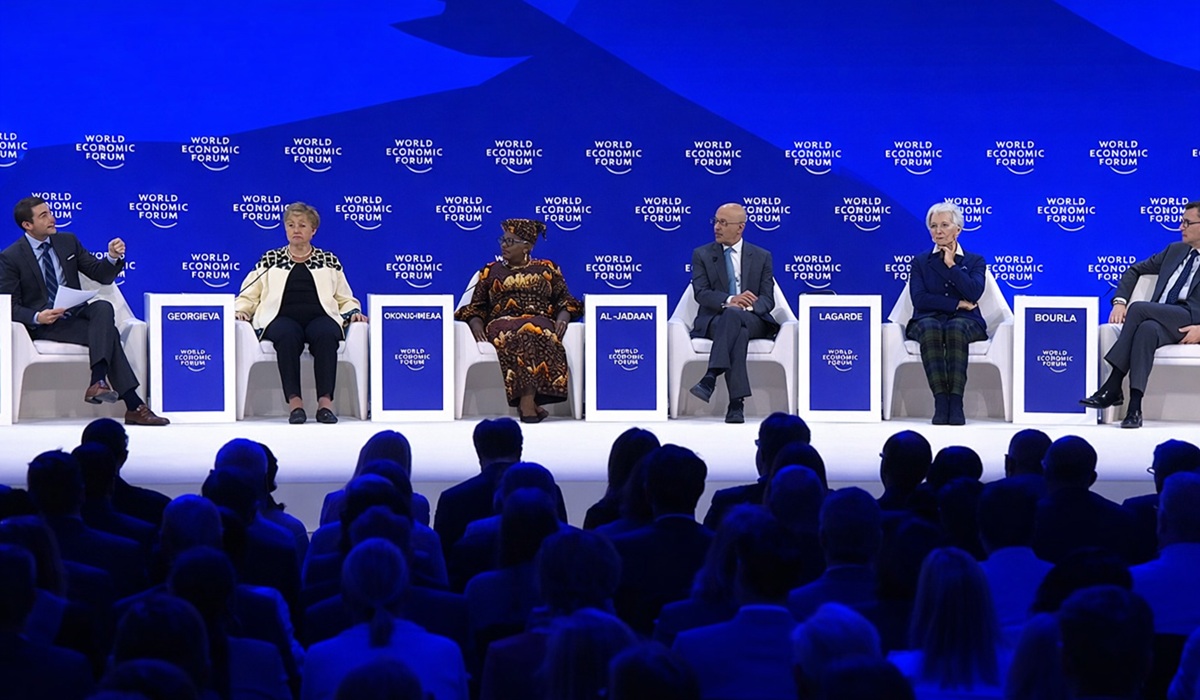
The World Economic Forum in Davos—once perceived as a relatively composed gathering of technocrats, corporate leaders, and policymakers—has increasingly become a barometer of global instability. The serene Swiss mountains, traditionally echoing discussions on growth, globalization, and cooperation, this year resonated with anxieties over fractured alliances, shifting power centers, and what many observers describe as the most serious transatlantic crisis in decades.
At the center of this turbulence is the aggressive and unilateral foreign policy of U.S. President Donald Trump. Anchored in territorial claims, coercive trade threats, and the use of military pressure, this approach has unsettled not only America’s adversaries but also its closest allies. From military posturing against Venezuela and provocative remarks regarding Greenland to escalating tensions with Iran, these actions have raised fundamental questions about the durability of the global order and the future of long-standing alliances.
Trump’s address at Davos was not a routine diplomatic engagement; it was a defining political statement. The “America First” doctrine was articulated with blunt clarity, signaling Washington’s willingness to prioritize narrow national interests even at the expense of decades-old alliances. This posture reflects not mere rhetoric but a calculated shift that is altering the global balance of power.
European reactions, particularly to Trump’s statements on Greenland, were unusually direct. European Commission President Ursula von der Leyen and French President Emmanuel Macron openly criticized U.S. pressure tactics, characterizing them as coercive rather than diplomatic. Some European voices even likened the approach to a revival of colonial thinking. A relationship once rooted in trust and shared values now appears increasingly defined by skepticism and strategic mistrust.
Europe’s response reflects not only anxiety but also awakening. For decades, European security and foreign policy evolved under the protective umbrella of American leadership. Davos 2026 challenged this assumption. European leaders made it clear that strategic autonomy, defense independence, and self-reliance are no longer abstract ideals but emerging necessities for survival in an unpredictable world.
This shift is no longer confined to rhetoric. Emergency consultations, debates over retaliatory trade mechanisms, increased defense spending, and investments in strategic industries indicate that Europe is reassessing its long-term dependence on Washington. Even the staunchest supporters of the transatlantic alliance now concede that the cracks may prove deep and enduring.
The consequences of American foreign policy extend far beyond Europe. The cases of Venezuela and Iran illustrate how a power-centric strategy reshapes global alignments. Efforts to weaken Nicolás Maduro’s government destabilized the region and forced global actors to reconsider their strategic calculations. Rather than consolidating U.S. dominance, such actions accelerated geopolitical recalibration.
In Iran’s case, sustained pressure has portrayed the United States less as a stabilizing force and more as an unpredictable actor. This has created space for China to expand its economic and diplomatic influence, for Russia to recalibrate its priorities, and for Muslim-majority countries to pursue alternative partnerships that better safeguard their sovereignty and interests.
A formal global alliance against the United States remains unlikely, but informal alignments are taking shape. China, exercising calculated restraint, is challenging U.S. influence in trade, technology, and diplomacy. Chinese statements at Davos criticizing the dominance of “a few powerful states” were widely interpreted as a clear reference to Washington’s unilateralism.
Muslim countries do not operate as a single bloc, yet a shared pattern is visible. Growing uncertainty surrounding U.S. policy has compelled many to diversify partnerships. Some fear escalation with Iran, while others see the widening rift between Europe and Washington as an opportunity to enhance their strategic relevance.
Europe, meanwhile, is not seeking confrontation with the United States but is pursuing an independent strategic posture. The drive toward autonomous defense structures, diversified trade routes, and balanced diplomacy underscores a broader transition toward multipolarity.
The international system is undergoing a profound transformation. The unipolar order that emerged after the Cold War is steadily eroding, replaced by a complex and multidimensional structure. No single power now dominates absolutely; regional autonomy is strengthening, economic diversification is reducing reliance on traditional Western systems, and strategic balance is becoming the guiding principle of global politics.
The assumption that the world will simply fall under Chinese leadership is overly simplistic. While China’s economic footprint is undeniable, it faces demographic pressures, debt vulnerabilities, and global skepticism. The emerging order points not to a single global hegemon but to a system defined by interdependence, competition, and pragmatic cooperation.
Davos 2026 may be remembered not for economic pledges but for delivering a stark message: the old global order is fragmenting, and the new one is still under construction. Trump’s policies have intensified debates over sovereignty, alliances, and leadership. Europe has awakened, China is advancing cautiously, Muslim countries are reassessing their strategic paths, and the United States—though still powerful—appears increasingly isolated by its own choices.
The world is not collapsing; it is being reshaped. The emerging global map will be defined by risks, rivalries, and opportunities. Its future will depend not on unilateral power projection but on collective diplomacy, respect for sovereignty, and leadership capable of navigating an increasingly complex and interconnected world.
About The Author