Image Credit: DGSstudios
Beneath the surface of the world’s oceans, a quiet crisis is unfolding that most people never see. The sea still appears vast and endless from the shoreline, its horizon stretching out as if nothing could ever diminish it. Yet marine scientists are increasingly describing the global ocean as an ecosystem under profound stress, changing faster than at any point in recorded history.
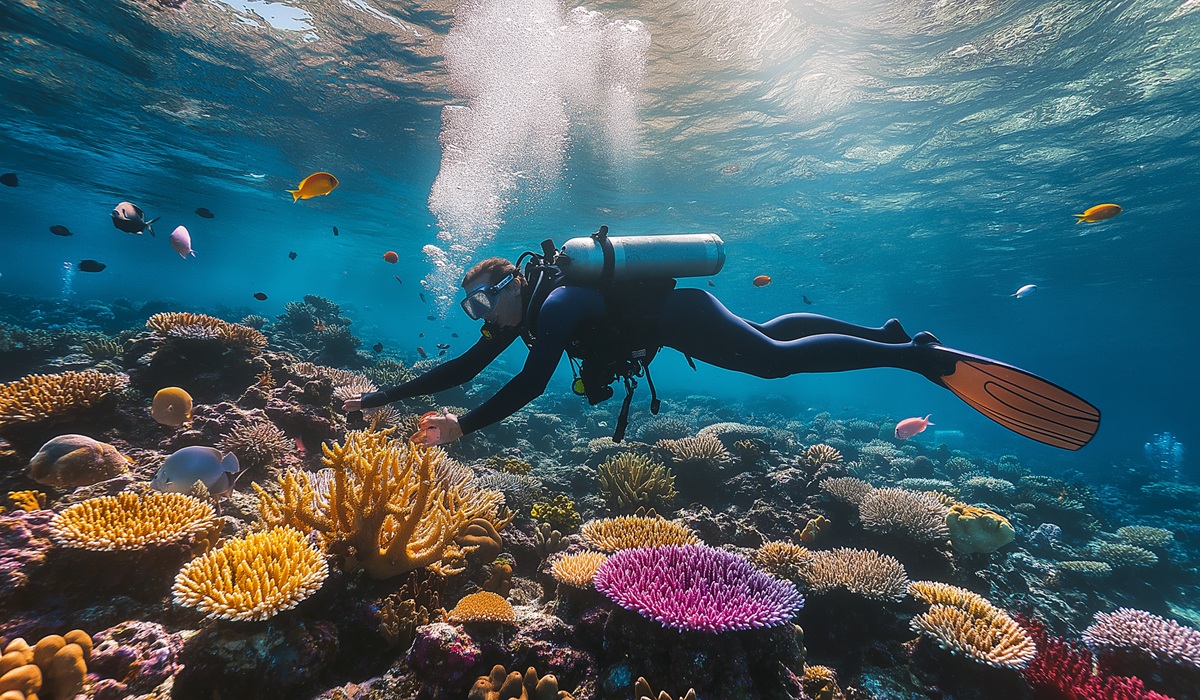
The first signs appeared gradually. Coral reefs that once glowed with color began to bleach, turning ghostly white as warming waters disrupted the fragile partnership between coral animals and the microscopic algae that sustain them. Entire reef systems, some thousands of years old, started dying within a matter of months. What had been vibrant underwater cities filled with fish, crustaceans, and marine plants became silent skeletons.
The loss of coral reefs is more than a visual tragedy. These ecosystems support nearly a quarter of all marine species, acting as nurseries for countless fish populations. When reefs decline, the ripple effects move outward through the entire food web. Fishing communities that depend on those ecosystems often feel the impact long before the broader public notices.
Warming water is only one part of the story. The ocean absorbs an enormous share of the carbon dioxide released into the atmosphere by human activity. While this process slows the pace of climate change on land, it carries a hidden cost. As carbon dioxide dissolves in seawater, it creates chemical reactions that increase ocean acidity. This change makes it harder for shell-forming organisms such as oysters, clams, and certain plankton to build their protective structures. Over time, entire marine food chains may be affected.
There is also the growing problem of oxygen depletion. As ocean temperatures rise, warmer water holds less dissolved oxygen. At the same time, pollution flowing from rivers feeds massive algae blooms that consume oxygen when they decay. The result is the expansion of “dead zones,” regions where oxygen levels drop so low that many forms of marine life cannot survive. Fish and other creatures flee these zones when possible, leaving large areas of the ocean eerily empty.
Perhaps the most visible symbol of the ocean crisis is plastic pollution. Tiny fragments of plastic now drift through nearly every marine environment on Earth, from shallow coastal waters to the deepest trenches. These particles enter the food chain when small organisms mistake them for food. As predators eat those organisms, the plastics move upward through the ecosystem, eventually reaching species consumed by humans.
Yet despite the severity of these problems, the ocean still retains remarkable resilience. Marine ecosystems have recovered from past disturbances when given the chance. Fisheries that were once on the brink of collapse have rebounded under careful management. Marine protected areas have shown that ecosystems can regenerate when destructive activities are limited.
The challenge lies in the scale and speed of current pressures. Climate change, pollution, overfishing, and habitat destruction are occurring simultaneously, creating stresses that interact with one another in complex ways. Solutions must therefore address multiple threats at once rather than treating each issue in isolation.
Around the world, scientists, conservationists, and coastal communities are experimenting with new approaches to ocean stewardship. Some regions are expanding marine reserves where fishing and industrial activities are restricted. Others are restoring mangrove forests and seagrass meadows that stabilize coastlines while absorbing carbon. Advances in monitoring technology are also providing better data on ocean conditions, allowing policymakers to respond more quickly to emerging threats.
The ocean has long been treated as an inexhaustible frontier, a vast blue expanse capable of absorbing humanity’s waste while providing limitless resources. That illusion is gradually dissolving as evidence accumulates that the sea, like any ecosystem, has limits.
Recognizing those limits does not mean abandoning the ocean’s economic importance. Fisheries, shipping, tourism, and energy production will remain vital parts of the global economy. The challenge is learning how to balance those activities with the long-term health of marine ecosystems.
If the past century was defined by the exploitation of the ocean’s resources, the next may be defined by whether humanity learns to protect them. The outcome will determine not only the future of marine life but the stability of food systems and coastal communities around the world.
About The Author