For years, the United States president has framed Latin America through a single, blunt lens: drugs. Drugs justify sanctions. Drugs justify threats. Drugs justify extraordinary action. Drugs are the stated reason Venezuela is treated as an international menace rather than a sovereign state. Drugs, we are told, are the line that cannot be crossed.
And yet, that framing collapses the moment you examine one decision that cannot be explained away: the pardon of the former president of Honduras. Convicted of
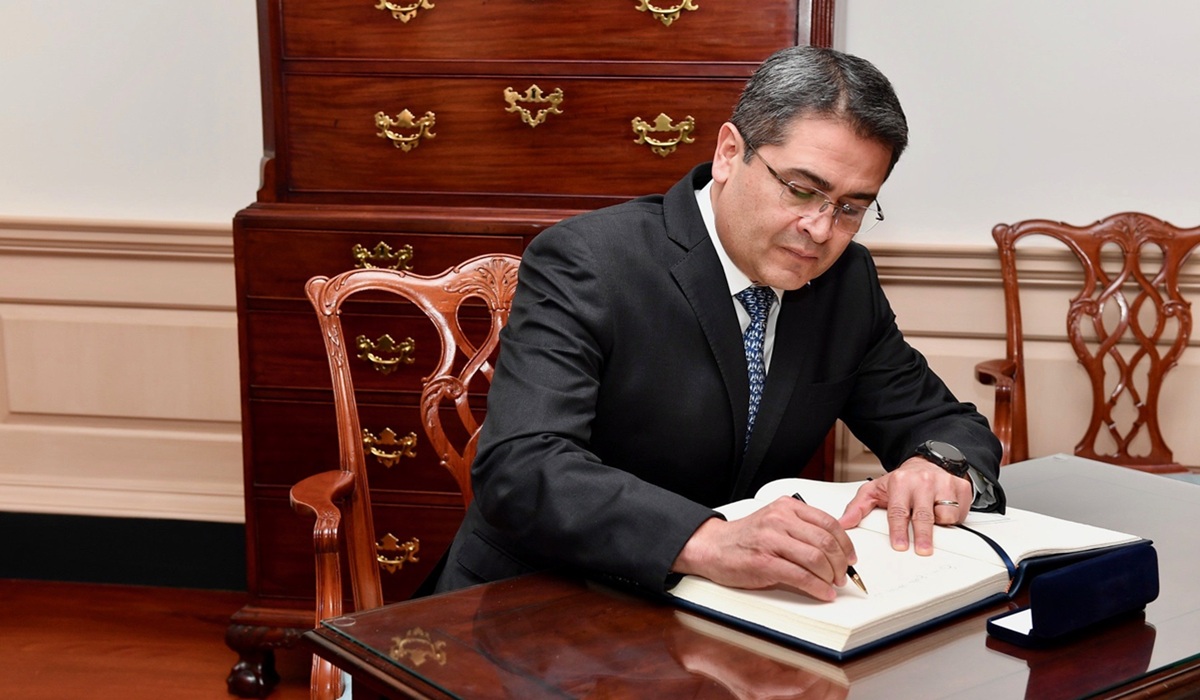
Juan Orlando Hernández was not accused in theory. He was not named in a whisper campaign. He was extradited, tried in a U.S. federal court, convicted by a jury, and sentenced to decades in prison for drug trafficking and weapons-related crimes. Prosecutors argued that under his leadership, Honduras became a major corridor for cocaine moving north, protected by state power. This was not a diplomatic dispute. It was a criminal case brought by the United States itself.
Then, suddenly, it was erased.
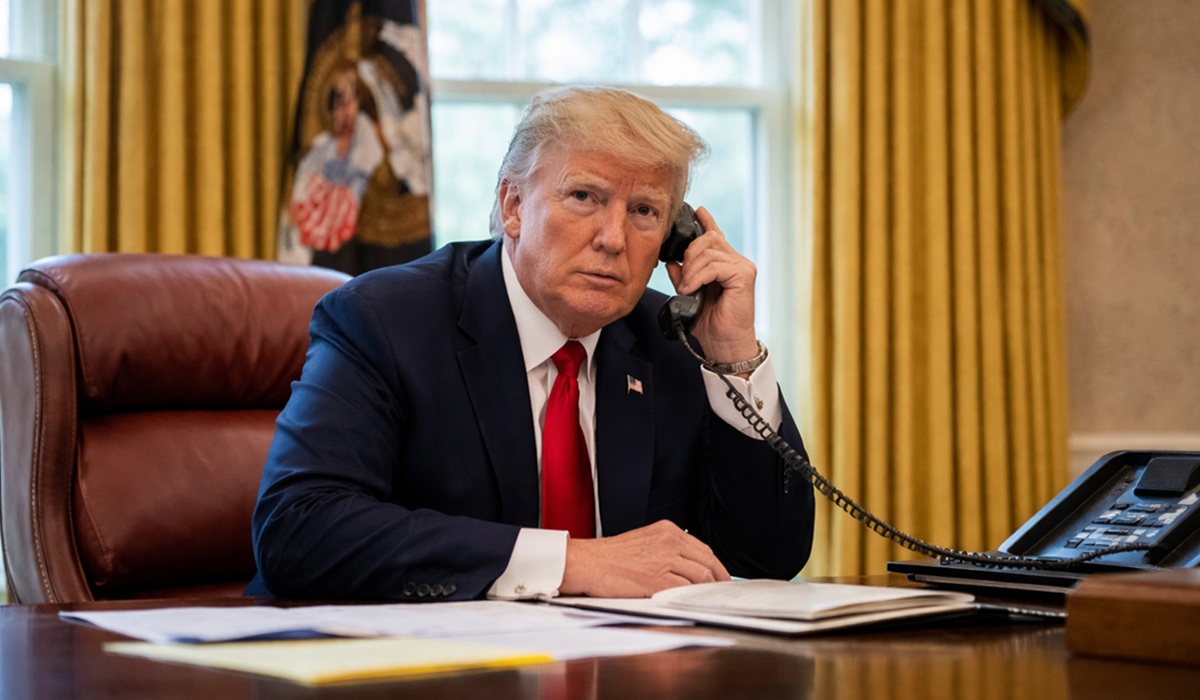
The president pardoned Hernández and ordered his release. No new evidence was presented publicly. No judicial error was identified. No retrial occurred. The administration claimed the case was unfair, political, or exaggerated—but offered no documented proof to support that claim. A conviction that once symbolized America’s supposed seriousness about narcotics trafficking was simply wiped away by executive pen.
That decision forces a question the White House has not answered: if this is truly about drugs, why pardon a man convicted of helping move them?
This is not a rhetorical trap. It is a factual contradiction.
If drugs were the real priority, Honduras would not be treated as a footnote. Mexico and Colombia would dominate every speech, every sanction list, every threat of escalation. Mexico remains the largest transit and production hub for synthetic drugs flowing into the United States. Colombia remains a major source of cocaine. Neither country has faced the type of existential pressure directed at Venezuela. Neither has been framed as an irredeemable criminal state. The line is not drawn at drugs. It is drawn elsewhere.
That reality is further exposed by the timing.
The pardon came as Honduras was moving through a volatile political moment. Elections were contested. Power balances were shifting. The United States was openly signaling preferences about who should govern. In that context, restoring the freedom of a former president with deep political, security, and economic knowledge is not a neutral act. It changes leverage. It reintroduces a player who knows how power actually moved through the region.
This is where the harder questions begin.
Why now? What does Hernández know? What does he have? What conversations took place that the public has not been told about?
It is not speculation to ask whether a former head of state—convicted of operating at the intersection of government, security forces, and organized crime—possesses information of value. That is a basic reality of power. Leaders at that level do not operate in isolation. They know who cooperated, who looked away, who facilitated, and who benefited. When such a person is pardoned, the assumption that nothing was exchanged is not credibility—it is naïveté.
Equally important is what the pardon signals going forward.
Honduras itself has made clear that a U.S. pardon does not absolve Hernández under Honduran law. Domestic legal processes continue. But politics does not stop at courtrooms. A freed Hernández does not need to return to office to matter. Influence does not require a title. It requires access, networks, and the ability to shape outcomes quietly. Those assets do not disappear when a prison door opens.
That raises another uncomfortable question: is the United States positioning Hernández, directly or indirectly, as a stabilizing or useful figure in Honduras again? Not necessarily as president—but as a broker, an intermediary, or a guarantor of certain outcomes aligned with U.S. interests. There is no public proof of such a plan. But the conditions that would make it possible now exist because of the pardon.
The broader contradiction cannot be ignored.
The United States is the largest consumer market for illegal drugs in the world. Demand does not originate in Caracas, Tegucigalpa, or Bogotá. It originates domestically. Any serious drug policy would begin there. Instead, drug rhetoric is consistently externalized, weaponized, and selectively enforced. Enemies are criminalized. Allies are forgiven. Convictions are treated as sacred until they become inconvenient.
That is why the “war on drugs” explanation no longer holds.
This is not about stopping narcotics. It is about power, alignment, and control. It is about who is useful and who is expendable. It is about which leaders can be removed, and which ones can be rehabilitated, depending on strategic needs at a given moment.
The pardon of Juan Orlando Hernández exposes that reality more clearly than any speech ever could.
If the administration wants the public to believe this is a principled campaign—about law, morality, and safety—it must explain why a man convicted under its own justice system was suddenly absolved. It must explain what national interest was served. And it must explain why drugs justify unlimited pressure on some countries while erasing accountability for others.
Until those answers are given, the conclusion is unavoidable: this was not a drug decision. It was a political one.
About The Author