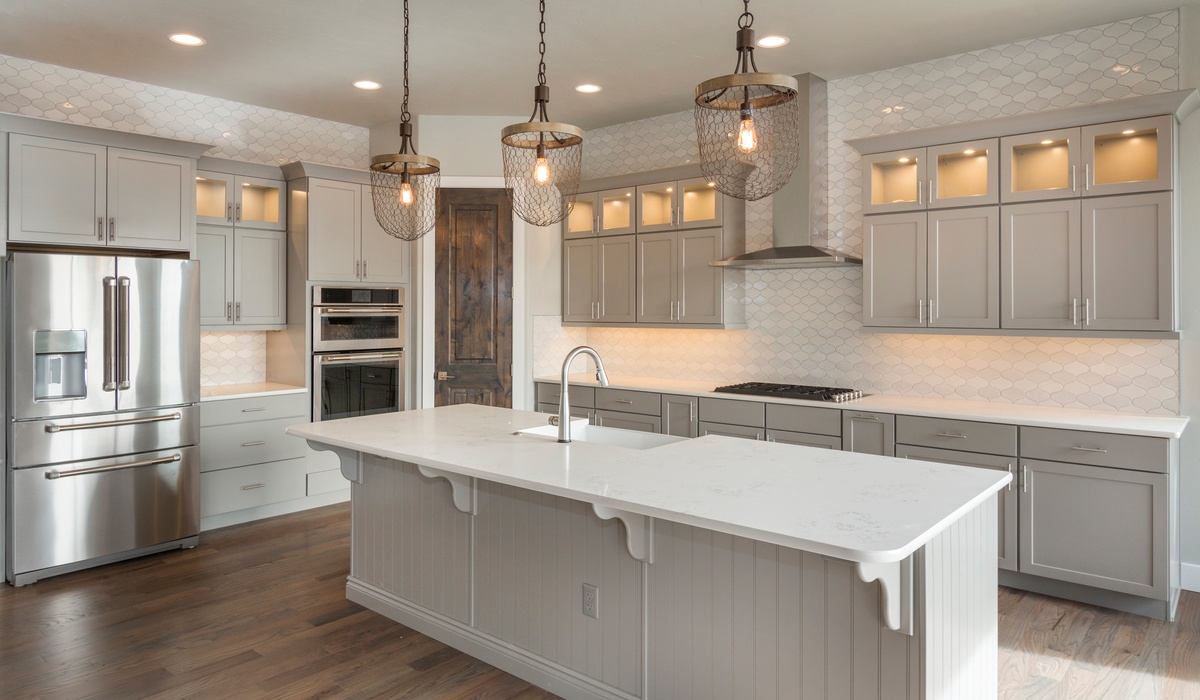
The farmhouse kitchen has become one of the most beloved interior design styles of the last decade. It evokes a sense of nostalgia, warmth, and simplicity that modern, high-gloss kitchens can lack. Rather than focusing on slick surfaces and minimalism, the farmhouse aesthetic embraces character, utility, and comfort. If you’re looking to remake your kitchen into this popular style, we’ll explain the key design elements every farmhouse kitchen needs.
Shiplap paneling is one of the most recognizable features of this style. Shiplap adds texture and visual interest to walls without overwhelming the space. You can install it horizontally to make a small kitchen feel wider or vertically to draw the eye upward toward high ceilings. Painting the boards white brightens the room and creates a clean, airy backdrop for other rustic elements, while leaving them natural offers a more rugged, authentic appeal.
No farmhouse kitchen is complete without an apron-front sink. Also known as a farmhouse sink, these sinks typically extend slightly beyond the cabinetry, breaking up the lines of the lower counters. While white fireclay or porcelain remain the classic choices, copper and stainless steel options are also available for those seeking a slightly different texture. A key thing to look for when buying a farmhouse sink is the depth of the basin and its ergonomics, so you don’t strain your posture when washing dishes or canning vegetables in your new, large sink.
Another core design element every farmhouse kitchen needs is open shelving. This design choice forces you to curate your kitchenware, displaying beautiful ceramic plates, glass jars, and vintage mugs rather than hiding them behind cabinet doors. Floating wood with iron brackets creates an open, airy feel, preventing the kitchen from looking heavy or closed off. This element also encourages practicality; your most-used items remain within easy reach, reinforcing the utilitarian spirit of the farmhouse style.
To ground the space, you need natural wood elements. The warmth of wood contrasts beautifully with the white walls and cabinetry that many farmhouse kitchens employ in their design. You might introduce this with butcher-block countertops, exposed ceiling beams, or wide-plank hardwood flooring. Even smaller touches, such as a large wooden dining table or antique cutting boards leaned against the backsplash, add necessary organic texture.
Finally, lighting plays a crucial role in setting the mood. Farmhouse lighting typically features industrial or vintage-inspired designs. Pendant lights with metal shades in black, bronze, or galvanized steel look exceptional when hung above an island. Glass-globe fixtures or lanterns with Edison bulbs also contribute to the cozy, old-world atmosphere.
Creating a farmhouse kitchen is about more than just following a trend; it is about building a space that feels lived-in and welcoming. By incorporating shiplap, a deep apron-front sink, open shelving, natural wood accents, and vintage-style lighting, you create a room that invites people to gather, cook, and stay a while. These elements work together to create a kitchen that feels both stylish and timelessly comfortable.
About The Author