The Dangerous Romance of Empire: When Power Starts Speaking in the Language of Conquest
- Ingrid Jones
- U.S.A
- February 18, 2026
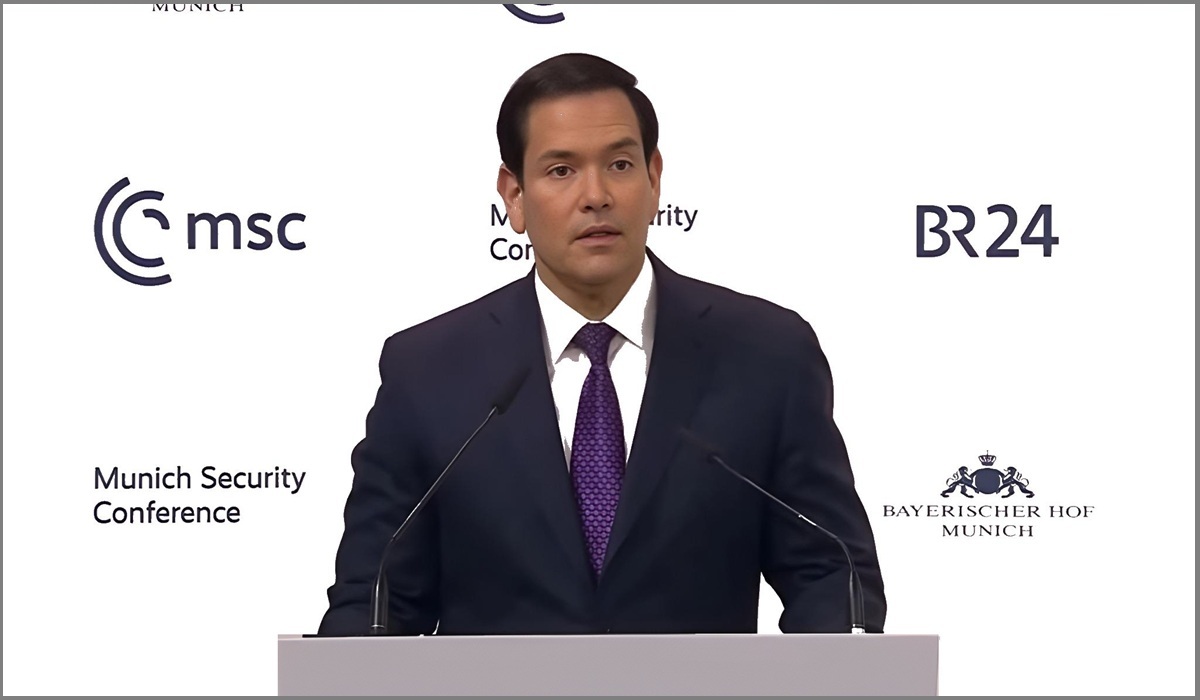
An uneasy reflection on Marco Rubio’s speech and the troubling message it sends far beyond the room it was delivered in
There was a moment in Marco Rubio’s recent address where the tone shifted from diplomacy into something that felt far more ideological, almost cinematic in its attempt to frame history as a noble march of destiny. The speech began as a familiar retelling of shared alliances and Western triumphs, but as it moved deeper into its core themes, it started to feel less like a conversation between partners and more like a call to reclaim something imagined to have been lost. The language was soaked in nostalgia, reverence, and a sense of civilizational urgency that raised an uncomfortable question about what exactly was being defended and why the past was being spoken about as something to be restored.
Rubio spoke of a civilization stretching from Athens to Rome to America, a continuous line of culture, faith, and strength presented as both inheritance and obligation. He framed expansion as courage, resilience, and purpose, describing centuries of movement across oceans as the foundation of a shared identity. It was a confident telling of history, but it was also selective. In that telling, the ships that crossed oceans carried faith, knowledge, and ambition, yet there was little acknowledgment of what they also carried with them for the people who were already living on those lands. The cost of empire was barely touched, as if it were an unfortunate footnote rather than a defining reality for much of the world.
As Rubio spoke about the need for the West to stop feeling shame and to embrace its heritage, the message landed with a weight that felt far heavier than the applause that followed. To some, it may have sounded like a call for confidence. To others, especially in regions shaped by colonial rule, it sounded like an attempt to soften the memory of extraction, occupation, and long-term imbalance. When a global leader talks about expansion in glowing terms without fully acknowledging its consequences, it begins to feel like history is being polished rather than understood.
There was an intensity in Rubio’s delivery that suggested more than a reflection on the past. It felt like positioning, as though the speech was aimed not only at the room in front of him but at a much larger audience watching from afar. The repeated emphasis on decline, restoration, and the need to reclaim strength had the rhythm of a political campaign message, one that hinted at future ambitions and a desire to stand as a dominant voice within his own country. That tone carried an edge that made the speech feel less like diplomacy and more like a declaration.
Part of what made the address so unsettling was the way it framed migration, sovereignty, and cultural identity as part of a larger civilizational struggle. Rubio spoke about the West needing to control its borders and protect its continuity, presenting these concerns as matters of survival. Yet the context behind those migrations, the long trail of economic disruption and resource extraction that helped shape the modern world, was largely absent from the narrative. If colonialism had not reshaped so many economies and drained so many regions of wealth over centuries, the movement of people across continents might look very different today. When those realities are left out, the story becomes incomplete, and the solutions being proposed begin to feel disconnected from the causes.
What makes moments like this complicated is the reality that when Rubio speaks, he does so as the face of American diplomacy. His words travel far beyond the hall in which they were delivered, shaping how the United States is seen in countries that already carry deep historical memories. It becomes difficult for people abroad to separate the views of one official from the beliefs of an entire population, even though the American public is far more diverse and nuanced in its thinking than any single speech could ever represent. When rhetoric leans heavily into themes of civilizational pride and restoration, it risks creating the impression that the country as a whole is embracing that perspective.
There is a difference between honoring history and romanticizing it, and that difference becomes critical when speaking on a global stage. Rubio’s emphasis on heritage and identity may have been meant to inspire confidence among allies, but it also brushed up against unresolved histories that still shape the present. Colonial rule did not end cleanly, and its effects did not disappear when flags were lowered. Entire regions were left with economies structured around extraction and dependency, and those realities continue to influence migration, instability, and inequality in ways that are still unfolding today.
The speech also carried a sense of confrontation, as if the world were entering a period where cooperation would take a back seat to competition between civilizations. Rubio spoke about reclaiming supply chains, restoring industry, and strengthening alliances rooted in shared cultural identity. While those goals may resonate politically, the tone suggested a world being divided into camps, defined by who belongs to which historical narrative. That kind of framing has a way of deepening divisions rather than healing them, especially when it comes from someone in a position of such visible authority.
There is also the reality that many Americans listening to that speech would not recognize themselves in its tone. The United States is made up of people from every background imaginable, many of whom do not see the world through the lens of empire or civilizational struggle. They are not looking to reclaim dominance or relive the past. They are focused on stability, opportunity, and the simple desire to live in peace. Yet when Rubio speaks with such certainty about identity and destiny, it can sound as though he is speaking for all of them, which places a burden on those who do not share that vision.
The deeper concern is not about one speech alone, but about the direction that kind of rhetoric suggests. When leaders begin to frame the world as a place where civilizations must defend themselves from decline, it can shift the conversation away from cooperation and toward confrontation. Words that romanticize expansion and minimize its consequences can reopen old wounds, especially in places where those consequences are still part of daily life. It becomes harder for people to hear the message as a call for unity when it feels like a celebration of a past that brought suffering to their ancestors.
Rubio may have intended to inspire confidence and pride, but the effect of those words depends on who is listening and what history they carry with them. For some, the speech may have sounded like strength. For others, it may have sounded like dismissal. That gap in perception matters, because diplomacy depends as much on how words are received as on how they are delivered.
In a world already strained by conflict and mistrust, the tone set by leaders carries enormous weight. When that tone leans heavily into nostalgia for eras of expansion and dominance, it risks reinforcing the idea that history is something to be reclaimed rather than something to be learned from. True strength is not found in reliving the past or framing it as a model to return to. It is found in acknowledging its full complexity, including the parts that are uncomfortable, and using those lessons to build something more stable and more humane.
What makes this moment feel so tense is not just what Rubio said, but how easily words like those can shape the way nations see one another. The more leaders speak in terms of civilizational struggle, the more people begin to believe that cooperation is weakness and that dominance is the only path forward. That kind of thinking has a long history, and it has rarely led to peace.
The world does not need a return to the language of empire, no matter how carefully it is dressed up as pride or heritage. It needs leaders who understand that strength can exist alongside humility, and that influence does not require erasing the pain of the past. When those in power forget that balance, the consequences reach far beyond a single speech, because words spoken from the top have a way of shaping the direction everyone else begins to follow.
About The Author