The Board of Peace and the Future of Gaza: Power, Control, and the People Left Outside
- TDS News
- U.S.A
- January 21, 2026
By: Donovan Martin Sr, Editor in Chief
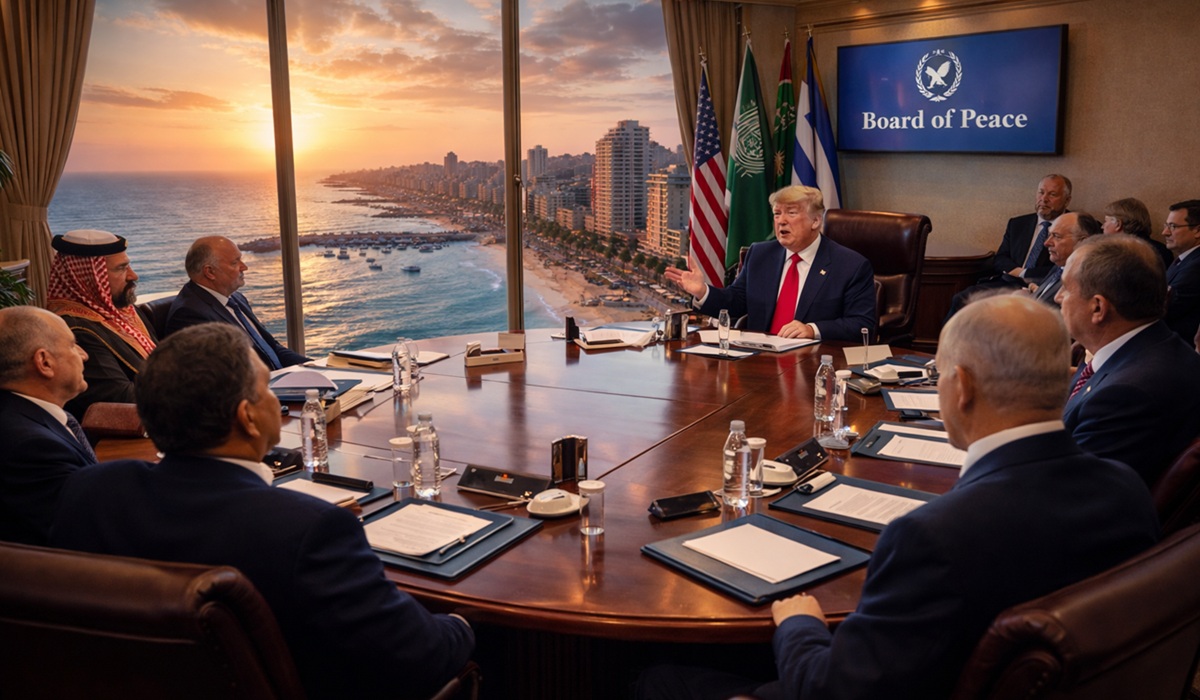
The Board of Peace is being positioned as a body that would shape the future of Gaza once the fighting ends. Not merely to advise, but to govern outcomes, from reconstruction priorities to economic development, land use, and access to natural and strategic resources along the Mediterranean coast. In effect, it is being framed as a mechanism that would decide who rebuilds Gaza, who profits from it, and who gets to live there afterward. That scope makes its structure, authority, and accountability impossible to ignore.
At the center of the initiative is a reported one billion dollar threshold tied to permanent participation. This payment is not described as aid, charity, or relief. The Board of Peace has never been framed as a donor conference or humanitarian fund. It is presented as a governing board. That distinction is critical. When money is required to secure permanence within a body that claims authority over territory, infrastructure, and redevelopment, the payment is not a donation. It is a price of entry into power.
What remains unclear, deliberately so, is where that money goes and who controls it. There is no publicly available charter explaining financial custody, no independent trustees named, no audit regime disclosed, and no legal framework defining how funds are protected or transferred if political leadership changes. The initiative does not operate under United Nations authority. There is no Security Council mandate, no General Assembly resolution, and no UN administered oversight. In modern international diplomacy, that absence is extraordinary.
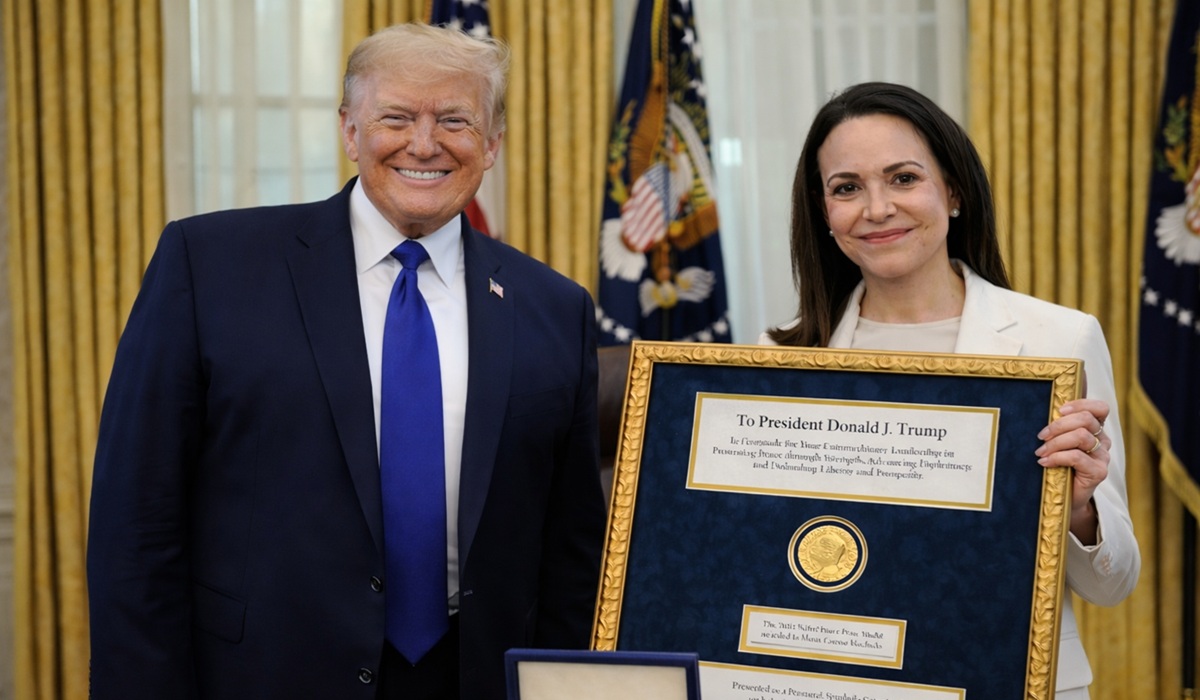
Authority within the Board of Peace appears highly centralized around Donald Trump. Membership invitations, permanence rules, and structural direction flow from the top, without the institutional diffusion typical of legitimate international bodies. When billions of dollars are involved and the governing rules are opaque, ambiguity is not a flaw. It is leverage.
Equally unresolved is what the billion dollars actually secures. Does it grant decision making power over land use. Priority access to reconstruction contracts. Influence over ports, energy infrastructure, or offshore resources. Gaza is not just a humanitarian concern. It sits on valuable coastal territory with long term strategic and economic significance. Any body that claims to rebuild Gaza is, by definition, deciding who controls that value. Yet the Board of Peace has offered no clarity on how those decisions would be made or who would benefit from them.
This is where the absence of Palestinian representation becomes indefensible. Palestinians are not present on the Board of Peace, despite Gaza being the subject of its authority. A governing structure that determines the future of a place while excluding its people is not peacebuilding. It is administration imposed from outside. The implications are stark. Imagine a rebuilt Gaza filled with luxury resorts, investment zones, and secure coastal developments while Palestinians are locked out, displaced, or reduced to a labor force without political agency. That is not a hypothetical concern. It is the logical outcome of a process that prioritizes capital and control over representation.
Public rhetoric surrounding Gaza’s future only reinforces this fear. The language increasingly centers on redevelopment, opportunity, and transformation, while questions of sovereignty, return, and self determination remain vague or absent. When visions of high end development are more concrete than guarantees of political rights, priorities are being revealed. Rebuilding without the people is not rebuilding. It is replacement.
The concern deepens when this initiative is viewed alongside Trump’s past handling of geopolitically sensitive revenue streams, including arrangements involving Venezuelan oil. In those cases, control mechanisms were unconventional, oversight was limited, and authority was tightly centralized. Whether the Board of Peace mirrors those structures exactly is less important than the fact that no credible alternative model has been presented. The pattern, large sums, personalized authority, minimal transparency, keeps repeating.
What happens to the money when Trump leaves office. Who controls it then. Under what legal jurisdiction are disputes resolved. What prevents the Board from becoming a permanent gatekeeper over Gaza’s economy, land, and resources. These are not hostile questions. They are the minimum requirements of legitimacy for any body claiming to rule outcomes of this magnitude.
If the Board of Peace were genuinely about peace, the safeguards would already exist. UN oversight would be explicit. Financial governance would be independent. Palestinian representation would be non negotiable. The absence of these elements is not an oversight. It is the architecture.
Strip away the rhetoric, and what remains is a structure that concentrates power, monetizes access, and excludes those most affected. A peace that locks people out of their own future is not peace at all. It is control, rebranded, well financed, and dangerously normalized under the language of diplomacy.
AI Image Generation
About The Author