Sudan’s War Is No Longer Just Displacement—It’s the Collapse of Survival
- Ingrid Jones
- Africa
- Trending News
- April 10, 2026
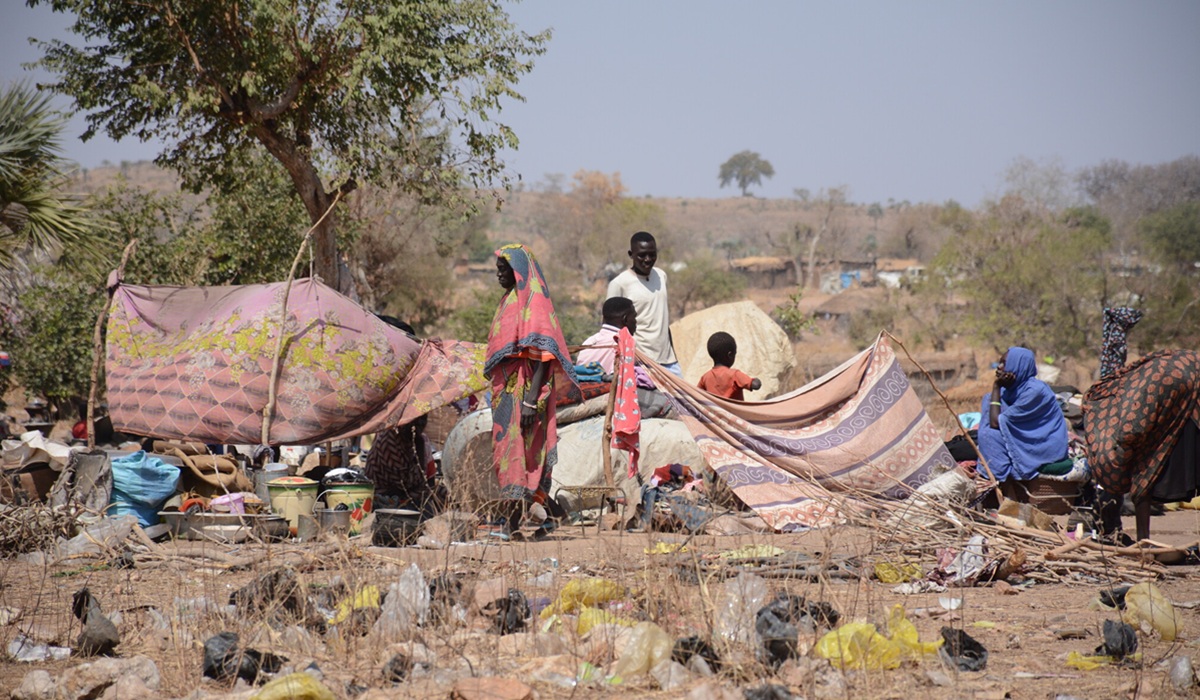
Three years into the war in Sudan, what is unfolding across the region has moved far beyond a displacement crisis and into something far more dangerous. This is now a systemic collapse of survival itself, where millions are no longer coping with hardship but slowly losing the ability to endure it altogether. Across Sudan, South Sudan, and Chad, families who once relied on resilience and community support are now reaching a breaking point, and the consequences are becoming impossible to ignore.
The scale of the crisis remains staggering, but the real story lies in what those numbers represent. More than nine million people are internally displaced, while millions more have crossed into neighboring countries, often arriving with nothing. Nearly 29 million people are facing acute hunger, with hundreds of thousands already in catastrophic conditions. Yet this is not just about hunger in isolation. It is about the steady erosion of everything that once allowed people to survive, from livelihoods to shelter to basic dignity.
What makes this crisis particularly severe is the pattern of repeated displacement. Families are not fleeing once and rebuilding. Many have been uprooted multiple times, each move stripping away what little they had left. Homes are gone, jobs have disappeared, and personal belongings have been reduced to whatever can be carried. With each displacement, their ability to recover weakens, and the margin for survival becomes thinner. Over time, this creates not just poverty, but exhaustion at a level that pushes people beyond their limits.
Food insecurity has reached a point where it is no longer a temporary emergency measure but a constant condition. In many areas, households are routinely skipping meals, and in some places, this has become nearly universal. This is not about rationing for a short period. It is about families living day to day without knowing where their next meal will come from, while having no realistic means of improving their situation.
At the same time, income opportunities have almost entirely disappeared. Across the region, the majority of displaced families report having no income at all, and in places like Chad, women-led households are overwhelmingly without work. Without income, even the most basic necessities become inaccessible, including water. What was once shared within communities is now increasingly scarce, and the informal systems that helped people survive are beginning to break down under pressure.
For years, those informal systems were the backbone of survival. Families supported one another, shared food, and opened their homes despite having very little themselves. That level of solidarity prevented an even greater catastrophe, but it is now reaching its limits. People who once helped others are now struggling to help themselves, and the ability to continue sharing is fading. When that kind of community support collapses, the consequences are far more severe than any single shortage of aid.
The impact is being felt most acutely by women and children. Access to sanitation remains deeply unequal, forcing many women to travel long distances for basic needs, often exposing them to harassment and violence. Children, meanwhile, are increasingly drawn into survival strategies that should never be expected of them. Families are sending them to work, education is disrupted or lost entirely, and the long-term consequences are already taking shape.
Even in countries like Egypt and Libya, where some refugees are able to find work, the situation remains fragile. Most employment is informal, unstable, and offers no long-term security. Documentation barriers and limited access to services mean that even those earning income are still living on the edge of survival.
Host countries themselves are under immense strain. Nations like Chad and South Sudan are absorbing large numbers of refugees while facing their own economic and humanitarian challenges. The pressure is growing, and the capacity to continue supporting displaced populations is becoming increasingly limited.
What is most concerning now is the direction this crisis is heading. This is no longer a situation where recovery can simply begin once the conflict ends. The longer this continues, the more deeply survival systems are damaged, and the harder it becomes to rebuild. Livelihoods are not just paused, they are erased, and social structures are not just strained, they are breaking.
At its core, this crisis has entered a new phase. It is no longer defined by displacement alone, but by the loss of resilience itself. When people reach the point where they can no longer cope, the consequences are not just humanitarian, they are generational.
That is the reality now facing millions across the region.
About The Author