Online dating and social media have changed how many people, especially those under 35, view love. Not long ago, the prevailing narrative, especially in Hollywood movies, depicted love as the result of a chance encounter. Another comforting narrative: “love is blind”; love knows no social boundaries—a princess can fall for a peasant. These narratives, along with others related to finding love, are now challenged by online dating and social media, which, when used to find “the one,” make your search criteria public. You’re not bumping into love; you’re searching for it. That said, having a “type” or “preference” existed long before the Internet.
Social media and online dating have many drawbacks, most notably the erosion of mystery and patience, as instant messaging and constant availability replace the anticipation and slow build of traditional courtship. Moreover, social media’s superficiality encourages quick judgments, reducing complex individuals to mere profiles and statistics, stripping them of their nuances. Additionally, a partner’s social circle and past relationships are readily accessible, which can lead to doubt and constant monitoring.
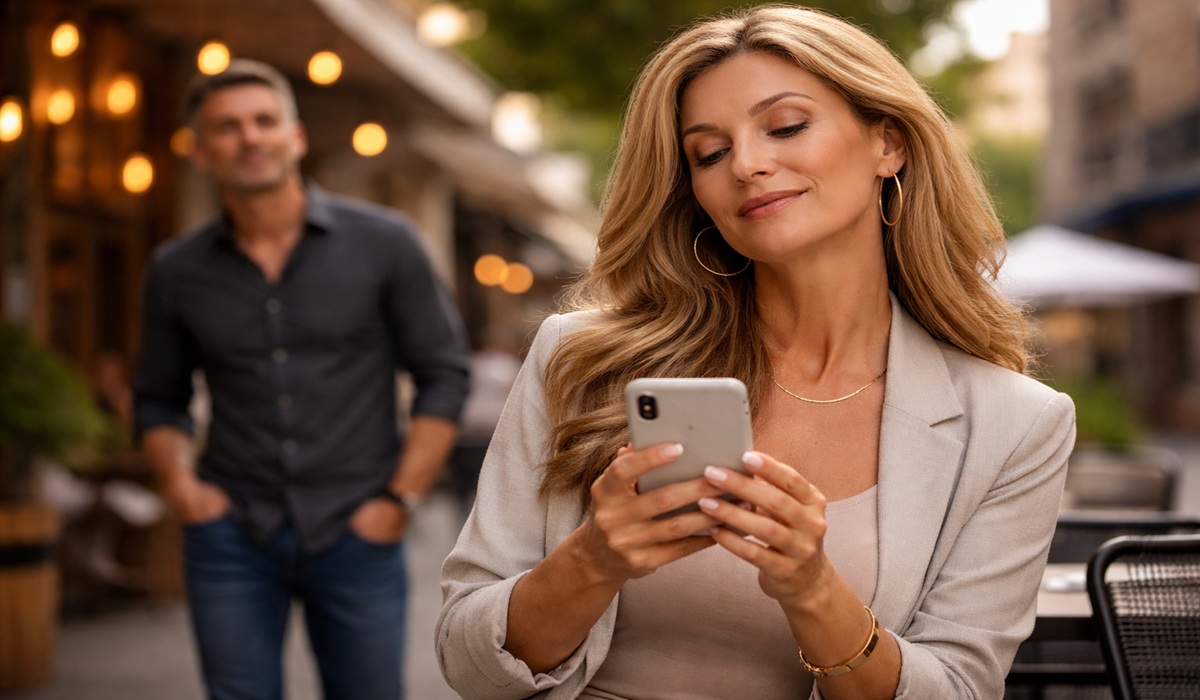
Finding romance used to require leaving your house, looking your best, having social skills, flirting, and showing genuine interest in someone. Today, with large swaths of the population sequestering themselves behind their screens, social media has virtually wiped out dating. Nowadays, everything on the digital battlefield of love revolves around comparison, which is cynical, fast, and empty.
Nowadays, young men are not only struggling to date; they’re even afraid to try. Approaching a woman, once a rite of passage, is now seen as a professional risk.
- Fear has replaced confidence.
- Curiosity is often met with hostility.
- Screens have replaced real-world interactions.
Besides promoting superficial interactions, social media has shifted the concept of romance toward instant gratification, exemplified by swiping left on Tinder to pass—judging someone solely on their looks and ignoring their character, skills, or values. Building authentic connections has become much harder, let alone developing romantic relationships, which are also difficult to sustain due to digital distractions, such as constant exposure to alternatives.
Speaking of Tinder, just days after the World Health Organization (WHO) declared COVID a global pandemic on March 11, 2020, the app recorded a record 3.2 billion swipes in a single day on March 29, 2020. Similar increases were observed across other dating platforms. This rise likely stems from individuals’ continued pursuit of love during lockdown periods. Interestingly, even after the pandemic, the volume of activity on dating apps has remained high, owing to the perception that swiping and messaging are much less cognitively taxing than in-person meetings.
During COVID lockdowns, social media became an essential communication tool. Undeniably, the pandemic significantly increased reliance on social media. After the lockdowns were lifted, many people chose to remain socially distant, which hindered their development of social skills, essential for dating, that had become rusty. Nowadays, many individuals, especially those who experienced COVID lockdowns during their teenage years, find small talk to be anxiety-provoking. Many haven’t learned how to read body language and pick up on social cues, which are essential social skills, along with detecting chemistry, deciphering tones, and flirting, to build momentum in potential romantic relationships.
Data shows that 59% of men aged 18 to 25 didn’t approach a woman in the past year. This isn’t merely social awkwardness stemming from hiding behind screens; it’s learned fear exacerbated by social media. Social media bombards men with mixed messages, such as:
- Saying “Hello” makes you seem creepy.
- Compliments are considered microaggressions.
- If she’s not interested, you’ll be seen as a threat.
As a result, many men have ceased engaging not because they lack a desire for connection, but because they fear potential repercussions, which has led to increased loneliness among men. Meanwhile, society and self-proclaimed “influencers” such as Joe Rogan, Andrew Tate, Jason Lamar, and Jordan Peterson promote the “man up” mentality, emphasizing machismo, emotional restraint, and traditional male dominance, creating a contradictory message where men are told to “man up” yet are also labelled as toxic for any perceived misstep.
Pointing out the mixed messaging men are receiving isn’t to excuse bad or disrespectful behaviour; it’s to understand why many men are choosing to stop dating altogether. The risk of “approaching” extends beyond mere rejection; it also encompasses fears of public shaming online, job loss, and reputational damage.
Social media and online dating haven’t only created a dating crisis; they’ve also contributed to a broader social crisis that needs to be addressed by returning to:
- Normalizing real-world interactions rather than emailing, texting, and direct messaging (smartphones can make and accept calls).
- Teaching men and women to communicate effectively and respectfully.
- Stop treating basic human curiosity as if it’s a crime.
What shouldn’t be ignored is that men and women are experiencing dysphoric singlehood, the feeling of being unwanted, disconnected, and judged by their appearance. The detrimental effects of social media and online dating on dating and finding love affect both genders. If this digital path continues, not only will romance die, but there’ll be generations that never learn how to begin pursuing love.
About The Author