Selective Service Letters Stir Unease as War Expands and Questions About a Draft Return to the Surface
- TDS News
- U.S.A
- March 27, 2026
By: Donovan Martin Sr, Editor In Chief
Across the United States, a routine piece of government mail is beginning to land very differently than it has for decades. Selective Service letters, long treated as a quiet administrative step tied to turning eighteen, are now arriving in the middle of a global environment that feels increasingly unstable, and that shift in context is changing how they are being read. What once felt procedural is now being interpreted by many as something closer to a signal, not of what is happening, but of what could.
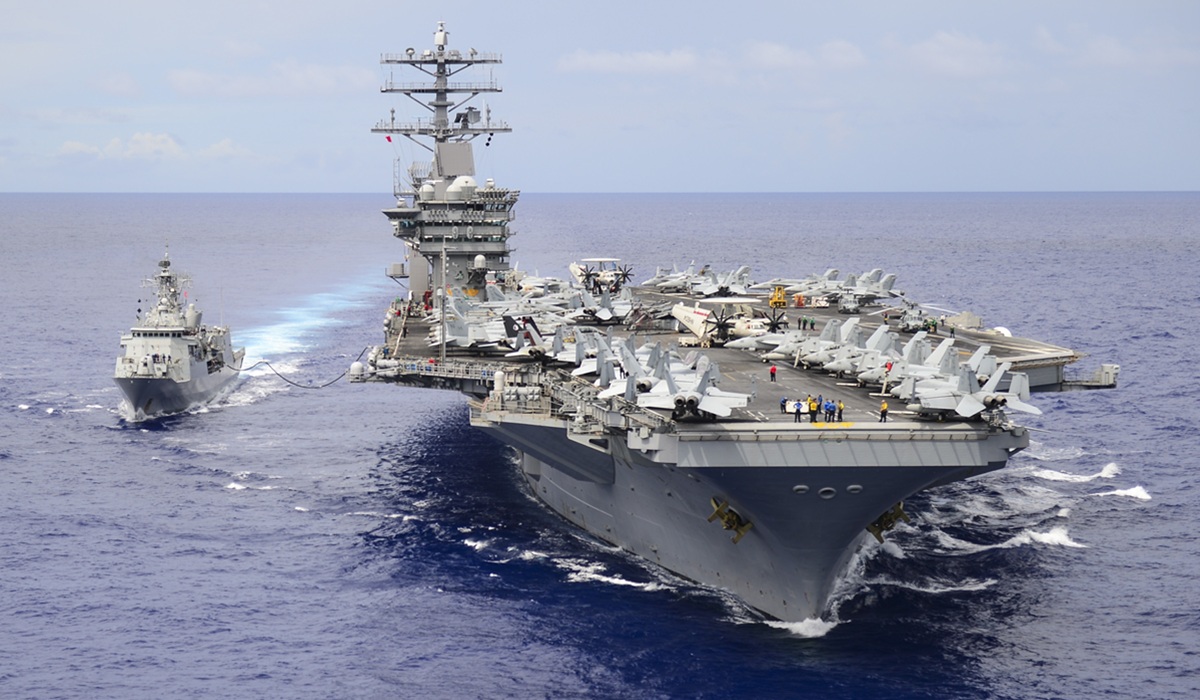
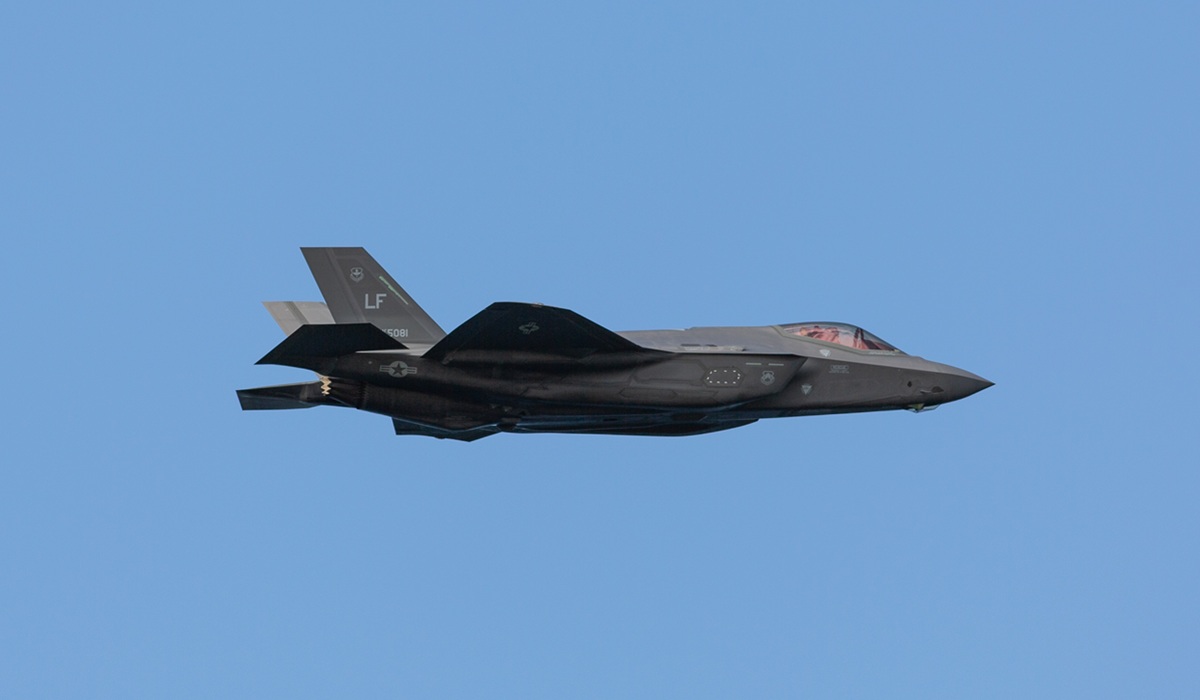
The timing is impossible to ignore. The United States is no longer operating in a single, contained conflict, and the war involving Iran is unfolding alongside broader military commitments that stretch across multiple regions. Operations, deployments, and strategic positioning are no longer confined to one theatre, and that reality carries weight, especially for a generation that has never lived through conscription. When global tensions rise and military posture expands at the same time that Selective Service notices are showing up in mailboxes, the connection is being made whether officials intend it or not.
The last time Americans were drafted into military service was in 1973, during the closing phase of the Vietnam War, and for decades that moment has been treated as a closed chapter. The shift to an all-volunteer force reshaped how the country viewed military service, creating a distance between civilian life and the realities of war that many have grown accustomed to. But the system that made that draft possible was never removed. It was preserved, maintained, and kept ready for a scenario that policymakers hoped would never return.
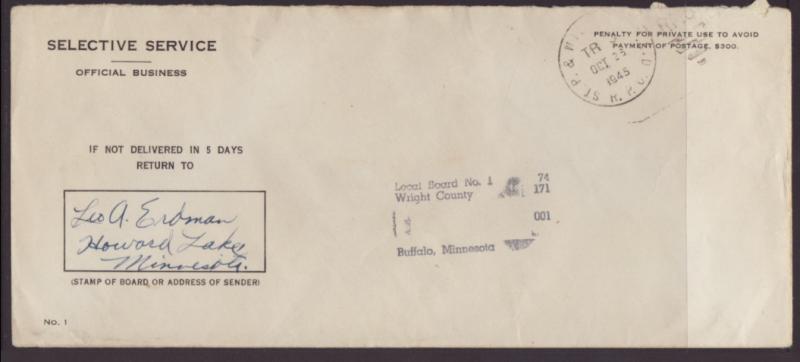
That system is still in place today, and the letters being sent are part of it. Registration remains mandatory for eligible men, and it exists for one reason: speed. If the United States were ever forced into a large-scale conflict that exceeded the capacity of its volunteer military, the Selective Service System would allow the government to move quickly. It is not an active draft, but it is a framework built for one.
The question that is now surfacing more openly is not whether the system exists, but whether the conditions that would require it are becoming less theoretical. Modern warfare may rely on advanced technology, but it still depends heavily on human capacity. Sustained operations across multiple regions require personnel at scale, not only in combat roles, but in logistics, intelligence, engineering, and support. When recruitment struggles to keep pace with demand, the conversation shifts, even if quietly, toward alternatives that have not been used in decades.
That does not mean a draft is imminent, but it does mean it is no longer unthinkable. There is a common misconception that a president could simply order a draft into existence, but that is not how the system works. For conscription to be reinstated, Congress would have to pass legislation authorizing it, and that process would be highly visible, politically charged, and subject to intense public debate. Only after that would the executive branch move to implement it. The structure is designed to prevent sudden or unilateral action, but it does not eliminate the possibility altogether.
What makes the current moment feel different is the convergence of factors. There is an active and expanding conflict involving Iran, there are broader global tensions that show no clear sign of easing, and there is a military operating across multiple fronts at the same time. At the same time, the true human cost of these conflicts is not fully known in real time. Casualty figures are often delayed or incomplete, and the reality of loss tends to emerge gradually, long after initial reports. History has shown that the full weight of war is rarely understood while it is still unfolding.

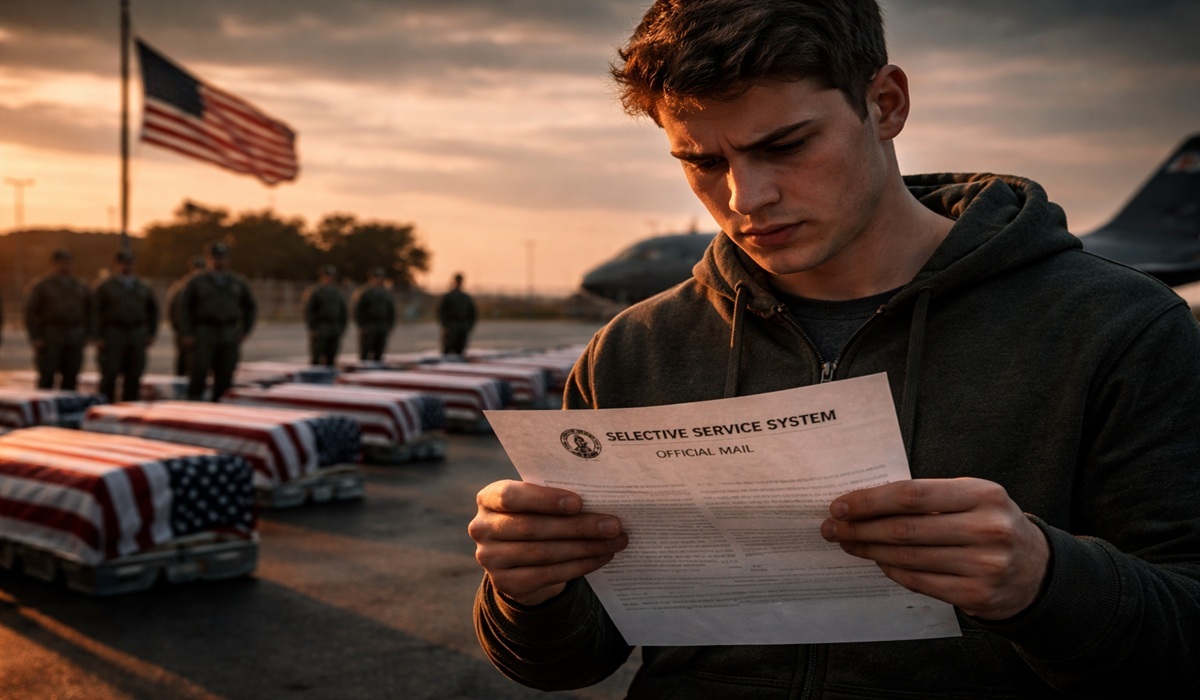
Images have a way of closing that gap. The sight of flag-draped caskets returning home has, in past conflicts, shifted public perception in ways that statistics never could. Those images carry a finality that policy discussions do not, and they have a way of bringing distant conflicts into immediate focus. For a generation that has largely been insulated from that reality, the prospect of seeing it again is not abstract.
That is where the unease around Selective Service letters is coming from. It is not about what they are, but about what they represent. They are a reminder that the infrastructure for a draft still exists, that it has been maintained deliberately, and that it could be used if circumstances were to demand it. In a different global climate, that fact was easy to ignore. In the current one, it is harder to dismiss.
Whether a draft ever returns will depend on decisions that have not yet been made and conditions that may or may not materialize. What is clear is that the conversation itself is no longer dormant. It is resurfacing, quietly but persistently, at the intersection of global conflict, military strain, and a system designed for a worst-case scenario.
For now, the letters remain what they have always been, a requirement, a registration, a contingency. But the context surrounding them has changed, and that change is enough to make people look at them differently. Not as paperwork, but as a reminder that the distance between civilian life and military obligation is not as permanent as it once seemed.
About The Author