Sanctions Yesterday, Russian Oil Today: The Strange Logic of Washington’s Energy Policy
- Xuemei Pal
- Breaking News
- March 13, 2026
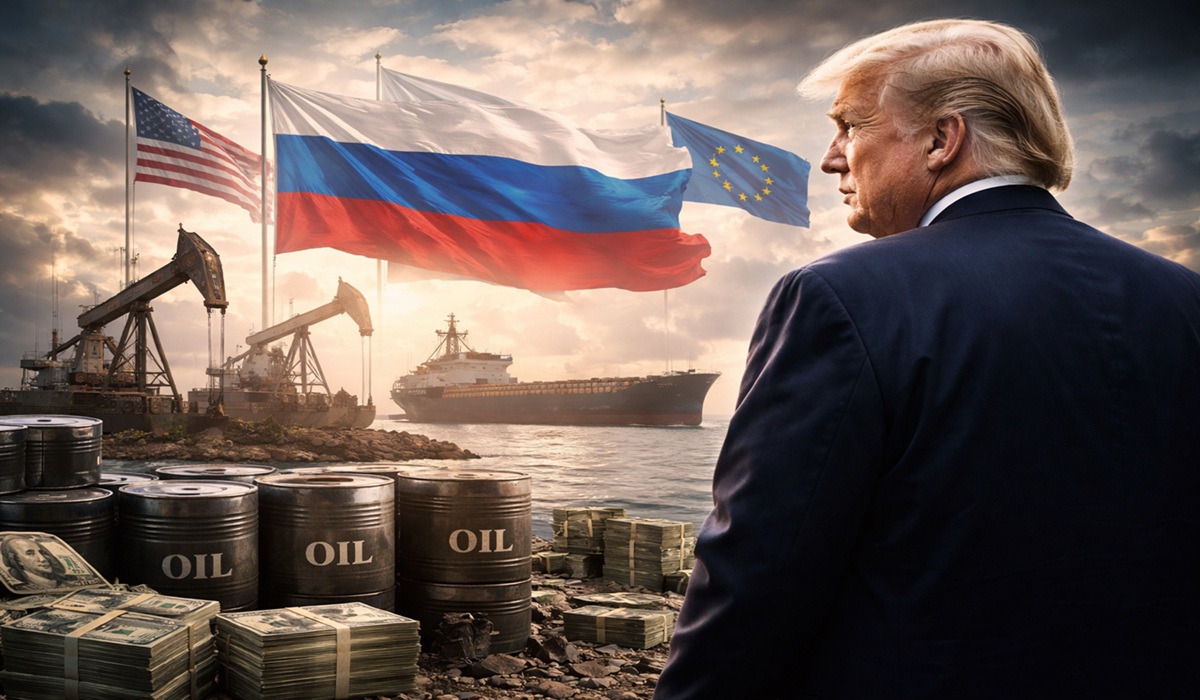
The decision by the Trump administration to remove sanctions on Russian oil has landed with a kind of geopolitical irony that is difficult to ignore. For years, Washington led the international campaign to isolate Russian energy exports. The pressure was relentless. European governments were urged, and in many cases forced, to abandon decades of dependence on Russian oil and natural gas. Entire energy systems were redesigned under that pressure. Now, in a sudden reversal, the same administration that pushed for those sanctions has stepped in to loosen them.
The moment has a surreal quality to it. The world was told that Russian oil had to be removed from global markets in order to weaken Moscow’s ability to wage war. Europe endured the economic shock that came with that decision. Energy prices surged. Industries faced rising costs. Governments scrambled to find alternative suppliers. American liquefied natural gas and oil exports filled much of the gap left behind. The message from Washington was clear: isolating Russian energy was both a moral obligation and a strategic necessity. Now the message has changed.
The lifting of sanctions, even if presented as temporary or technical, raises obvious questions about the underlying logic that drove the earlier policy. If Russian oil was unacceptable for global markets yesterday, what exactly changed today? The answer appears less about principle and more about the brutal arithmetic of global energy markets. Oil remains the bloodstream of the modern economy. When supply tightens and prices rise too quickly, every other sector begins to feel the shock. Transportation costs rise. Food prices climb. Airlines, shipping companies, and manufacturing sectors absorb the pressure before passing it on to consumers.
Political leaders may speak the language of sanctions and strategic isolation, but they still operate inside the constraints of energy markets. When oil prices surge, the consequences move quickly from the global stage to the domestic economy. Inflation rises. Voters feel it at the gas pump and in grocery stores. Governments that once appeared confident in their geopolitical strategies suddenly find themselves confronting political realities much closer to home.
That context helps explain why the removal of sanctions on Russian oil has happened now, and why it carries such a sense of contradiction. The United States spent years pushing European allies to sever their dependence on Russian energy. Entire pipelines were shut down. Long-standing supply relationships were dismantled. European economies endured enormous adjustment costs as they pivoted toward American LNG shipments and other alternative suppliers.
Yet the current decision effectively acknowledges something that policymakers have often been reluctant to admit publicly: the global energy system still depends heavily on Russian supply. Remove too much of it too quickly, and the entire market begins to destabilize.
For Europeans, the moment is particularly uncomfortable. Many governments across the continent accepted the economic pain of cutting Russian energy ties because they believed it was part of a unified Western strategy. Now they are watching Washington loosen the same restrictions it once insisted were essential. The result is an awkward question hanging over European capitals. Were the sacrifices demanded of them always part of a coherent strategy, or were they simply reacting to shifting political priorities in Washington?
The irony grows sharper when viewed against the broader history of energy politics in recent decades. Control over oil and natural gas has repeatedly shaped conflicts and foreign policy decisions around the world. From the Middle East to North Africa, energy resources have been deeply entangled with geopolitical competition. Entire wars, sanctions regimes, and alliances have been justified through the language of stability and security, even as access to energy supplies remained an unspoken constant in the background.
Against that backdrop, the sudden easing of sanctions on Russian oil looks less like a dramatic shift in ideology and more like a reminder of how fragile energy politics really are. Governments can attempt to isolate producers, restrict supply, or redesign global markets, but the basic reality remains unchanged. Modern economies still run on oil. When too much of it disappears from the system, the consequences ripple outward quickly.
The timing of the decision also adds another layer of political context. Oil prices rarely exist in isolation from domestic politics. Rising energy costs have historically been one of the fastest ways to turn economic anxiety into political pressure. When fuel prices climb, the effect spreads across everything from food to transportation. Governments that once appeared confident in their geopolitical posture suddenly find themselves under pressure from voters who care less about strategic theory and more about the cost of daily life.
In that environment, the logic behind lifting sanctions becomes easier to understand, even if it still appears contradictory. Stabilizing oil markets can calm inflation and prevent economic shockwaves that would otherwise reach households within weeks. From a purely political standpoint, the temptation to release additional supply into the market becomes difficult to resist.
Still, the optics remain striking. The same power that helped enforce a global effort to isolate Russian energy has now stepped in to loosen the restrictions it helped create. For critics, it reinforces a long-standing suspicion that energy policy often follows convenience more closely than principle. For allies, particularly in Europe, it raises uncomfortable questions about how much strategic planning truly lies behind the shifting decisions of global powers.
In the end, the episode illustrates something fundamental about the modern geopolitical order. Nations may speak confidently about sanctions, alliances, and long-term strategies, but energy markets operate according to their own logic. Oil supply, global demand, and price stability often shape decisions far more than public rhetoric suggests.
What appears at first glance to be a contradiction may actually be something simpler: a reminder that the global economy still runs on energy realities that no government can fully control. And when those realities collide with political ambitions, even the most carefully constructed strategies can begin to unravel in ways that look almost comical from the outside.
About The Author