Rohingya Families Left Homeless After Overnight Fire Ravages Cox’s Bazar Refugee Camp
- Naomi Dela Cruz
- Breaking News
- January 21, 2026
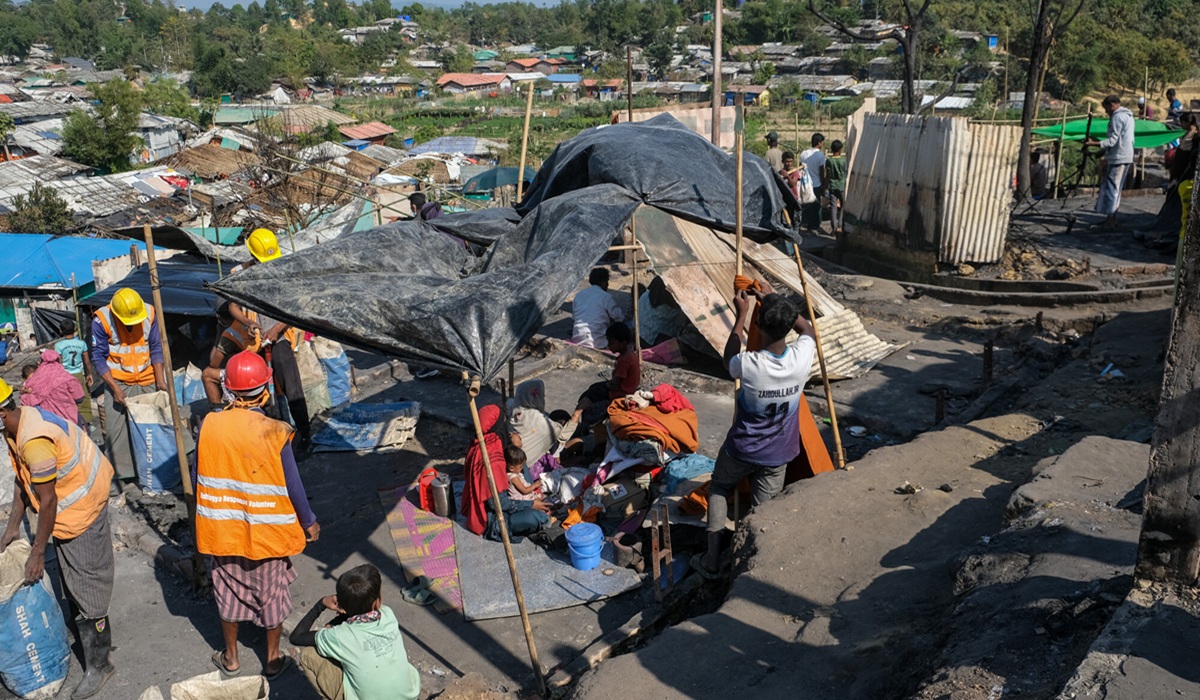
A massive fire tore through Rohingya refugee shelters in Camp 16 in Cox’s Bazar, Bangladesh, in the early hours of January 20, 2026, destroying hundreds of homes and leaving more than 2,000 people displaced.
The fire broke out at approximately 3:00 a.m. and spread rapidly through Blocks D2, D3, and D4. At least 335 shelters were completely destroyed and another 72 were partially damaged. Families lost all personal belongings, including bedding, cooking utensils, clothing, and food supplies. Those affected have been forced to take shelter with relatives or friends inside the already overcrowded camps.
According to the Norwegian Refugee Council, the blaze underscored the extreme vulnerability of Rohingya refugees who continue to live in densely packed shelters made of highly flammable materials such as bamboo and polythene. These structures, originally designed to last only six to twelve months, have now been used for years due to stalled reconstruction efforts.
In addition to homes, the fire caused extensive damage to essential infrastructure. At least 86 latrines, 68 bathing cubicles, 11 water points, and 40 solar streetlights were damaged or destroyed. Educational and religious facilities were also affected, including 10 learning centres and two mosques or madrasas, further disrupting daily life for displaced families.
Refugees described the sudden loss and uncertainty following the fire. One resident of Camp 16 said his shelter and all belongings were reduced to ashes, leaving him unsure where his family would sleep or how they would recover in the days ahead.
Fire incidents are not new in the Rohingya camps. Between May 2018 and December 2025, more than 2,400 fires were recorded across the camps, affecting over 100,000 people and damaging more than 20,000 shelters. Overcrowding, open cooking flames, and the widespread use of combustible building materials have made fires a persistent and deadly risk.
In December 2024, the Interim Government of Bangladesh approved three semi-permanent shelter designs aimed at improving safety and living conditions. The plan called for the reconstruction of 50,000 shelters across the camps, offering more durable protection against fire, storms, and monsoon rains. However, major humanitarian funding cuts announced in January 2025 halted the rollout of these shelters before construction could begin at scale.
Humanitarian agencies report that the Rohingya response remains critically underfunded. In 2025, only about half of the required funding for the overall response was secured, leaving a gap of approximately US $466.6 million. Funding for shelter projects was even more limited, with less than one-fifth of required resources delivered, according to the UN Office for the Coordination of Humanitarian Affairs.
More than 1.14 million Rohingya refugees currently live in Cox’s Bazar, the majority having fled violence in Myanmar since 2017, according to United Nations High Commissioner for Refugees. Humanitarian organisations warn that without urgent financial support, families will remain trapped in unsafe shelters that cannot withstand fires or severe weather, increasing the likelihood of repeated displacement and loss.
Emergency assistance is ongoing in Camp 16, with aid groups distributing essential household items and hygiene supplies while assessing damage to water and sanitation facilities. However, agencies stress that emergency relief alone cannot address the underlying risks. Without renewed funding to resume the construction of approved semi-permanent shelters, fires like the one that devastated Camp 16 are expected to continue, placing thousands of already vulnerable families at risk.
About The Author