Resetting the Agenda: Prince Edward Island Legislature to Be Prorogued Ahead of New Throne Speech
- Naomi Dela Cruz
- Canada
- February 20, 2026
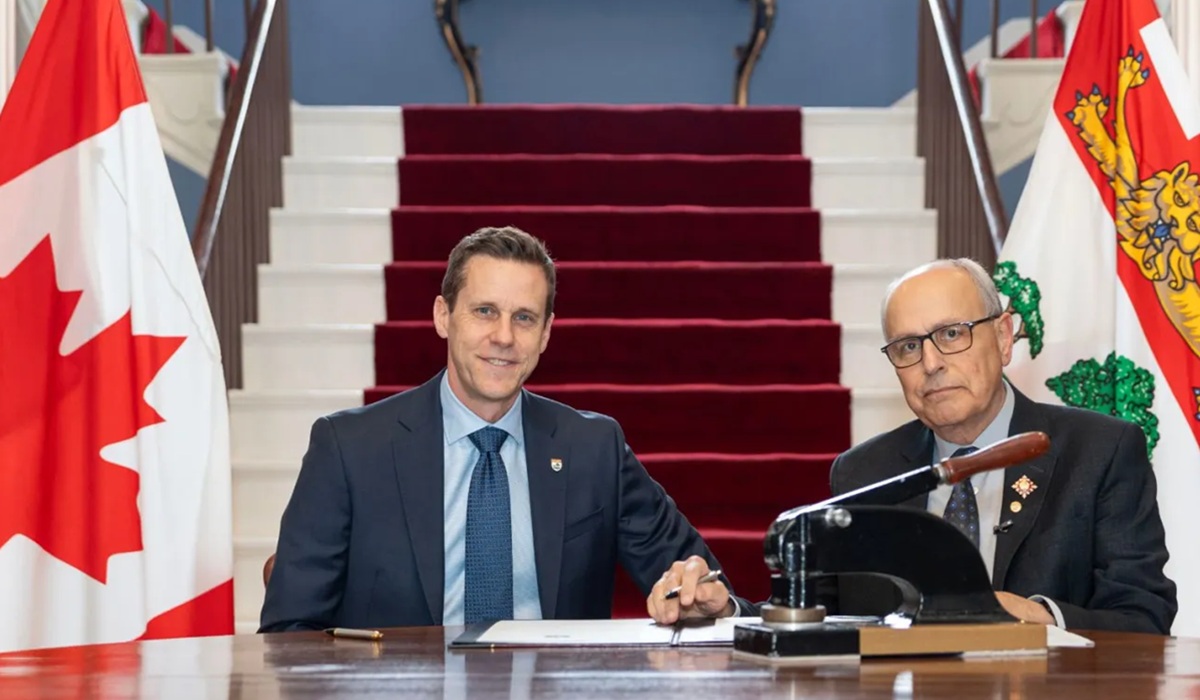
On February 20, 2026, Rob Lantz, the 34th Premier of Prince Edward Island, announced that the province’s Legislative Assembly will be prorogued and reconvene on March 24 with a Speech from the Throne delivered by His Honour, Dr. Wassim Salamoun. While the word “prorogation” can sound procedural and distant, the decision carries real political and policy weight. It signals a reset, a recalibration, and a deliberate attempt to frame the next chapter of governance on the Island.
Proroguing a legislature effectively ends a session of parliament. All current legislative business—bills that have not yet passed, committee work that has not concluded, debates that are midstream—comes to a halt. When the Assembly reconvenes, it begins a new session with a Speech from the Throne, which sets out the government’s agenda and priorities. It is not an election, nor does it dissolve the legislature. Instead, it is a pause and a pivot.
In this case, the pivot appears intentional and strategic. Premier Lantz has made clear that the upcoming Throne Speech will focus on four central pillars: strengthening healthcare, ensuring energy security, improving affordability for families, and taking responsible action on land use and protection. Those themes are not random. They reflect the pressures Islanders are feeling in real time.
Healthcare remains one of the most urgent issues across Atlantic Canada. Like many provinces, Prince Edward Island continues to grapple with physician shortages, wait times, and the strain placed on emergency departments. By placing healthcare at the top of the agenda, the government is acknowledging both the anxiety in communities and the expectation that tangible improvements must follow. A Throne Speech provides an opportunity to outline not only funding commitments but structural reforms, recruitment strategies, and modernization efforts.
Energy security is equally pressing. In a province that relies heavily on imported energy and is vulnerable to fluctuating costs, the phrase carries economic as well as environmental meaning. Islanders have experienced firsthand how global market disruptions and extreme weather can ripple through utility bills and household budgets. A renewed session allows the government to frame a more cohesive strategy—whether through renewable investments, grid resilience, or regional partnerships—to stabilize supply and protect consumers.
Affordability, perhaps the most politically sensitive theme, speaks directly to everyday life. Housing costs, grocery bills, and transportation expenses have reshaped family budgets. When a government signals that affordability will anchor its legislative direction, it is also accepting that voters measure leadership by what it does to ease that pressure. The Throne Speech will likely serve as a roadmap for tax measures, housing initiatives, and targeted supports aimed at middle- and lower-income households.
Land use and protection round out the agenda with a distinctly Island lens. Prince Edward Island’s identity is deeply tied to its farmland, coastline, and rural character. Development pressures, environmental concerns, and agricultural sustainability often intersect in complex ways. By elevating land policy within the Throne Speech, the government is positioning itself to address both growth and preservation, a balancing act that defines provincial politics in a place where geography and community are inseparable.
The timing of prorogation can also be read as an effort to draw a clear line between what has been and what is to come. Governments use this tool to regroup, to refine messaging, and to align legislative priorities with shifting public expectations. It creates a moment of political clarity. Rather than allowing a session to drift with incremental bills and piecemeal debate, prorogation allows leadership to step back and reintroduce its direction in a consolidated way.
Critics of prorogation, in general, sometimes argue that it can be used to sidestep scrutiny or reset political narratives. Supporters contend that it is a legitimate and necessary mechanism within parliamentary systems, providing governments the flexibility to adapt and refocus. In this instance, the Premier’s statement frames the move not as retreat but as renewal. Islanders, he said, expect steady leadership, clear direction, and results. The implication is that the new session will be structured to deliver on those expectations with sharper focus.
When the Assembly reconvenes, the Speech from the Throne will do more than outline policy objectives. It will set the tone for the months ahead. It will indicate how the government intends to balance fiscal responsibility with social investment, how it defines growth, and how it interprets its mandate at this stage in its term. In a province where politics often feel close to home, that tone matters.
Prorogation is, at its core, a constitutional tool. Yet its impact is practical and immediate. It clears the legislative slate and reopens it with intention. For Prince Edward Island, the coming Throne Speech will serve as both compass and contract—an articulation of priorities that Islanders can measure against outcomes.
As the Island approaches March, attention will turn to whether the new session delivers the clarity and momentum promised. In a small province where policy decisions echo quickly through communities, a reset is never merely procedural. It is an opportunity to redefine direction and reaffirm purpose at a moment when both are under close watch.
About The Author