Reciprocity at the Border: Why Sahel States Are Pushing Back Against U.S. Travel Restrictions
- Kingston Bailey
- Africa
- Breaking News
- January 2, 2026

The recent decision by several Sahel states to impose reciprocal travel restrictions on U.S. citizens represents a significant moment in contemporary international relations, one that goes beyond visa policy and speaks to broader shifts in global power dynamics. Mali, Burkina Faso, and Niger, now operating within the Alliance of Sahel States, responded directly to expanded U.S. travel and visa restrictions by applying similar limitations to American travelers. This response was deliberate, measured, and rooted in the principle of reciprocity.
At its core, the situation reflects a growing unwillingness among these states to accept unilateral decisions that affect their citizens without consequence. For decades, travel bans and visa restrictions have been used by powerful countries as instruments of pressure, often framed around security concerns or governance standards. What is notable in this case is that the affected countries chose not to appeal quietly or seek exemptions, but instead mirrored the restrictions. This approach signals a shift toward asserting equality in diplomatic treatment, even in relationships marked by significant power imbalances.
Security concerns are the stated rationale behind the U.S. restrictions, but the broader context suggests additional motivations. The Sahel occupies a strategically important position in global economic and security planning. The region is rich in natural resources, including uranium, gold, and other minerals critical to global energy systems and industrial supply chains. Access to these resources has long been intertwined with security cooperation and political alignment, particularly with Western nations.
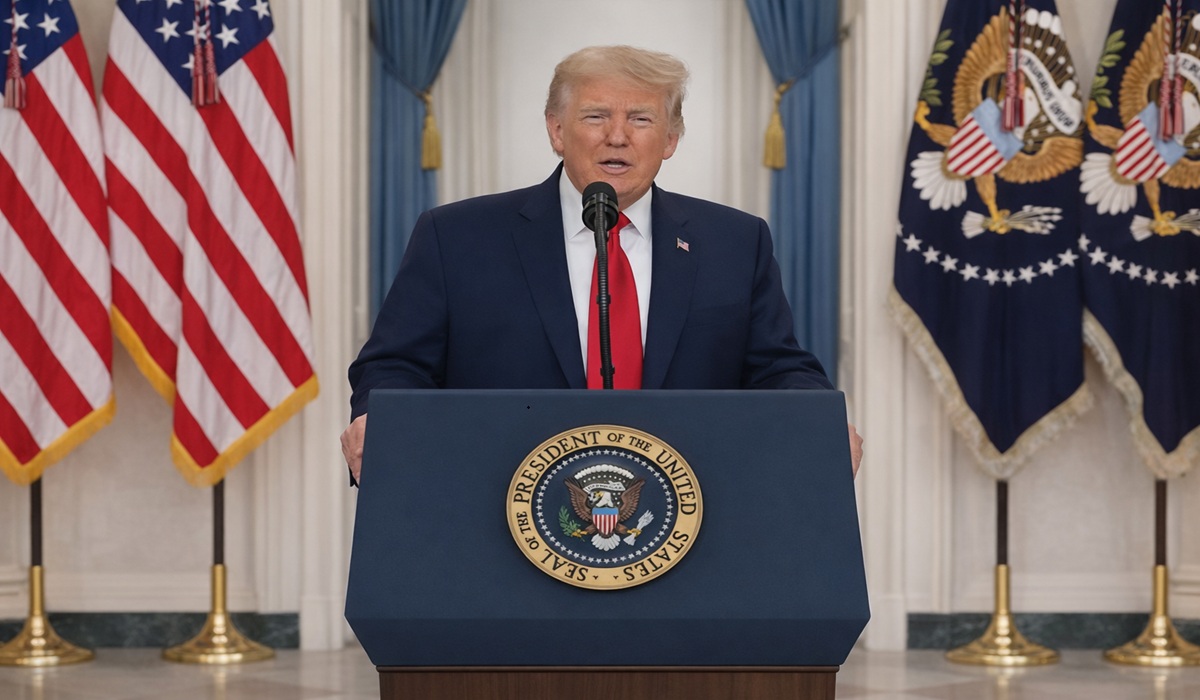
The Trump administration’s foreign policy approach emphasizes leverage, transactional relationships, and the protection of U.S. strategic interests. In that framework, travel restrictions function as more than administrative measures. They serve as tools to influence state behavior, reinforce security expectations, and maintain strategic advantage in regions of high geopolitical value. By restricting access, the United States signals dissatisfaction and applies pressure without direct confrontation.
The response from the Sahel states indicates that this form of pressure is no longer universally effective. These governments are asserting that access to their territory, resources, and cooperation cannot be taken for granted. Rather than absorbing restrictions as an unavoidable consequence of asymmetrical power, they are choosing to impose equivalent costs. This reflects a broader recalculation of influence, one shaped by the availability of alternative partnerships and shifting global alliances.
Another important factor is domestic political legitimacy. The governments of Mali, Burkina Faso, and Niger have framed their leadership around sovereignty, national dignity, and resistance to external interference. Reciprocal travel measures reinforce these narratives by demonstrating decisiveness and independence. They show domestic audiences that the state is prepared to respond to external actions in kind, rather than accept them passively.
This episode also highlights a changing diplomatic environment. In an increasingly multipolar world, pressure tactics that once carried little risk now generate responses. Countries with strategic assets and regional coordination capacity are more willing to challenge established norms of unilateral decision-making. Reciprocity becomes both a defensive measure and a signaling mechanism, indicating that future engagement will be conditional and negotiated on new terms.
Ultimately, the reciprocal travel restrictions are less about limiting movement and more about redefining relationships. They reflect an assertion that sovereignty includes control over borders, resources, and diplomatic posture. Whether this standoff leads to prolonged tension or eventual recalibration will depend on how both sides adjust to a world where influence must be balanced against the growing willingness of states to push back.
About The Author