Ramadan Through Service: Honouring Abdul Sattar Edhi
- TDS News
- Trending News
- Ramadan
- February 19, 2026
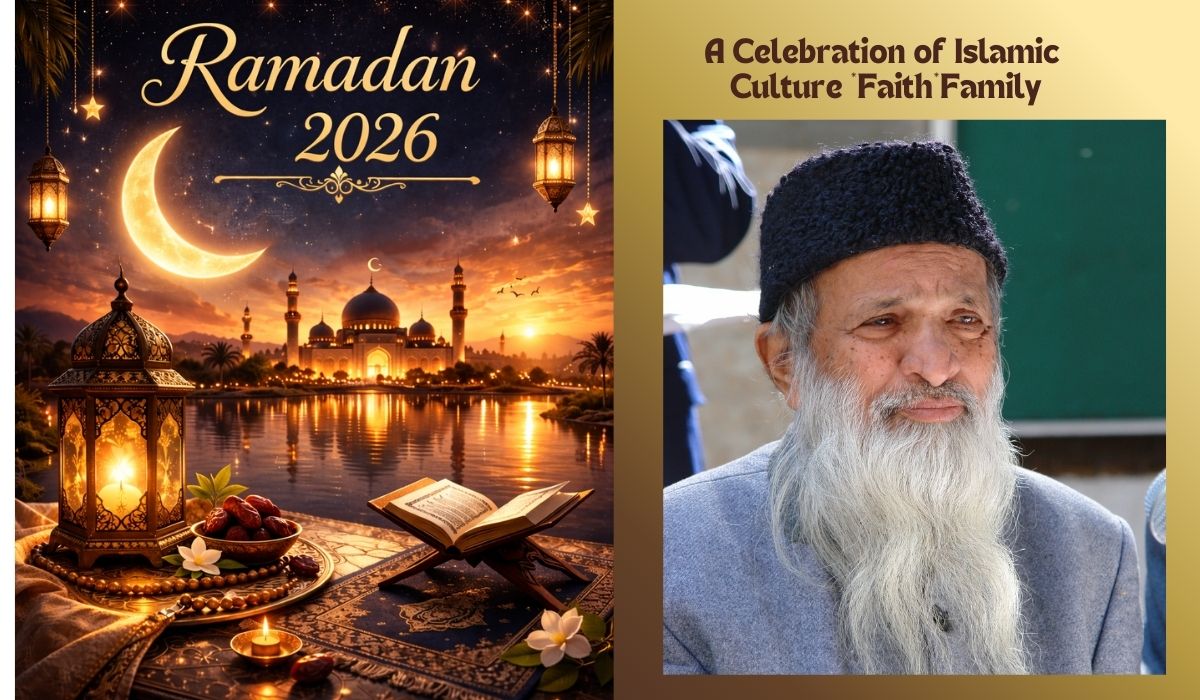
The Living Embodiment of Mercy and the Eternal Spirit of Zakat
By: Donovan Martin Sr, Editor in Chief
The arrival of Ramadan is often heralded by a shift in the atmosphere—a slowing down of the physical world to make room for the expansion of the spiritual one. It is a month defined by the hunger of the belly and the thirst of the soul, designed to bridge the gap between those who have and those who have not. In this sacred window of time, the global community looks for icons of charity and pillars of selflessness. To honor Abdul Sattar Edhi during this holy month is not merely to remember a man; it is to celebrate a radical, uncompromising commitment to the sanctity of human life that mirrors the very discipline of the fast.
This servant of humanity did not wait for the crescent moon to practice the virtues of sacrifice. For him, the entire year was a cycle of austerity and service. While the world remembers him as the “World’s Richest Poor Man,” his journey began with a simple, profound lesson in empathy from his mother. The two paisas she gave him as a child—one for himself and one for a person in need—formed the bedrock of a philosophy that would eventually challenge the social fabric of an entire nation. Edhi understood early on that the true test of faith was not found in the seclusion of a prayer mat, but in the dust and heat of the streets where the abandoned and the dying lay forgotten.
The foundation he established, which started with a single, battered ambulance nicknamed the “Poor Patient’s Ambulance,” grew into the largest voluntary rescue fleet on the planet. But the vehicles were only the mechanical heartbeat of a much larger body of work. His true genius lay in the ability to see the gaps in society that everyone else chose to ignore. By placing cradles outside his centers for abandoned infants, he saved thousands of lives, providing them with a name, a home, and a future. During Ramadan, a month that emphasizes the protection of the vulnerable, this legacy serves as a piercing reminder that charity is not just about giving from one’s excess, but about taking responsibility for the lives that society has discarded.
The lifestyle of this humble soul was perhaps the most authentic reflection of the Ramadan spirit ever witnessed in the modern era. The holy month teaches us to detach from worldly comforts to better understand the plight of the impoverished. Abdul Sattar Edhi lived in a state of permanent detachment, owning only two sets of traditional khaki clothes, sleeping in a windowless room on a hard bench, and never accepting a salary from the organization he built. Even as his foundation handled millions of dollars in donations, he remained a mendicant. He famously sat on the footpaths of Karachi with a begging bowl, not for himself, but to give the common man a chance to participate in the act of saving a life.
In the context of the holy month, his work also serves as a powerful bridge between diverse communities. He was a man of deep faith, yet his service was strictly secular in its application. He cared for the wounded, washed the unclaimed bodies of the deceased, and fed the hungry without ever asking for their religion or ethnicity. When once asked why he helped people of all backgrounds, he simply noted that an ambulance does not have a religion. This universalism is the pinnacle of what Ramadan seeks to achieve: a sense of global brotherhood and the breaking down of the walls that divide us.
As we navigate the long hours of fasting this year, reflecting on his example helps us recalibrate our intentions. It is easy to get lost in the ritualistic aspects of the month—the elaborate meals and the social gatherings—but his life pulls us back to the core. He reminds us that the hunger we feel during the day is a temporary window into a permanent reality for millions. The “Angel of Mercy” proved that one individual, armed with nothing but sincerity and a refusal to look away from suffering, could build a safety net for an entire country.
To honor Edhi this Ramadan is to commit ourselves to a higher standard of compassion. It means looking at the person shivering on the street corner or the orphan without a school and seeing them not as a burden, but as our personal responsibility. It means understanding that our wealth is a trust and that our hands were made to lift others. He passed away leaving behind no mansions or worldly riches, yet he died the wealthiest man in the world, draped in the prayers of the millions he served. This month, as we seek the blessings of the Almighty, let us walk the path he paved—a path of dirt, of sweat, of absolute poverty, and of infinite mercy.
About The Author