Protest Erupts in Argentina Amdysts Law Proposing Longer Work Days
- Ingrid Jones
- Breaking News
- Latin
- February 14, 2026
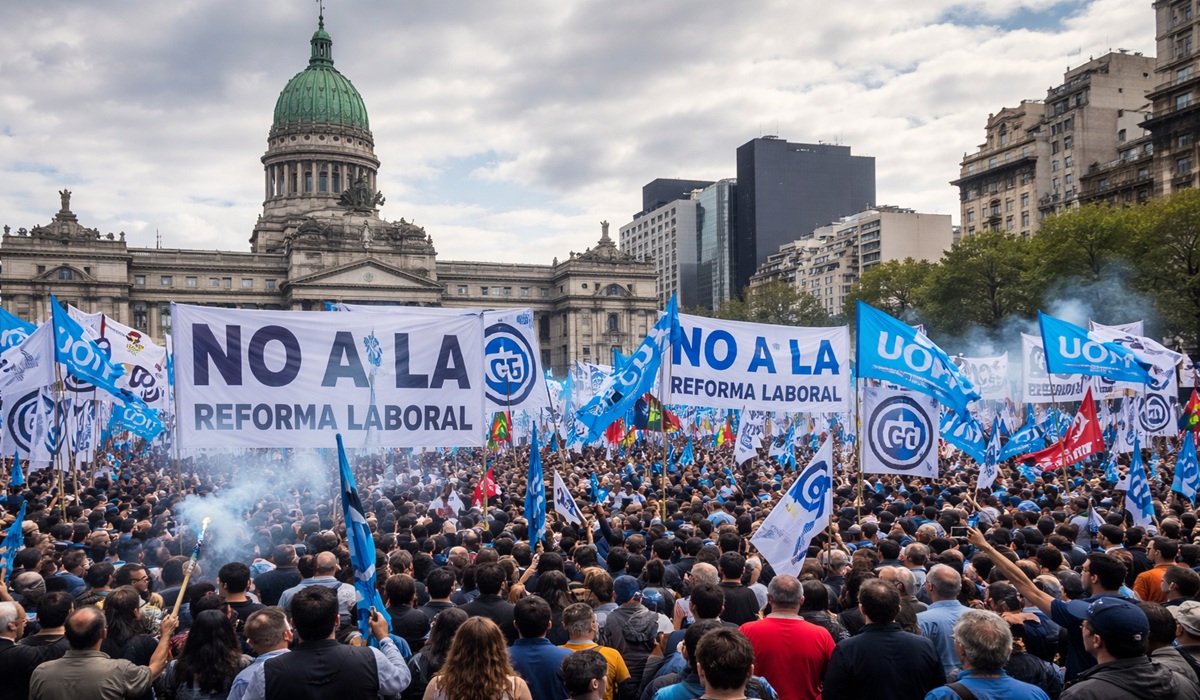
Argentina is once again at the center of an intense national debate after lawmakers advanced a sweeping labor reform backed by President Javier Milei, a move supporters say is necessary to modernize the country’s economy while critics argue it risks weakening long-standing worker protections. The proposed changes, which recently cleared a key step in the Senate and are still moving through the legislative process, form part of a broader effort to reshape Argentina’s economic structure during a time of deep financial instability, soaring inflation, and persistent unemployment.
At the heart of the controversy is a provision that allows for more flexible scheduling, including the possibility of workdays extending up to 12 hours under certain arrangements. While some observers have described this as a dramatic 50 percent increase over the traditional eight-hour day, the reality is more nuanced. The reform does not establish a universal 12-hour workday as the new standard. Instead, it permits employers and employees to structure schedules differently through systems that can include longer shifts balanced by fewer working days, additional time off, or alternative compensation through accumulated hours. The goal, according to supporters, is to give businesses and workers more freedom to adapt to modern economic realities.
In many parts of the world, longer daily shifts are already common in sectors that operate on compressed workweek models. Countries across Europe, North America, and parts of Asia use variations of this approach, where employees work four longer days rather than five shorter ones, or complete extended shifts in exchange for additional rest days. In industries such as healthcare, emergency services, manufacturing, and resource extraction, 12-hour shifts are widely used and often paired with shorter overall workweeks or extended periods off between rotations. Proponents of Argentina’s reform point to these models as examples of how flexible scheduling can increase productivity while offering workers longer stretches of personal time.
At the same time, the proposal has sparked sharp concern among labor unions and social advocates, who fear that flexibility could tilt too heavily in favor of employers in a country where economic pressure is already intense. There has been particular scrutiny over language that allows certain forms of compensation to be delivered in non-cash benefits, such as vouchers or goods, though this has not been clearly framed as a replacement for wages. Critics worry that in a fragile economy, any shift toward alternative compensation could be abused, especially among lower-income workers with limited bargaining power.
The broader context behind these changes is Argentina’s severe and prolonged economic crisis. The country has faced years of high inflation that has eroded purchasing power and savings, currency instability that has shaken investor confidence, and debt pressures that have constrained public spending. Businesses have struggled with unpredictable costs, while workers have seen real wages lose value in the face of rising prices. Milei came to office promising aggressive free-market reforms designed to shrink government, reduce regulation, and encourage private sector growth. The labor overhaul is one of several steps aimed at making hiring easier, lowering employment costs, and increasing competitiveness.
Supporters argue that rigid labor rules have long discouraged job creation and pushed employers toward informal hiring practices. They believe that allowing more adaptable work arrangements could help bring more workers into the formal economy, stabilize businesses, and attract investment. From that perspective, the introduction of flexible 12-hour shifts is seen less as a loss of rights and more as an option that could allow employees to trade daily hours for fewer total workdays or more consistent time off.
Opponents see it differently. In a country where many people already feel financially squeezed, they fear that extended shifts could become the norm without the promised benefits of shorter weeks or improved pay. Argentina has a long history of strong labor protections and union influence, and any shift in that balance is bound to trigger resistance. For many workers, the concern is not just about hours, but about whether economic reforms will translate into real stability and opportunity.
The debate unfolding now reflects a deeper question facing Argentina as it tries to rebuild. The country is searching for a path that can stimulate growth without increasing inequality, modernize employment without undermining dignity, and restore confidence without sacrificing social protections. The discussion around longer shifts is only one part of that larger conversation, but it has become a powerful symbol of the choices ahead.
In that sense, the controversy is not just about whether a 12-hour day is acceptable. In many places, it already is, particularly when paired with reduced weekly hours and meaningful rest periods. The real issue is whether such flexibility will be implemented in a way that genuinely benefits workers, strengthens the economy, and reflects the realities of life in a nation still trying to steady itself after years of financial turbulence.
About The Author