Prime Time Address: When Power, Entitlement, and Distraction Replace Leadership
- TDS News
- U.S.A
- December 19, 2025
By: Donovan Martin Sr, Editor in Chief
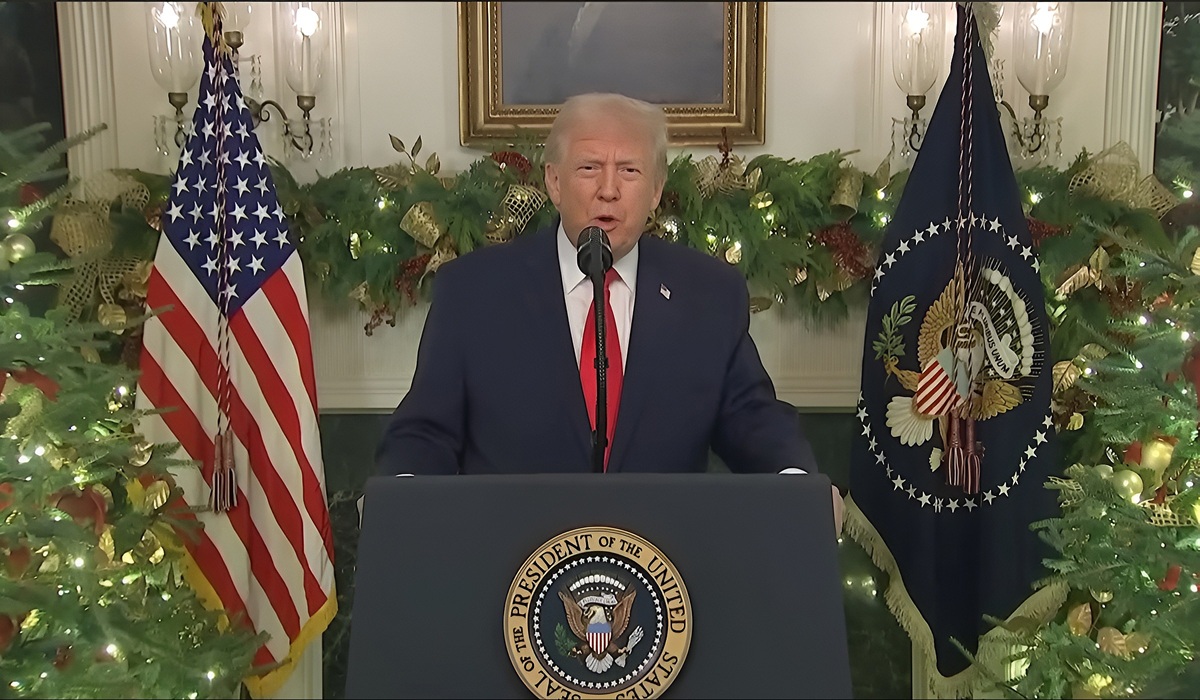
What was billed as a prime-time address to the nation arrived wrapped in the gravity of consequence. Networks cleared schedules, banners implied urgency, and viewers were led to believe they were about to hear a serious statement about war, national security, or a major shift in U.S. policy. Instead, the country was given a familiar performance: a self-congratulatory monologue by U.S. President Donald Trump that relied on sweeping claims, selective facts, and rhetorical heat rather than substance. It was not a war speech, though it leaned heavily on the language of conflict. It was not a policy address, though it gestured vaguely toward economic success and global stability. It was, above all, a distraction.
During the address, the President claimed he had “ended eight wars,” without naming them clearly, defining what “ended” meant, or acknowledging the continued U.S. military presence, funding, intelligence operations, and arms flows in many of the same regions. Americans were left to infer that long-running conflicts in places like Iraq, Syria, Afghanistan’s surrounding theaters, and parts of Africa had simply concluded by declaration. In reality, U.S. forces remain deployed abroad, military aid continues at scale, and proxy dynamics persist. A ceasefire, a drawdown, or a drop in media attention is not peace. By failing to explain this distinction, the speech substituted clarity with applause lines.
The President also insisted that the economy is “great,” citing lower oil prices and cheaper eggs as proof. These claims were delivered without context. Energy prices move because of global supply decisions, demand cycles, geopolitical shocks, and production agreements—forces far beyond a single leader’s control. Food prices fluctuate due to disease outbreaks in agriculture, transportation costs, and supply-chain disruptions. Temporary dips do not erase broader pressures such as housing costs, medical bills, insurance premiums, or consumer debt. For millions of households juggling these realities, the declaration that “everything is great” sounded less like reassurance and more like denial.
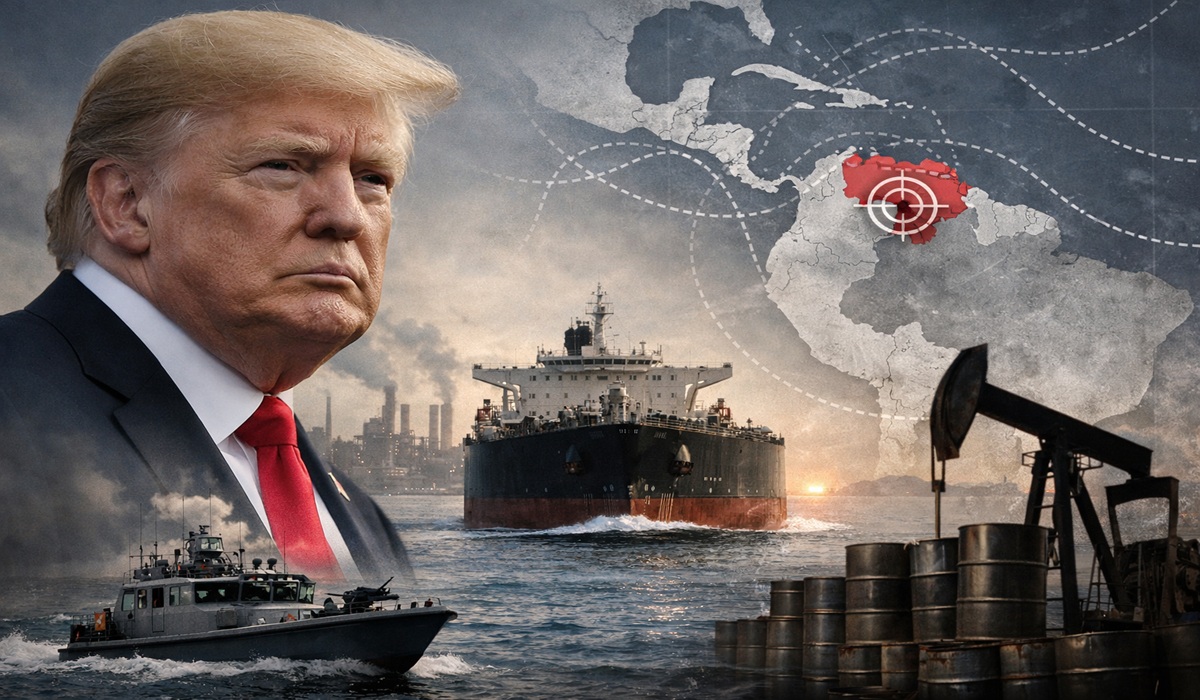
But the most jarring and specific moment of the address came when the President again drifted into incoherent and legally baseless claims about Venezuela—asserting, in essence, that Venezuela’s oil belongs to the United States, that America is the rightful owner of another sovereign nation’s natural resources. This was not a slip of the tongue. It echoed previous remarks and policy postures that frame foreign resources as prizes rather than as assets governed by international law. To be clear, under international law, Venezuela’s oil belongs to Venezuela. Sovereignty over natural resources is a foundational principle of the modern international system. The idea that one country can simply claim ownership of another country’s oil would be laughable if it were not being voiced from the most powerful office on earth.
Imagine the inverse. Imagine Venezuela announcing on global television that it owns U.S. oil fields in Texas or North Dakota, that American energy resources are rightfully Venezuelan. The absurdity is obvious. Yet when the claim runs in the opposite direction—when power flows from the strong toward the weak—it is too often normalized, excused, or ignored. This is where the speech crossed from bombast into something more dangerous: the casual dismissal of international law as optional, enforceable only when it benefits the powerful.
International law, in theory, exists to prevent exactly this kind of logic. It is meant to restrain conquest, protect sovereignty, and reduce the incentive for resource-driven conflict. In practice, it is unevenly applied. Powerful states invoke it when convenient and discard it when inconvenient. The President’s remarks on Venezuela laid this hypocrisy bare. Sanctions, economic pressure, regime-change rhetoric, and open talk of “taking” resources are all presented as tools of order, while similar actions by less powerful countries are labeled aggression. The rules, it seems, apply only in one direction.
This is not merely offensive; it is destabilizing. When a U.S. president speaks as if foreign resources are America’s by right, it signals to the world that might makes ownership. It tells smaller nations that sovereignty is conditional. It invites retaliation, resistance, and the hardening of alliances against U.S. influence. It also undermines decades of diplomatic norms that, however imperfectly observed, have helped prevent large-scale resource wars.
The address repeatedly flirted with war without naming it. References to enemies who “respect us again,” to American dominance, to strength that must be asserted, were delivered without identifying who exactly threatens the United States or how escalation would make Americans safer. No diplomatic roadmap was offered. No explanation of risks, costs, or consequences was provided. This ambiguity is not accidental. It conditions the public to accept confrontation without understanding its cause. It makes war feel ambient rather than deliberate.
This is how endless wars are sustained. Not with formal declarations, but with rhetoric that normalizes force and treats conflict as background noise. Military budgets expand. Sanctions multiply. Proxy battles intensify. And because no single moment feels decisive, accountability disappears. When outcomes turn grim, leaders insist there was no alternative.
Distraction plays a central role in this process. Like a dog yanked by every sudden movement, the national conversation is pulled from one provocation to the next. While attention is consumed by boasts, grievances, and outrageous claims, deeper questions go unanswered. Why does the United States remain so economically vulnerable at home despite its wealth? Why do infrastructure systems strain under predictable stress? Why are diplomatic tools so often sidelined in favor of coercion? None of these questions were meaningfully addressed.
The moral cost of this style of leadership is profound. When a leader dismisses international law while demanding obedience to a “rules-based order,” credibility collapses. When hardship is denied and dissent is mocked, social trust erodes. Over time, citizens stop expecting honesty. Cynicism replaces engagement. Democracy weakens not because people disagree, but because truth becomes optional.
What made the address especially frustrating was what it could have been. It could have explained America’s role in Venezuela honestly, including the history of sanctions, oil interests, and geopolitical rivalry. It could have acknowledged economic pressures while outlining realistic steps forward. It could have clarified the limits of U.S. power instead of pretending those limits do not exist. Instead, it chose spectacle, grievance, and legally incoherent claims of ownership over other nations’ resources.
America’s history offers a warning. Empires rarely fall because they lack power. They falter because they confuse power with entitlement, confidence with invulnerability. Resource-driven wars, justified by rhetoric and denial, have a long record of ending badly. One day, an endless war will not bend to American will. History suggests that day always arrives.
The United States is not in trouble because critics say so. It is in trouble because denial has replaced strategy, because distraction has replaced governance, and because international law is treated as a tool rather than a principle. Prime-time addresses are rare chances to level with the public. Using them to ramble, to boast, and to lay rhetorical claim to another country’s oil is not just a waste of time. It is a warning sign.
What Americans witnessed was not clarity. It was noise—loud enough to dominate the moment, empty enough to explain nothing. And while the broadcast ended, the consequences of that noise, of that denial, and of that dangerous entitlement will linger far longer.
About The Author