Pakistan’s Diplomatic Role: Can Dialogue Defuse the US–Israel–Iran Crisis?
- Naveed Aman Khan
- Trending News
- Middle East
- South Asia
- March 25, 2026
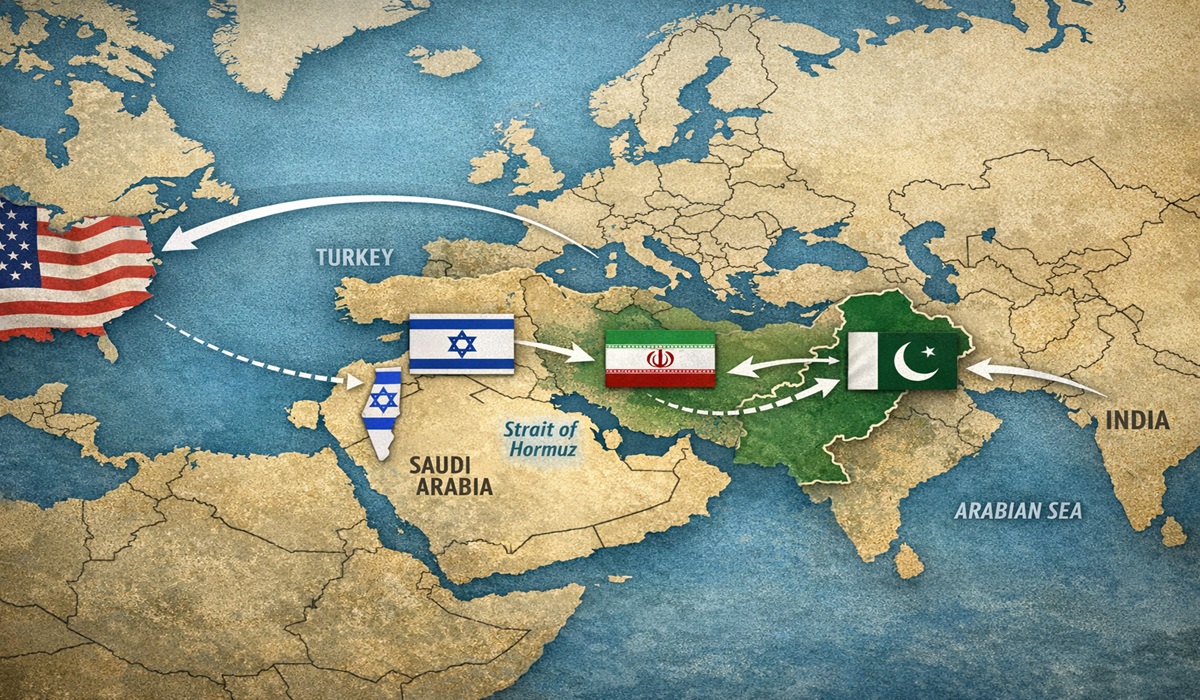
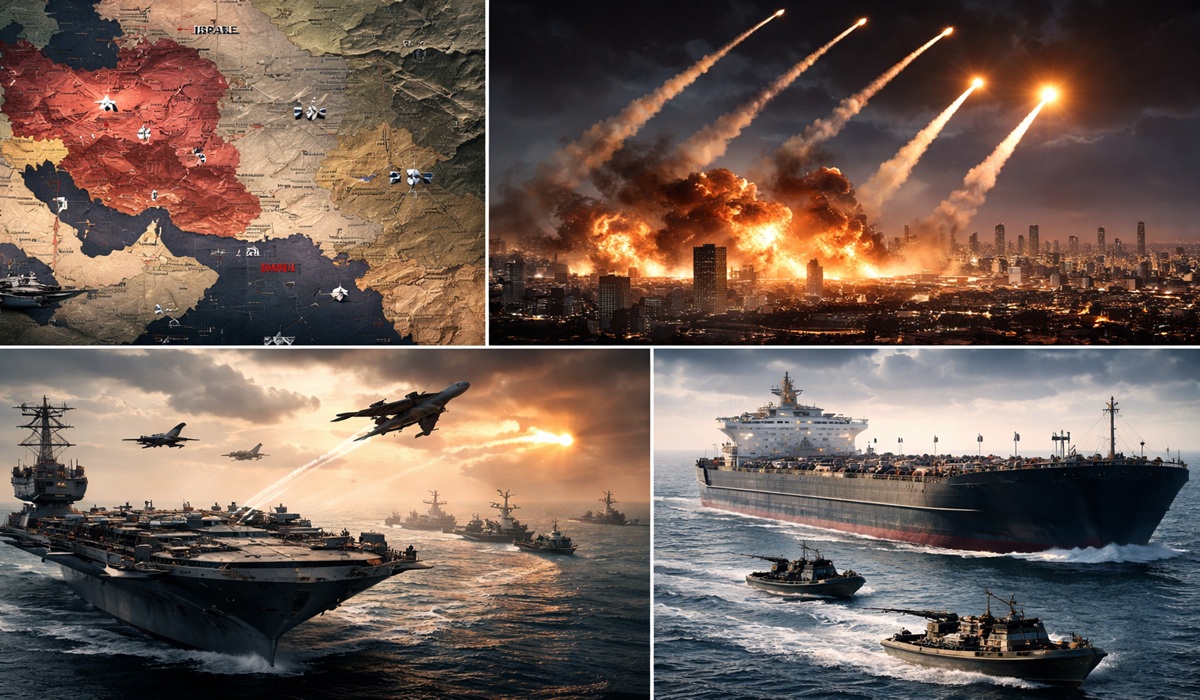
The intensifying confrontation between the United States, Israel, and Iran has pushed the Middle East to the edge of a potentially devastating regional war. In such a volatile geopolitical climate, Pakistan’s initiative to broker peace talks emerges as a bold and consequential diplomatic move. This effort is not merely an act of mediation—it is a defining test of Pakistan’s strategic maturity, diplomatic credibility, and its aspiration to assert itself as a meaningful actor on the global stage.
Pakistan’s proposed dialogue framework is both ambitious and comprehensive, reportedly structured around fifteen key conditions designed to de-escalate tensions and lay the groundwork for sustainable peace. At its foundation lies the demand for an immediate ceasefire, aimed at halting the cycle of retaliation that continues to destabilize the region. Complementing this is the gradual easing of sanctions on Iran, a step intended to create goodwill and incentivize Tehran’s cooperation in broader negotiations. Equally significant is the call for the cessation of Israeli military strikes, which have been a central trigger of escalation.
The framework also addresses broader regional security concerns, including guarantees for Gulf states that find themselves vulnerable amid rising tensions. Transparency in Iran’s nuclear program is another critical component, reflecting longstanding international concerns over nuclear proliferation. In parallel, the proposal emphasizes the need to end proxy conflicts—an essential step given the role of non-state actors and regional militias in perpetuating instability across multiple theaters.
Further provisions focus on de-escalation in key conflict zones such as Syria, Iraq, and Yemen—regions that have long served as battlegrounds for indirect confrontation among major powers. The inclusion of a fair and just resolution of the Palestinian issue underscores an important reality: no peace process in the Middle East can succeed without addressing this deeply rooted and emotionally charged conflict.
Additional measures, including prisoner exchanges, the prevention of cyber warfare, and the protection of global energy routes, reflect the evolving nature of modern conflict and the interconnectedness of global security.
The proposed framework also envisions a robust role for the United Nations, alongside international monitoring mechanisms to ensure compliance and accountability. Confidence-building measures are intended to reduce mistrust among the parties, while a long-term conflict resolution framework aims to move beyond temporary fixes toward lasting stability. Collectively, these conditions represent a holistic approach that acknowledges both the immediate triggers of conflict and the deeper structural issues that sustain it.
At the heart of the crisis lies a fundamental clash of strategic perceptions. For the United States and Israel, Iran represents a persistent and potentially existential threat, particularly in light of its nuclear ambitions and regional influence. For Iran, however, its nuclear program is framed as a sovereign right and a necessary deterrent against external aggression. This divergence is not merely political—it is deeply rooted in historical grievances, security anxieties, and competing visions of regional order.
Equally central to the conflict is the unresolved Palestinian question, which continues to serve as a powerful symbol of injustice across the Muslim world. Without meaningful progress on this front, any diplomatic initiative risks lacking both legitimacy and sustainability. The Palestinian issue is not an isolated dispute; it is intrinsically linked to broader regional dynamics and remains a key driver of public sentiment and political mobilization.
Assessing who holds the upper hand in the ongoing confrontation is a complex task. The United States and Israel possess overwhelming conventional military superiority, advanced technological capabilities, and extensive global alliances. Their ability to project power is unmatched, giving them a clear advantage in direct military engagements. However, Iran has demonstrated a different kind of strength—one rooted in resilience, adaptability, and strategic patience.
Through its reliance on asymmetric warfare, Iran has managed to offset many of its conventional disadvantages. Its missile capabilities, drone technology, and network of regional allies enable it to sustain prolonged conflict and impose significant costs on its adversaries. Iran’s strategy is not centered on achieving decisive victory but on avoiding defeat. By prolonging the conflict and raising its economic and political costs, Iran effectively transforms the battlefield into a war of endurance. In this sense, while Iran cannot be said to have “won,” it has successfully denied its opponents a clear and decisive triumph.
The prospects for successful dialogue remain uncertain, though not without hope. Much will depend on the political will of the involved parties and their willingness to engage in genuine compromise. Historical patterns suggest that Israel may act unilaterally if it perceives an existential threat, raising concerns about the potential disruption of negotiations. At the same time, there is skepticism regarding whether the United States and Israel might use the dialogue process as a strategic pause—an opportunity to reassess their positions and prepare for future actions.
For Pakistan, this diplomatic initiative represents both an opportunity and a significant challenge. Successfully facilitating dialogue between such deeply entrenched adversaries would elevate Pakistan’s standing in the international community and reinforce its image as a credible and responsible mediator. Under the leadership of Asim Munir, Pakistan has the chance to redefine its role—not merely as a regional player, but as a constructive force in global conflict resolution.
However, the risks are equally substantial. The deep mistrust between the parties, coupled with conflicting strategic objectives and external geopolitical pressures, creates an environment in which progress is fragile and easily reversible. Even minor miscalculations or unexpected developments could derail the entire process, underscoring the complexity of the task at hand.
Ultimately, the lesson of history is clear: war is not a sustainable solution. It leads to prolonged instability, economic destruction, and immense human suffering. Dialogue, despite its challenges, remains the only viable path toward lasting peace. Pakistan’s initiative is therefore both timely and necessary, reflecting an understanding that diplomacy—not confrontation—offers the best hope for a stable future.
If these talks succeed, they could mark a transformative moment in Middle Eastern geopolitics, reshaping alliances and reducing tensions across the region. If they fail, however, the consequences could be severe, pushing the region further into chaos and uncertainty. The stakes are extraordinarily high, and the outcome will ultimately depend on whether the United States, Israel, and Iran are willing to move beyond entrenched positions and embrace compromise in pursuit of long-term stability.
About The Author