Operation Sindoor and Epic Fury: Unfinished Objectives and Strategic Drift
- Naveed Aman Khan
- Trending News
- Middle East
- South Asia
- March 26, 2026
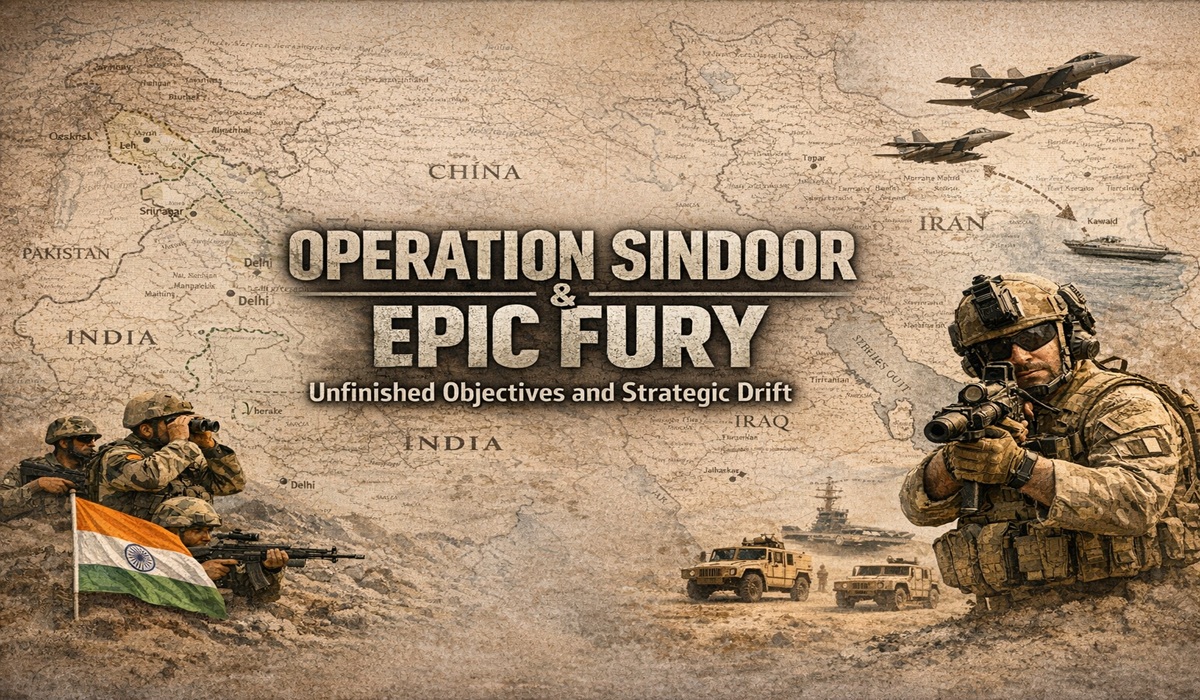
In the field of international politics and modern military strategy, it is becoming increasingly evident that military power alone does not guarantee decisive success in any conflict. In the post–Cold War era, conventional wars have largely given way to limited, hybrid, and multi-dimensional conflicts in which cyber warfare, information operations, economic pressure, proxy networks, and diplomatic engagement operate simultaneously. Within this context, India’s “Operation Sindoor” and the United States’ “Operation Epic Fury” can be viewed as examples where the use of force did not translate into the achievement of intended strategic objectives, and both operations fell short of delivering comprehensive success.
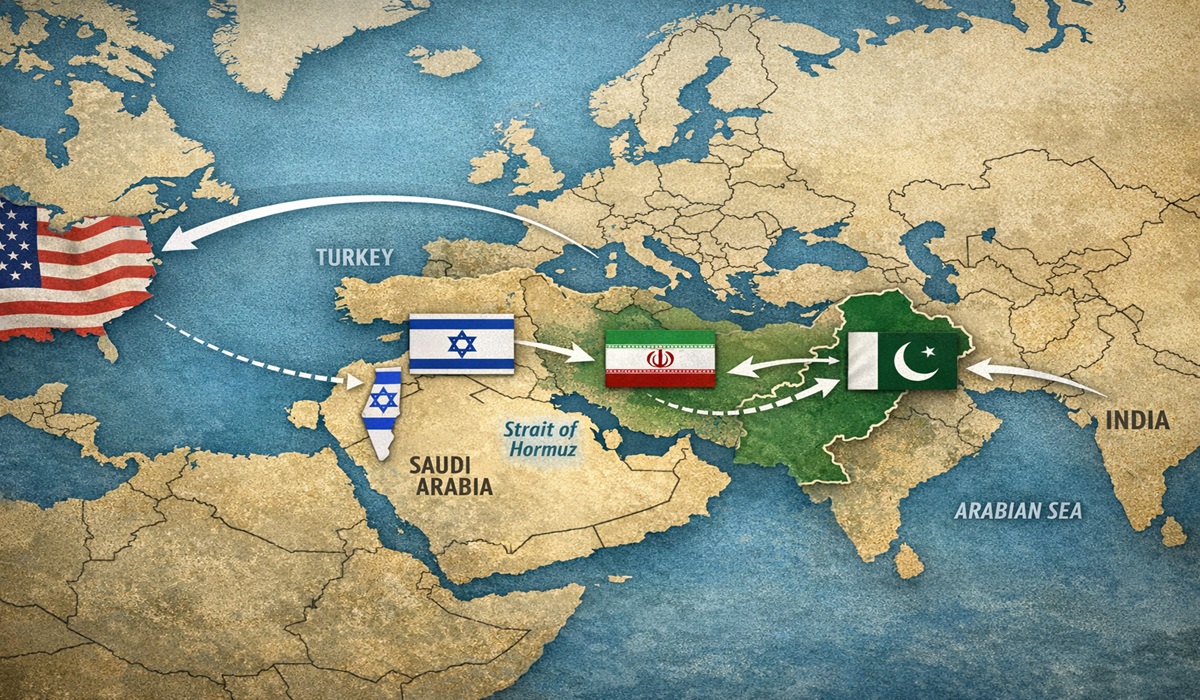
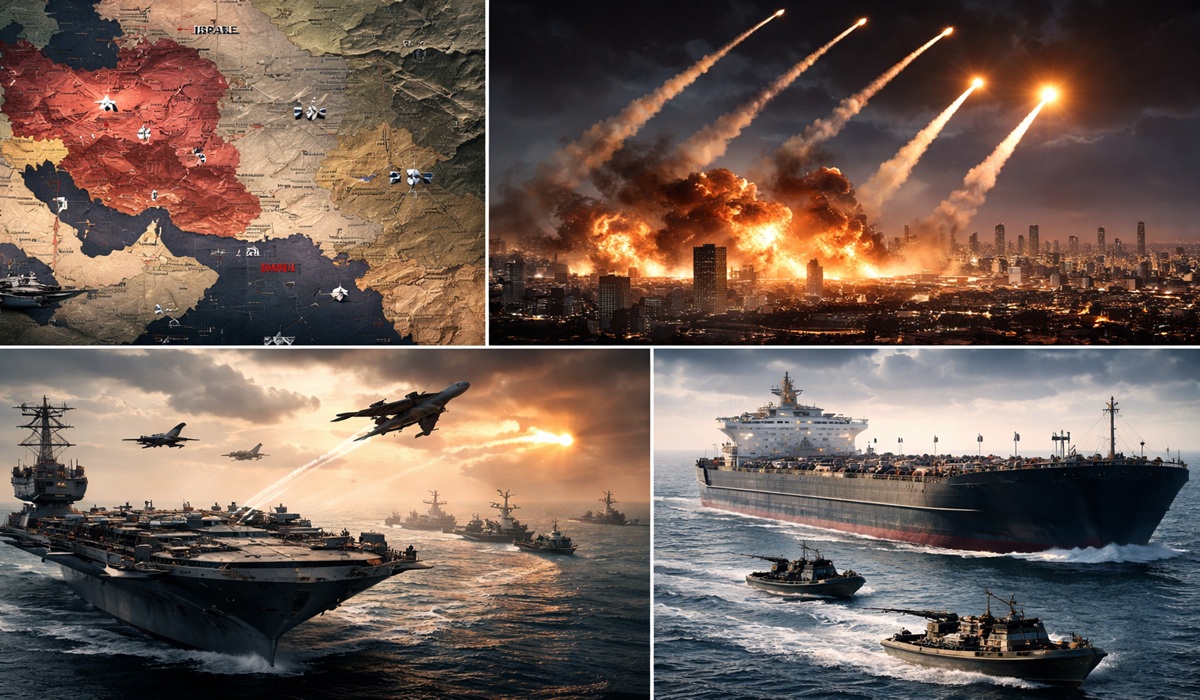
When examining the objectives of “Operation Epic Fury,” its primary goals were to limit or dismantle Iran’s nuclear capability, weaken its missile program, reduce its regional influence, and neutralize its proxy networks. The ground realities proved otherwise. Iran’s nuclear infrastructure was not completely eliminated, and its scientific and technical capabilities remained intact in one form or another. Its missile and drone programs continued to function, and periodic demonstrations of these capabilities underscored Iran’s defensive strength and capacity for response.
Iran’s proxy networks in the region were also not fully neutralized. Various affiliated groups continued their activities, highlighting the fact that eliminating a state’s influence entirely through military means alone is extremely difficult. Despite its presence in the region, the United States faced significant challenges in establishing long-term stability. Tensions in the Strait of Hormuz affected the global energy supply chain, leading to fluctuations in oil prices and adding pressure to the global economy. This situation demonstrated how regional conflicts can have far-reaching global consequences.
On the domestic front, Iran’s political system remained intact and, under external pressure, further consolidated its defensive and strategic posture. The resilience of its state institutions and continuity of its strategic policies indicate that such operations often fail to bring about the intended political transformation. Overall, “Operation Epic Fury” did not achieve its core objectives and instead produced several unintended consequences.
Similarly, “Operation Sindoor” was designed to deliver a limited but clear strategic message. India aimed to apply military pressure on Pakistan, push it into a defensive posture, project its own regional dominance, and reinforce its image as a strong global power. However, these objectives were not fully realized in practice. Pakistan responded promptly and effectively, maintaining its defensive balance while demonstrating its capability to counter any act of aggression.
This situation further highlighted the importance of strategic balance in South Asia, particularly between two nuclear-armed states. Any escalation in such an environment carries the risk of severe consequences, and even a limited confrontation can potentially spiral into a broader conflict. Following “Operation Sindoor,” it also became evident that India’s attempts at isolating Pakistan diplomatically did not fully succeed, as the issue drew international attention and prompted calls from various countries for restraint and dialogue.
One of the key reasons behind the shortcomings of both operations was the miscalculation of the opponent’s capabilities and underestimation of their resilience. In modern military strategy, it is a common error to assess an adversary solely on conventional military metrics while overlooking non-traditional factors such as public support, internal stability, strategic depth, and adaptive planning. Both Iran and Pakistan effectively leveraged these non-conventional elements to strengthen their defense posture.
In today’s era, information warfare and cyber operations have become critical components of conflict. Media platforms, social networks, and digital ecosystems are now instrumental in shaping narratives and influencing global public opinion. In both cases, various actors attempted to control the narrative and gain informational advantage, demonstrating that warfare is no longer confined to the physical battlefield but extends into psychological and informational domains as well.
At the global level, the implications of these developments are significant. First, the perception that major powers can always achieve their strategic objectives has been weakened. This has contributed to the growing discourse around a multipolar world, where multiple powers pursue their respective interests. Second, the global economy has been impacted, particularly through fluctuations in energy markets and disruptions in supply chains, affecting many countries worldwide.
Regionally, both the Middle East and South Asia have experienced heightened security concerns. In the Gulf region, perceptions of insecurity have prompted states to reassess their defense strategies, especially regarding critical infrastructure such as energy routes. In South Asia, these events have reinforced the understanding that even limited conflicts between nuclear-armed states can escalate rapidly, making diplomacy and restraint the most viable path forward.
Both “Operation Sindoor” and “Operation Epic Fury” illustrate a fundamental reality of modern warfare: military force alone is insufficient to secure strategic victory. Success in contemporary conflicts requires comprehensive planning, accurate assessment, effective diplomacy, and long-term strategic vision. The use of force without a realistic and multidimensional strategy can not only fail to achieve its objectives but may also generate additional complexities. The current global environment thus calls for prioritizing dialogue, confidence-building measures, and diplomatic engagement as the most sustainable means of resolving disputes and ensuring lasting peace.
About The Author