By: Donovan Martin Sr, Editor in Chief
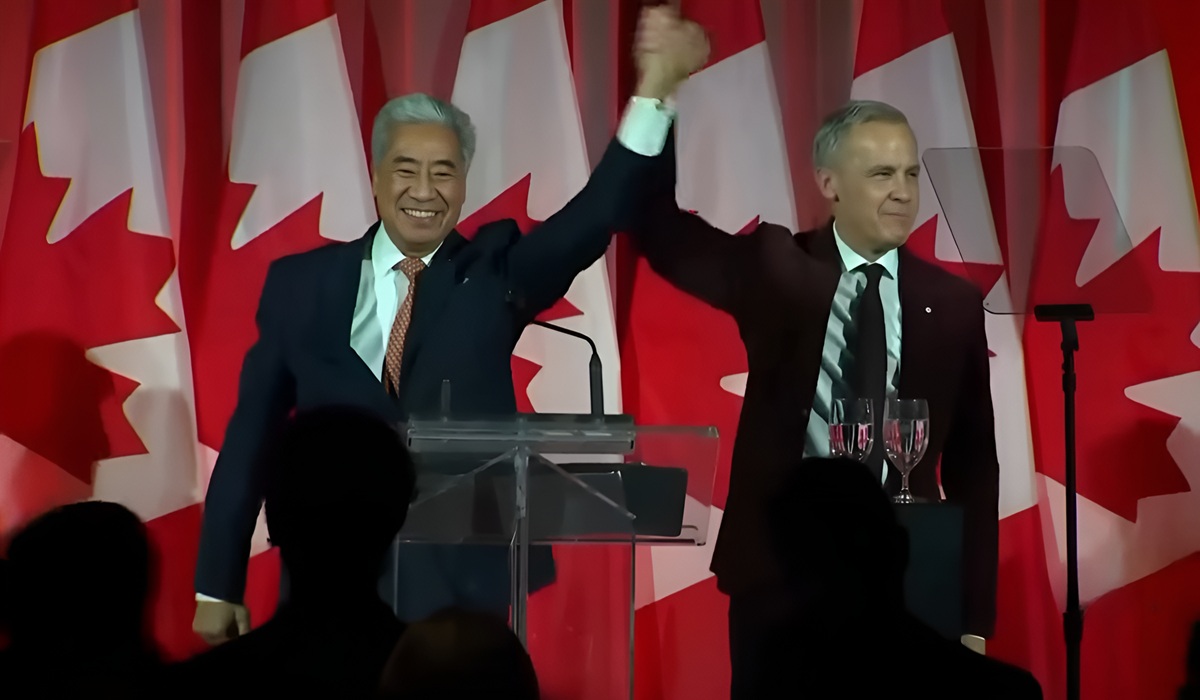
In the final days before Parliament adjourned for the Christmas recess, Michael Ma, the Conservative Member of Parliament for Markham–Unionville, crossed the floor to join the Liberal caucus. The move raised the Liberal seat count to 171, leaving the government one seat short of a majority in the House of Commons. While the decision involved a single MP, it occurred against a backdrop of broader movement within the opposition that has steadily narrowed the parliamentary margin over recent weeks.
Ma’s decision followed an earlier floor crossing by Chris d’Entremont, the longtime Conservative MP for Acadie–Annapolis in Nova Scotia. D’Entremont left the Conservative caucus weeks earlier and joined the Liberals, citing disagreements with the party’s direction and leadership. Taken together, the two defections marked a rare and notable development: two sitting Conservative MPs crossing the floor to the governing party within the same parliamentary session.
The cumulative effect of those moves has been significant. With 171 seats, the Liberals now sit just one seat below the 172 required for a majority government. While this does not formally change Canada’s minority Parliament status, it materially alters the balance of power. The government’s exposure on confidence votes is reduced, opposition leverage is weakened, and even small changes in seat distribution now carry national consequences.
Beyond the confirmed floor crossings, there have been rumblings on Parliament Hill that another sitting MP may be planning to exit federal politics earlier than expected in the coming year. While no formal announcement has been made and no party affiliation change has occurred, such an early departure would trigger a vacant seat and, by extension, a by-election. At this stage, it remains speculative, but it reflects the broader sense of fluidity within the current Parliament.
Should a vacancy arise, the political incentives are straightforward. A single by-election victory would be enough to deliver a majority government. In that context, it would be entirely expected that the Liberals would move quickly to call a by-election and concentrate significant organizational and financial resources on securing the seat. This would not be unusual behavior, but rather a rational response to the parliamentary arithmetic now in place.
This logic extends beyond any one potential vacancy. With the Liberals so close to majority status, every seat that becomes available through resignation, retirement, or defection takes on heightened importance. Whether the opening comes from the Conservatives, the New Democratic Party, or another caucus, the governing party has a clear incentive to pursue majority control through attrition rather than waiting for a general election.
For the Conservatives, the loss of two MPs through floor crossings has intensified scrutiny of caucus unity and leadership stability. These developments arrive ahead of a scheduled leadership review in January, a process that will now unfold in the shadow of visible departures from the party’s own benches. Even if no further MPs defect, the perception of internal strain carries political consequences of its own.
The situation also underscores long-standing debates about democratic legitimacy. Floor crossings and mid-Parliament seat changes reshape the House of Commons without direct voter input. Supporters argue that MPs are elected as individuals and must retain the freedom to act according to conscience and judgment. Critics counter that major shifts in parliamentary power should be decided by voters rather than by internal political movement. Canadian political history contains precedents for both views, and moments like this tend to bring that tension into sharper focus.
As Parliament pauses for the holidays, the landscape it leaves behind is notably different from the one that existed only weeks earlier. Two Conservative MPs, Michael Ma and Chris d’Entremont, now sit with the governing Liberals. The government stands one seat away from a majority. Rumours of further departures, while unconfirmed, add to a sense of instability within the opposition. Whether or not additional seats change hands, the events of recent weeks have demonstrated how quickly parliamentary math can shift, and how a minority government can edge toward majority power without a single national vote being cast.
About The Author