Minab Girls’ School Tragedy, UN, Malala, and Women’s March
- Naveed Aman Khan
- Middle East
- Trending News
- March 16, 2026
The horrific bombing on a girls’ school in the southern Iranian city of Minab by America has emerged as one of the most tragic and controversial incidents during the recent Iran–US–Israel tensions. The attack not only represents a profound human tragedy but has also raised serious questions about military strategy, international law, and the responsibilities of global powers during wartime. On February 28, 2026, the Shajra Tayyaba Girls’ Elementary School in Minab was struck by missiles while hundreds of young students were attending classes. Within moments, this center of learning was reduced to rubble, sending disbelief, grief and outrage across the world.
As many as 180 people were martyred in the attack, most of them girls between the ages of six and twelve, while 95 others were severely injured. Multiple missiles struck the school building, completely destroying the structure and trapping several students and teachers under the debris. The tragedy is considered the deadliest incident involving civilian casualties during the recent wave of attacks on Iran. At the beginning of the conflict, the United States launched Tomahawk cruise missile strikes against several military and civilian targets in Iran. The school was located near a compound associated with Iran’s Islamic Revolutionary Guard Corps.
If the strike had truly been the result of an unintended mistake, the United States would have expressed clear remorse or issued an official apology. Instead, US officials stated that the intended target was the Revolutionary Guard compound located near the school and that the missile accidentally struck the school building. Modern missile systems are programmed to hit a specific target with high precision.
Under international humanitarian law, attacks on schools and other civilian facilities constitute serious violations. If it is proven that civilians were deliberately targeted, such actions could fall under the category of war crimes. The tragedy has therefore intensified criticism of the international community and institutions such as the United Nations, which many argue have failed to ensure adequate protection for civilians during the ongoing hostilities against Iran.
Targeting educational institutions does not merely destroy buildings; it threatens the future of entire societies. Even during armed conflict, schools are widely recognized as protected spaces, and safeguarding them is considered an international responsibility. Continued attacks on educational institutions could have devastating consequences for generations to come.
Another troubling aspect of this tragedy is the apparent silence from several prominent voices who advocate for education and the rights of girls worldwide. Nobel Peace Prize laureate Malala Yousafzai, who herself survived a violent attack while returning from school in Pakistan, has not publicly commented on unjustified killing of the Minab schoolgirls. Similarly, many international organizations that campaign for women’s rights and human rights have not mounted any significant protest over the incident. In Pakistan as well, groups associated with the Women’s March have not issued strong statements, held press conferences, or organized public demonstrations in response to the tragedy.
The reality is that the suffering of women and children should never be viewed through the narrow lens of nationality or politics. Women and girls everywhere share the same fundamental rights, and violations of those rights—regardless of where they occur—deserve global attention and solidarity. Human rights are not merely local concerns; they are universal obligations.
Within the United States itself, lawmakers may also seek explanations from the Pentagon regarding how such a catastrophic event occurred. Greater transparency is needed concerning the process of target selection, the intelligence assessments involved, and whether advanced technologies or artificial intelligence played any role in the strike.
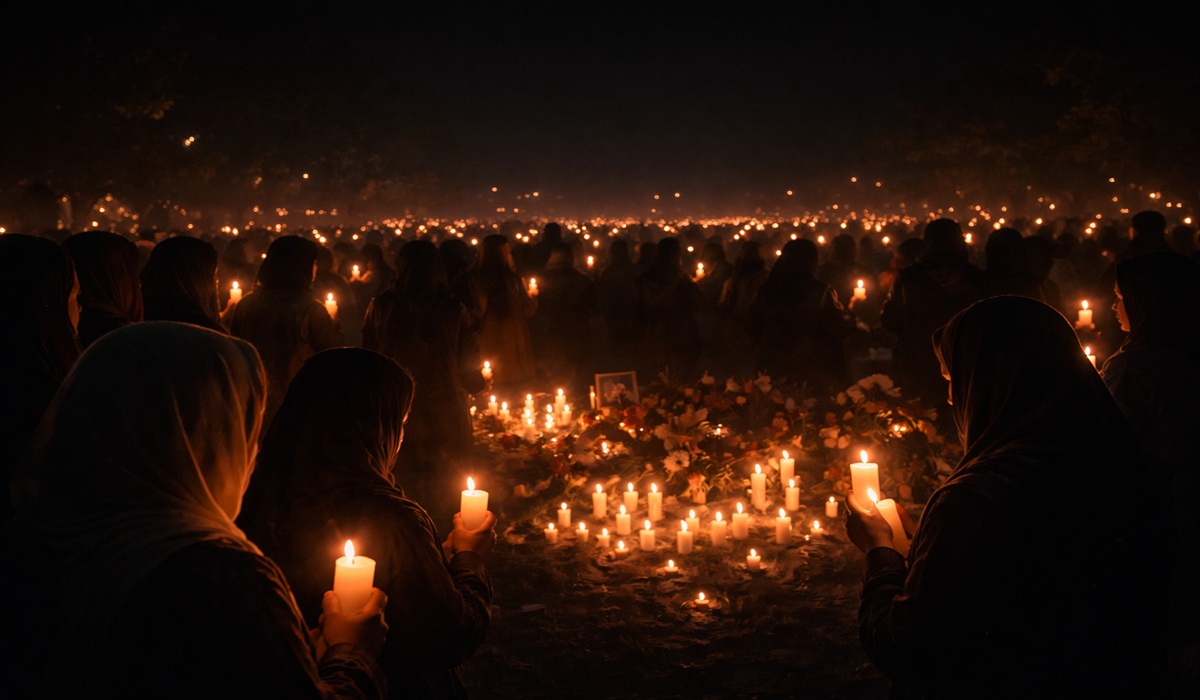
Beyond political and diplomatic debates, the human dimension of this tragedy remains deeply painful. In Minab and other Iranian cities, hundreds of thousands of mourners attended the funerals of the young victims. Images of small coffins broadcast on international media deeply moved people around the world and once again highlighted a harsh truth: in war, it is always ordinary civilians and innocent children who bear the greatest burden.
The destruction of the Minab girls’ school is not merely a local tragedy; it represents a profound moral and legal challenge for the international community. If transparent and independent investigations are not conducted, and if those responsible are not identified and held accountable, similar tragedies may continue to occur in future conflicts. The world must not only ensure justice but also develop stronger mechanisms to protect schools and children during wartime.
The tragedy of Minab serves as a painful reminder that the true cost of war is ultimately paid by humanity itself. If the international community fails to learn from this incident, history may continue to repeat such devastating tragedies.
About The Author