Mexico Cartel Leader “El Mencho,” Killed In Deadly Shootout
- Naomi Dela Cruz
- Breaking News
- Latin
- February 23, 2026
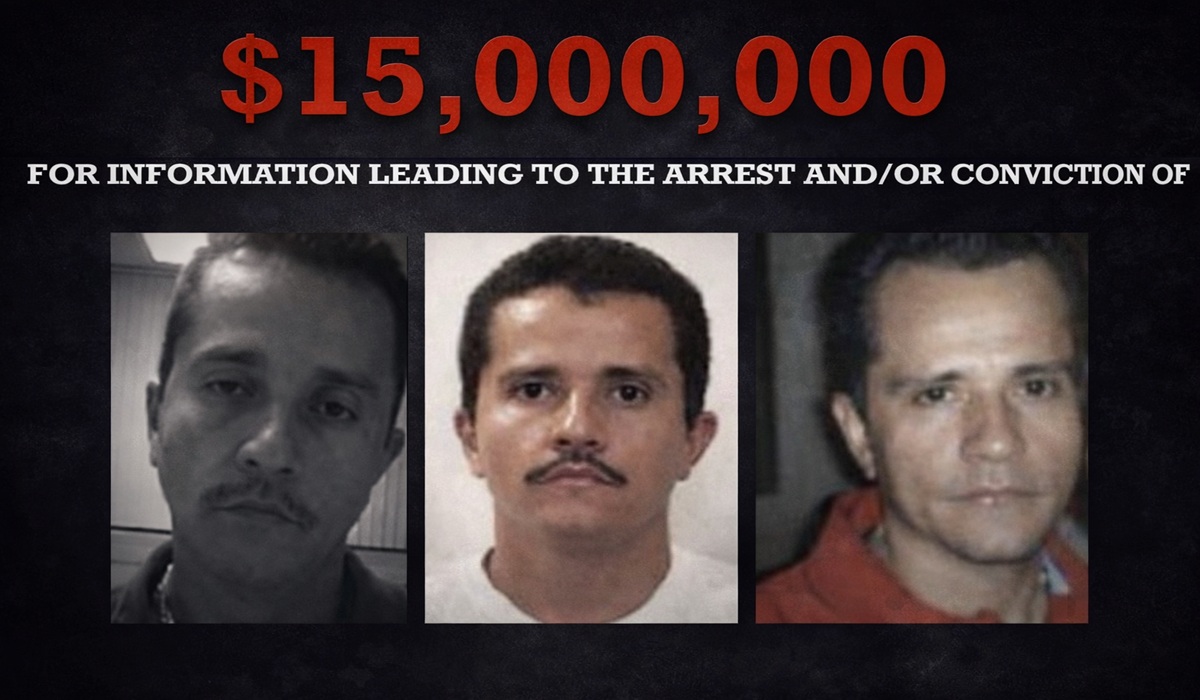
Guadalajara, Mexico — Mexico’s federal government has confirmed the death of Nemesio Rubén Oseguera Cervantes, known globally as “El Mencho,” the longtime leader of the Jalisco New Generation Cartel, following a military operation in the western state of Jalisco. His killing marks one of the most significant blows to organized crime in Mexico in over a decade and has already triggered violent retaliation across multiple regions of the country.
El Mencho, who carried a U.S. bounty of up to $15 million for information leading to his arrest or conviction, had risen from a regional enforcer to the head of one of the most aggressive and financially powerful drug cartels in the Western Hemisphere. Under his leadership, the Jalisco New Generation Cartel, or CJNG, became a dominant force in the trafficking of fentanyl, methamphetamine, and cocaine into the United States, while expanding into extortion, fuel theft, arms trafficking, and territorial control across Mexico.
According to Mexico’s Ministry of Defense, the operation took place Sunday in Tapalpa, a mountainous area south of Guadalajara long believed to be one of the cartel’s strongholds. Mexican army forces reportedly engaged armed CJNG members in a confrontation during an attempt to capture Oseguera. He was wounded in the exchange of gunfire and died while being transported to receive medical attention. Officials acknowledged that U.S. intelligence support played a role in locating him, reflecting deep security coordination between the two countries.
Within hours of the announcement, retaliation began. Across Jalisco and into neighboring states, criminal cells believed to be aligned with CJNG set vehicles ablaze and used them to block major highways. Social media and local reporting showed smoke rising from fuel stations, torched delivery trucks, and burned-out cars positioned across roadways to paralyze movement. Businesses shuttered in several cities as panic spread. Convenience stores, small retail outlets, and banks were reportedly targeted in acts of arson and vandalism. In some municipalities, gas stations were set on fire, creating fears of broader fuel shortages and supply chain disruption.
Authorities worked to clear roadblocks as National Guard units were deployed to secure major corridors. Flights in and out of parts of western Mexico experienced delays and cancellations amid security concerns. Schools in affected areas announced temporary closures as a precaution.
Casualty figures remain fluid as local prosecutors and federal authorities compile reports from multiple jurisdictions. Early accounts indicate that fatalities include cartel members killed during the military clash and additional deaths tied to retaliatory violence. Officials have not released a final consolidated toll, but security analysts warn that secondary violence in the coming days could alter those numbers.
The significance of El Mencho’s death cannot be overstated. For years, CJNG had been considered Mexico’s most expansionist and heavily armed criminal organization. Unlike older cartels that relied more heavily on secrecy, CJNG developed a reputation for overt displays of force, including armored vehicles, coordinated ambushes, and rapid retaliation against state forces. Its structure combined centralized leadership with semi-autonomous regional commanders, giving it resilience even under pressure.
The immediate question now is succession. While El Mencho was the symbolic and operational head of the cartel, CJNG is not a one-man enterprise. Analysts believe several senior lieutenants could compete to consolidate power. A violent internal struggle is possible if factions disagree over leadership or territorial control. At the same time, rival criminal groups may attempt to exploit any perceived vacuum to seize trafficking routes or production zones.
Historically, the removal of a cartel kingpin in Mexico has produced mixed results. In some cases, fragmentation weakens the organization over time. In others, splinter groups multiply and violence temporarily intensifies as control shifts. Much will depend on how quickly CJNG can establish a new chain of command and whether federal authorities sustain pressure in the aftermath.
For the Mexican government, the operation represents a strategic victory but also a test. Restoring stability, protecting civilians, and preventing a prolonged wave of reprisals will be critical in the days ahead. Public messaging has emphasized that security forces remain fully deployed and prepared to respond to additional threats.
For communities in Jalisco and beyond, the situation remains tense. Residents are watching whether this moment marks a turning point in the country’s long struggle against organized crime or the beginning of another violent chapter in an already turbulent conflict.
As federal authorities continue operations and investigations, Mexico now stands at a pivotal crossroads. The death of El Mencho closes one era of cartel dominance, but what replaces it may determine the trajectory of security and stability in the region for years to come.
About The Author