Mark Carney in Davos: The End of Deference and the Rise of A New World Order
- TDS News
- Canada
- January 21, 2026
By: Donovan Martin Sr, Editor in Chief
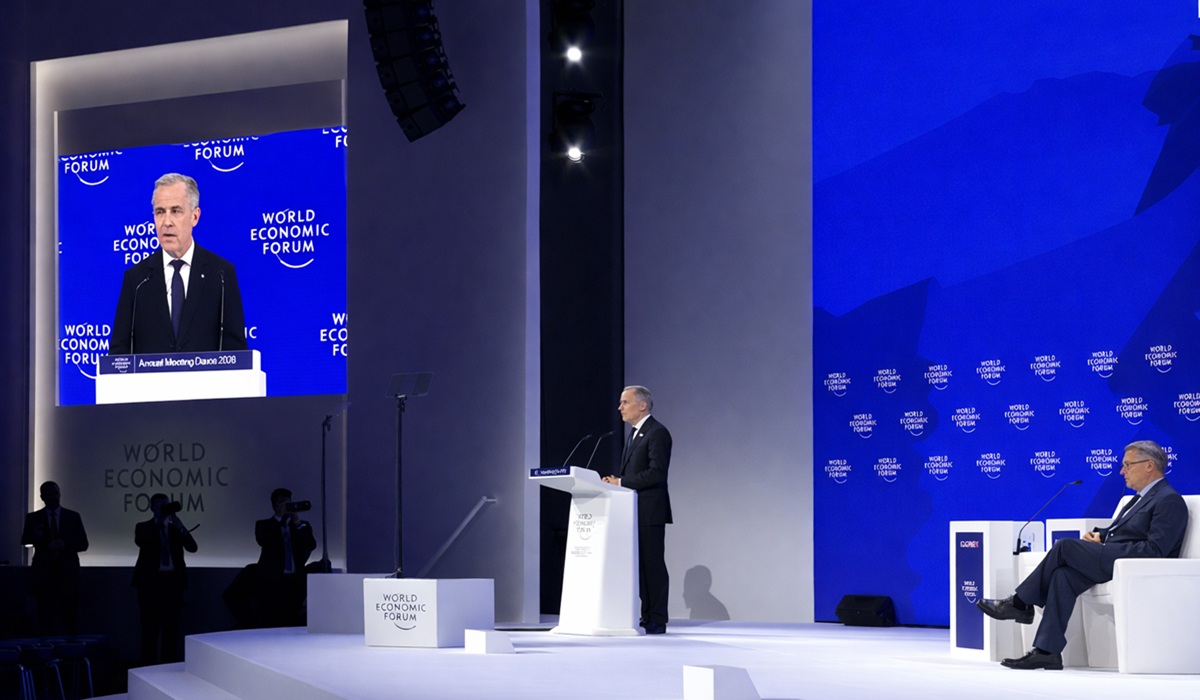
What was delivered in Davos was not a warning shot and not a performance for applause. It was a strategic statement, delivered calmly, to an audience that understands power when it sees it. This speech is not about China. It is not about Russia. And it is not aimed at the world in general. Its focus is far narrower and far more deliberate: the growing use of economic and political pressure by the United States against allies, paired with the assumption that those allies will absorb the cost quietly in the name of stability.
That assumption was rejected. When the speech speaks of tariffs used as leverage, financial infrastructure as coercion, and supply chains turned into vulnerabilities, it is describing lived experience, not theory. The decision to avoid naming Washington is intentional. Naming would have personalized the critique. By keeping it structural, the message becomes unavoidable.
The central argument is simple and unsettling: this behavior is no longer an exception tied to a single leader. It is now treated as a condition of the system itself, and systems must be managed, not hoped away. That is why the phrase “rupture, not transition” matters. It signals that waiting for a return to predictability is no longer policy. Continuing to behave as if old guarantees still hold is framed as self-deception. This is where the Havel reference lands its weight.
“Living within a lie” is not about distant authoritarian regimes. It is about allies continuing loyalty rituals while absorbing asymmetric pressure. The sign in the window is not ideological; it is behavioral. Compliance no longer buys safety, access, or respect. The response outlined is not confrontation. It is insulation.
What follows in the speech is a methodical removal of leverage points. Trade diversification. Defence integration beyond a single capital. Strategic autonomy in energy, minerals, finance, and emerging technologies. None of this is framed as retaliation. It is framed as preparedness. The tone is calm because the decision is already made.
When relationships are described as being recalibrated so their depth reflects shared values, the meaning is clear without being provocative. Cooperation remains. Automatic deference does not. Engagement continues, but on terms that no longer assume asymmetry as the price of stability. The most consequential line remains the pivot from values alone to the value of strength. That strength is not measured in volume or aggression. It is measured in optionality—the ability to decline pressure without collapse.
Security is framed the same way. Collective defense is reaffirmed, but dependence on any single actor is quietly replaced with layered partnerships. Emphasis on Europe and the northern flank is not rhetorical flourish. It is strategic redundancy. The standing ovation in Davos was not ideological agreement. It was recognition. Leaders from other middle powers understood the architecture being described because many are facing the same pressure points.
This is not anti-American. It is post-dependence. There is no call for confrontation, no challenge issued, no demand made. Instead, the speech demonstrates how coercion loses effectiveness when the target removes the mechanisms that make it work. That is what power looks like in this moment. Not defiance. Not submission. Quiet, structural independence, built openly and explained without apology. This was not a request to lead differently. It was a declaration that the shift is already underway.
About The Author