Karmen Black’s Life-Saving Heroic Act Earns the Highest Honor
- TDS News
- Breaking News
- January 5, 2026
By: Donovan Martin Sr, Editor in Chief
Some moments don’t announce themselves. They happen quietly, almost invisibly, and only later do we realize how close we came to loss.
Last spring at Bde Maka Ska, one of those moments unfolded. A toddler ran toward the water, slipped, and disappeared beneath the surface. It happened fast. Too fast for shouting, too fast for hesitation. Karmen Black saw it—and moved.
She didn’t stop to think about whether she was qualified or what the risk might be. She entered the lake fully clothed and pulled the child out before most people nearby even understood what was happening. Within moments, the child was back in his father’s arms. Shaken, but alive.
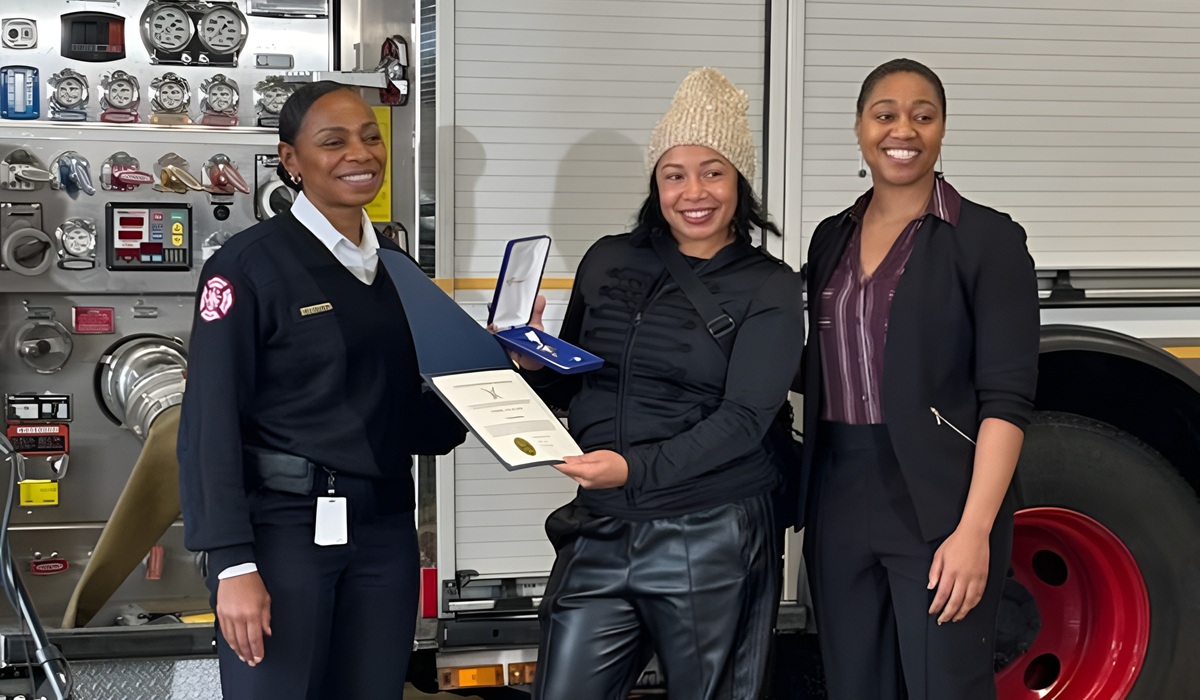
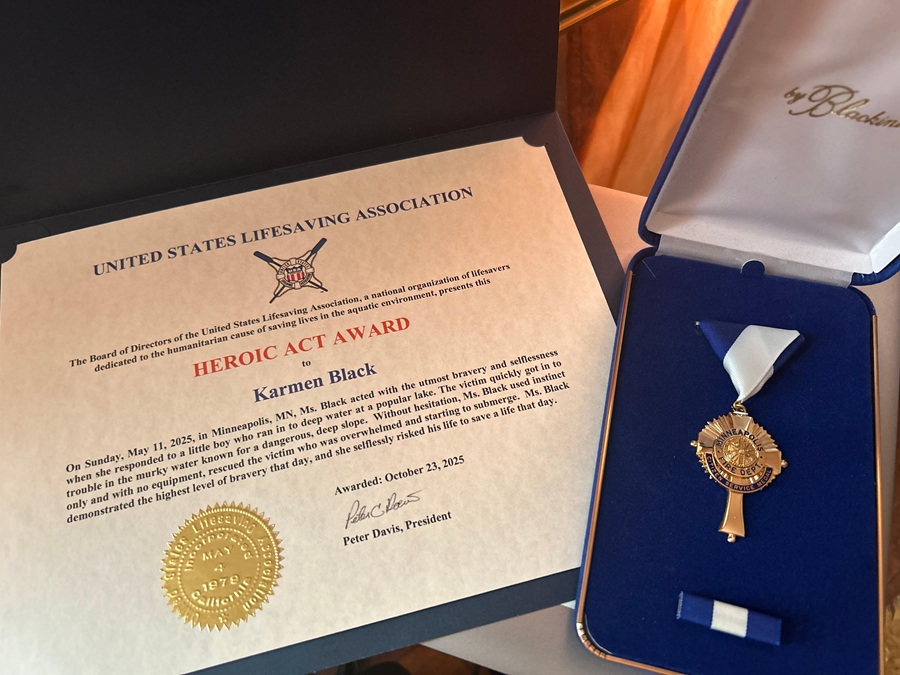
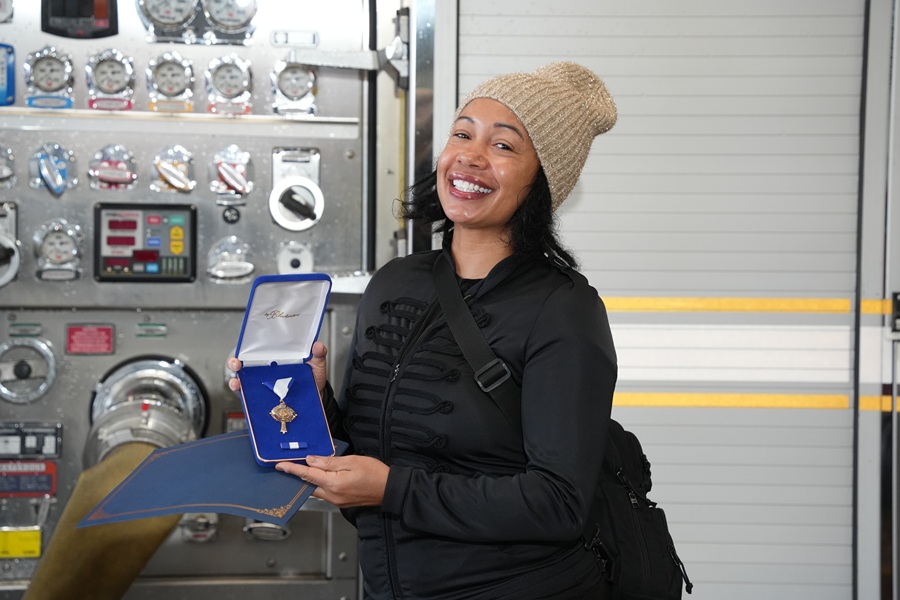
Today, at Minneapolis Fire Station 5, that act was formally recognized with a national lifesaving award. Not because Black sought attention, but because moments like this deserve to be acknowledged—for what they prevent, and for what they say about who we are when it matters.
Black is a social worker and community advocate. She is not a lifeguard. She is not a first responder. What she had was awareness and the willingness to act on it.
“I didn’t think — I just moved,” Black said. “Any child deserves someone to notice, to act, and to care. I’m grateful I was there.”
That instinctive response carried real risk. Sudden emergencies put enormous strain on the body. Heart rate spikes, adrenaline surges, and fear competes with responsibility. It’s easy to freeze. Black didn’t. Her decision reminds us that heart health isn’t only about long-term prevention—it’s also about how the body and mind respond under pressure, and how readiness can save lives in seconds.
The rescue happened one day before Mother’s Day. It’s impossible not to think about what could have followed had no one intervened. Instead of tragedy, there was relief. Instead of grief, there was gratitude. That difference is everything.
The award presented today is the United States Lifesaving Association’s Heroic Act Award, the highest honor the organization gives to non-lifeguards. It places Black among a small group of people nationwide whose actions met the highest standard of courage and impact.
The presentation was made by Dr. Ayanna Rakhu, Ph.D., Founder and CEO of Sankofa Swim International and a former lifeguard. Her words centered not on heroics, but on awareness—on the idea that lifesaving often begins before an emergency is obvious.
“What Karmen did reflects the very heart of lifesaving,” Rakhu said. “She saw danger, trusted her instincts, and acted without hesitation. This is why community education and awareness matter.”
Adrienne Groh, Chair of the USLA Heroic Acts Committee, echoed that sentiment.
“This rescue meets the highest standard of bravery we recognize,” Groh said. “Karmen Black’s actions embody courage, compassion, and service to humanity.”
Stephane Rebeck, a USLA training officer in the Great Lakes Region, spoke to the reality of how these incidents unfold.
“Most drownings happen quickly and silently,” Rebeck said. “This rescue underscores the importance of awareness, recognition, and immediate response to interrupt drowning and save lives.”
Minneapolis Station 5 Fire Chief Rucker offered remarks during today’s ceremony, speaking as someone who understands risk and response firsthand. Her words carried a quiet respect—for the act itself, and for the fact that Black stepped forward without training, obligation, or expectation. First responders prepare for these moments. Few expect to see civilians do the same.
The ceremony brought together Black’s family and members of the media, but the recognition extended beyond those in the room. It reflected a shared commitment—among families, professionals, and the broader community—to valuing awareness, responsibility, and looking out for one another when it matters most.
Honoring acts like Black’s is about more than awards; it’s about setting a standard for what community responsibility looks like when seconds count.
At its core, this story isn’t dramatic. It’s human. It’s about noticing. About caring. About acting before fear has time to take over.
On an ordinary day that could have ended very differently, one person’s instinct changed everything. And today, that mattered enough for a room full of professionals, leaders, and first responders to stop—and say so.
What today’s recognition ultimately underscores is how thin the line can be between an ordinary day and an irreversible loss, especially around water. Lakes, rivers, and shorelines are woven into daily life, particularly in places like Minneapolis, where access to open water is constant and familiar. That familiarity can create a false sense of security. Drowning does not look the way people expect it to. It is quiet. It is fast. And without someone paying attention, it often goes unnoticed until it is too late.
That is why moments like this one matter beyond the ceremony. Water safety is not solely the responsibility of lifeguards or first responders; it is a shared obligation rooted in awareness, education, and willingness to act. Karmen Black’s rescue did not happen because she had specialized equipment or authority. It happened because she noticed something was wrong and trusted herself enough to respond. In recognizing that choice, today’s award does more than honor one person—it reinforces the idea that safer communities begin with people who are present, prepared, and willing to look out for one another, especially when seconds matter most.
About The Author