Jeneroux Crosses the Aisle as Liberals Climb to 169, Leaving Conservatives on the Brink
- Kingston Bailey
- Breaking News
- February 18, 2026
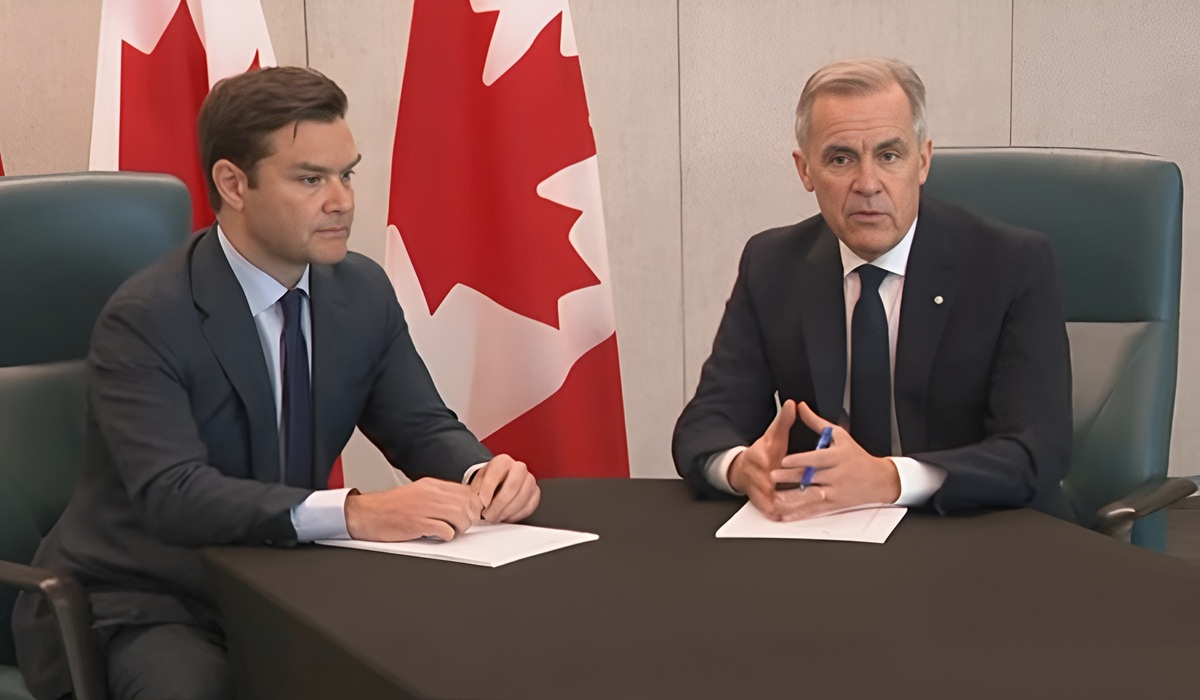
The floor of the House of Commons has seen its share of dramatic crossings over the decades, but this one lands with particular force. A third Conservative Member of Parliament has now joined Prime Minister Mark Carney’s Liberals, tightening the arithmetic in Ottawa and tightening the pressure on Conservative leader Pierre Poilievre.
With the addition of Matt Jeneroux, the Liberals now sit at 169 seats, just three short of the 172 required for a majority government. In a Parliament defined by razor-thin margins and constant brinkmanship, three seats is not a comfortable buffer for the opposition. It is a flashing warning light.
Jeneroux, who has represented Edmonton since 2015, had already signalled he would not seek re-election. His move therefore carries both symbolic and strategic weight. He is not a rookie looking for relevance, nor a backbencher chasing survival. He is a veteran legislator who, by his own account, was moved by the Prime Minister’s speech at the World Economic Forum in Davos. He said he could not sit on the sidelines anymore.
Before Jeneroux, two other Conservatives crossed the aisle: Chris d’Entremont of Nova Scotia and Michael Ma of Ontario. Three defections in a single parliamentary stretch is not a routine hiccup. It is a narrative shift.
Poilievre was quick to accuse the Prime Minister of engineering dirty backroom deals to edge closer to majority control. The charge is politically potent, especially for a Conservative base that prides itself on distrust of insider maneuvering. Yet politics has a long memory, and aisle-crossing is hardly the only arena where quiet negotiations shape outcomes.
It was, after all, a carefully managed internal arrangement that allowed Poilievre himself to run in a safe Conservative seat when he needed one. A sitting Member of Parliament stepped aside, creating space for the party leader to secure a foothold in friendly territory. No elected official relinquishes a seat lightly, and certainly not without discussions about timing, opportunity, and future considerations. That is not scandal. It is politics. But it does make sweeping accusations about backroom dealing ring somewhat hollow.
If negotiations behind closed doors are suddenly disqualifying, then much of modern parliamentary strategy would have to be put on trial. Leadership bids, nomination contests, committee assignments, even cabinet shuffles are rarely conducted in full public view. They are shaped through persuasion, compromise, and sometimes trade-offs. The difference lies not in whether deals happen, but in whether they serve a broader political or policy purpose.
What makes this moment sharper is timing. Poilievre only recently survived a party confidence vote. On paper, it was unanimous. Behind the scenes, however, the mood was far less serene. Many within the caucus reportedly understood that triggering a leadership contest while Carney’s Liberals are riding a surge in national polling would risk electoral disaster. There is no obvious successor waiting in the wings. A divided party without a fresh face could have been swallowed whole by a government enjoying economic momentum and renewed international standing.
Now, the optics are brutal. Three MPs walking away suggests something deeper than individual restlessness. It suggests discomfort. It suggests doubt. It suggests that, at minimum, some Conservatives see a governing Liberals Party that is setting the narrative while they are reacting to it.
For Carney, the numbers matter as much as the symbolism. At 169 seats, every vote becomes easier. Every committee becomes more manageable. Every confidence motion carries less existential risk. Even without formal majority status, the psychological advantage shifts. Other MPs watching from either side of the aisle know that the gravitational pull of a near-majority government can be strong.
For Poilievre, this is a wake-up call. It forces hard questions about message discipline, internal unity, and the party’s path to government. It also exposes the tension between rhetoric and reality. Politics is built on negotiation. Sometimes those negotiations happen across party lines. Sometimes they happen within them. To pretend otherwise is to ignore how Parliament has always functioned.
There is also the regional dimension. Jeneroux represented Edmonton, a Conservative stronghold. When a long-serving MP from Alberta decides to align with a Liberal Prime Minister, it punctures the idea that ideological lines are immovable. Even if he was planning retirement, the decision sends a signal that transcends one riding.
None of this guarantees a Liberal majority. Three seats is still three seats. Minority governments can collapse quickly. Public opinion can shift just as fast as caucus loyalties. But momentum in politics is real, and right now it belongs to Carney.
For Conservatives, the question is whether this moment becomes a catalyst or a spiral. Parties have survived defections before. They have rebuilt after internal fractures. Yet ignoring warning signs rarely ends well. If members are crossing the aisle because they feel the governing party better reflects their economic or global outlook, that demands reflection. If they are leaving because they sense vulnerability in leadership, that demands action.
In the end, aisle crossing is neither saintly nor sinister by default. It is a feature of parliamentary democracy. What matters is why it happens and what it signals. Three defections, a government within striking distance of majority status, and an opposition leader defending his legitimacy only weeks after a confidence vote create a volatile mix.
Ottawa thrives on numbers. Today, the number that matters is 169. And the number looming over every strategy session on Parliament Hill is 172.
About The Author