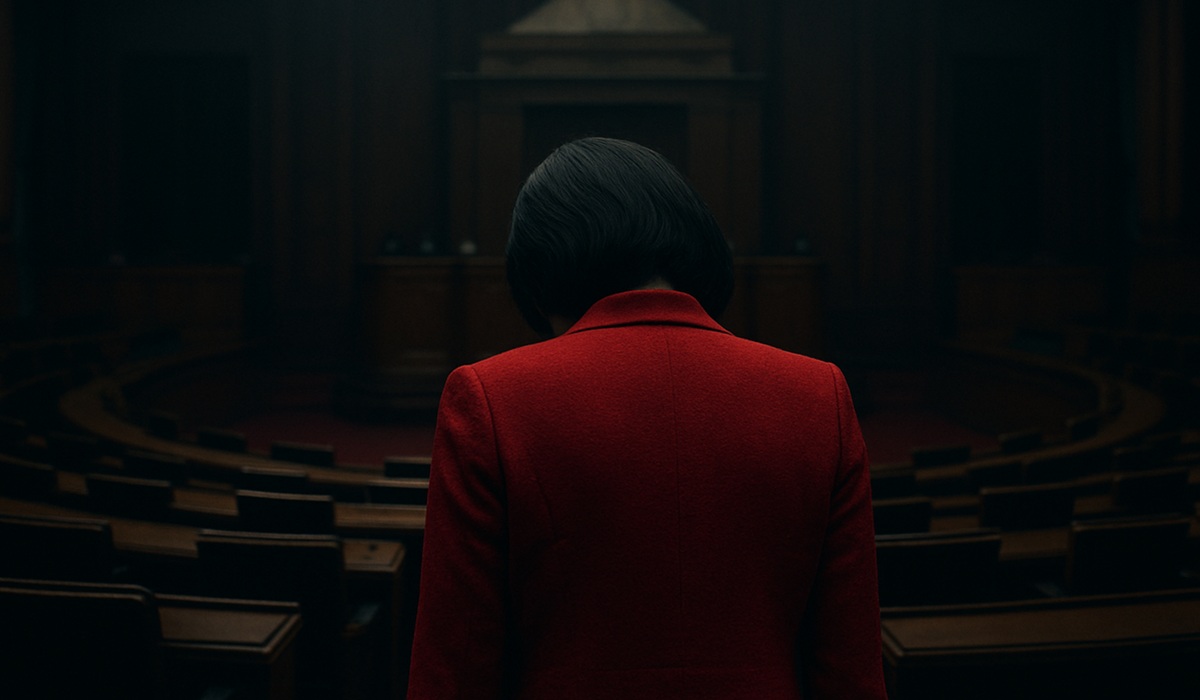
Japan is entering one of its most volatile political moments in years, and much of the turmoil stems from the increasingly fragile position of its Prime Minister. Once perceived as a steady figure guiding Japan through global uncertainty, she now finds herself facing intense scrutiny, collapsing approval ratings, and questions that no leader wants to hear: who has been advising her, and how did things deteriorate this quickly?
Recent events have made Japan appear diplomatically exposed. Relations with both Russia and China have sharply worsened in the past week, with accusations, miscommunications, and strategic missteps accumulating at a pace that suggests deeper problems inside the Japanese leadership circle. Foreign policy decisions that were meant to project strength have instead triggered coordinated pushback from Tokyo’s rivals, leaving analysts stunned at how rapidly the situation unraveled.
Behind the scenes, insiders describe an administration divided between hawkish strategists pushing for aggressive posture and advisors warning against provoking two of Asia’s largest powers simultaneously. Somehow, the hawks have prevailed — and the consequences are now unfolding in real time. Japan’s position in the region looks increasingly precarious, not because its military or economic capacity has weakened, but because its foreign policy messaging has become inconsistent, reactive, and strategically confused.
The Prime Minister now faces the uncomfortable reality that either the intelligence she received was flawed, or the guidance she followed failed to account for how closely Russia and China coordinate their responses. The result is a diplomatic storm that many believe could have been avoided with better counsel and a clearer long-term strategy.
Public frustration is rising as well. Voters want to understand how a government that once prided itself on careful planning ended up blindsided on multiple fronts. Political observers warn that unless the Prime Minister reshapes her advisory circle and stabilizes Japan’s messaging, the crisis will deepen and potentially reshape the country’s leadership before the next electoral cycle.
At this moment, Japan is not just dealing with external pressure — it is confronting an internal reckoning. Whether the Prime Minister can recover from this, or whether the damage is already irreversible, will determine Japan’s place in an increasingly unstable Indo-Pacific world.
About The Author