Inside T Flow: What Happens From Artwork to Installation
- T Flow Printing & Signage
- Western Canada
- December 29, 2025
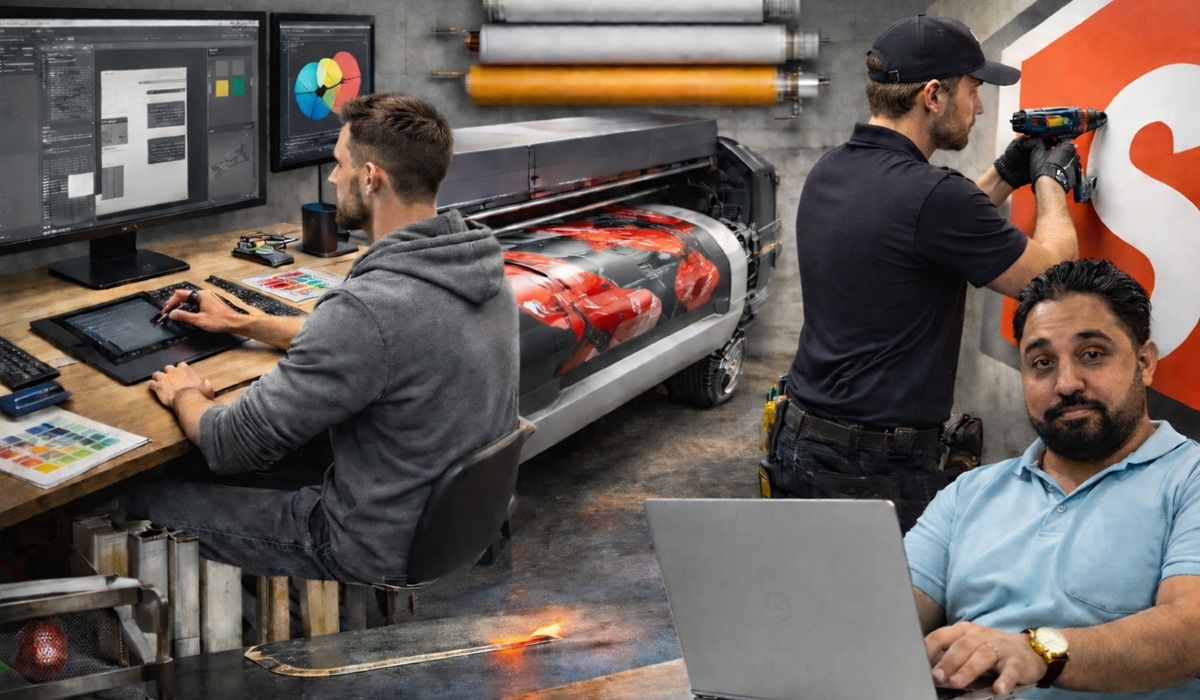
Walk into T Flow Printing & Signage with an idea, a sketch, or even just a rough concept, and what happens next is far more involved than most people realize. From the outside, printing and signage can look simple—design something, print it, install it. But behind every finished sign, banner, decal, or branded surface is a carefully managed process that blends creativity, technical precision, problem-solving, and hands-on craftsmanship.
It all begins with understanding the purpose. Before a single file is opened or a printer is turned on, the team looks at what the sign actually needs to do. Is it meant to attract attention from a busy roadway? Guide customers inside a building? Reinforce a brand’s professionalism? Hold up against Winnipeg winters? These questions shape every decision that follows, from material choice to colour saturation to mounting method.
Once the goal is clear, artwork takes centre stage. Some clients arrive with polished, print-ready files. Others come with logos that need refining, old artwork that needs updating, or ideas that exist only in conversation. At this stage, T Flow focuses on translation—turning digital designs into something that will exist in the real world, at scale, under real lighting conditions. Colours are adjusted to ensure they print accurately. Fonts are checked for legibility at distance. Layouts are reviewed so they don’t just look good on a screen, but make sense when viewed from across a street or inside a storefront.
This is also where practical experience matters. Certain colours behave differently on different materials. A design that works beautifully on paper may need adjustments when printed on vinyl, aluminum, coroplast, or fabric. The team anticipates these issues early, preventing surprises later. It’s a quiet but critical step that saves time, money, and frustration.
With artwork approved, production planning begins. This is where decisions become tangible. The right material is selected based on where and how the sign will be used. Outdoor signage needs durability and UV resistance. Indoor graphics might prioritize finish and texture. Temporary signage focuses on speed and cost-efficiency, while long-term installations demand strength and precision.
Printing itself is a balance of technology and oversight. Modern wide-format printers are powerful, but they’re not fire-and-forget machines. Settings must be dialed in for each job. Ink density, resolution, curing time, and alignment are monitored closely. Test prints are often run to ensure colours and details match expectations. This step is about consistency—making sure what leaves the shop reflects the standards promised at the start.
After printing comes finishing, a stage many people never consider but one that defines the final product. This can include trimming, laminating, mounting, hemming, grommeting, or contour cutting. Lamination, for example, isn’t just about shine or matte preference. It protects against scratches, fading, and moisture. Mounting a print to a rigid substrate requires accuracy down to the millimetre to avoid bubbles, warping, or misalignment. These details separate professional signage from something that looks rushed or temporary.
Quality checks happen throughout this process. Before anything is packaged, it’s inspected as a finished piece, not just a printed image. Edges are checked. Colours are reviewed again under proper lighting. Mounting is tested for stability. If something isn’t right, it’s corrected before it ever reaches the client. That commitment to getting it right in-house is part of what builds long-term trust.
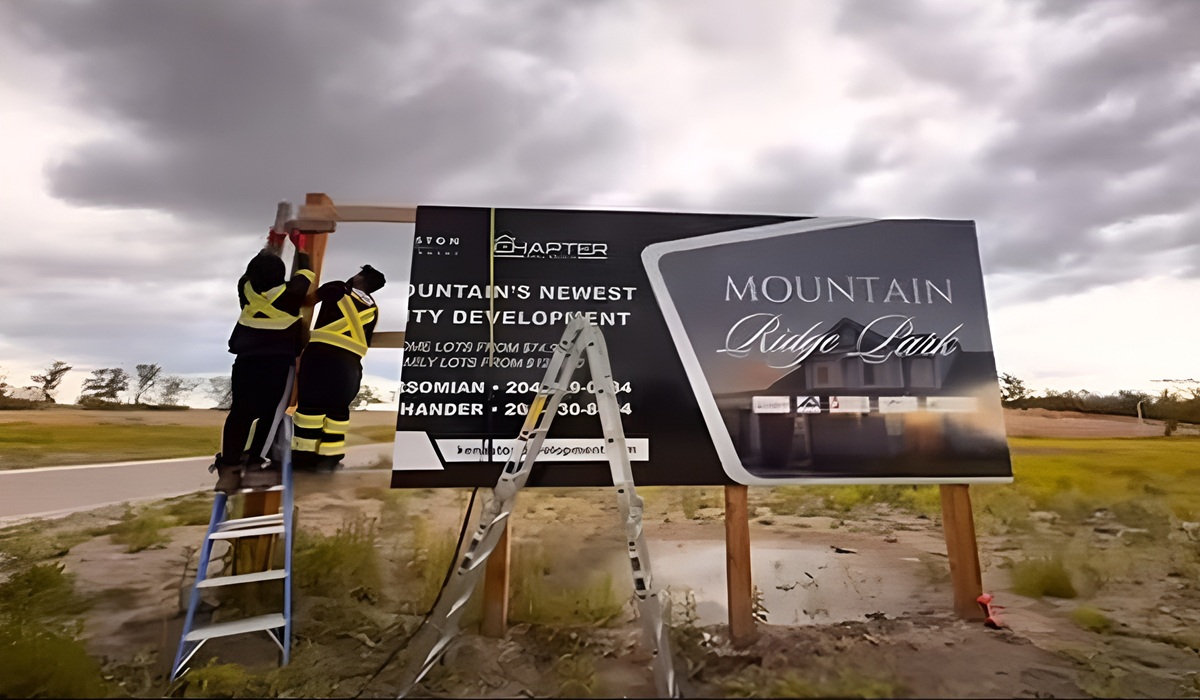
Then comes installation—the moment where everything either comes together or falls apart. Installation is not an afterthought at T Flow; it’s an extension of the design and production process. Site conditions are considered in advance. Wall surfaces, weather, access, height, and visibility all matter. An installer needs to understand not just how to attach a sign, but how it will be seen, how long it needs to last, and how it interacts with its surroundings.
Measurements are verified on site. Levels are used to ensure alignment. Mounting hardware is selected to match both the sign and the structure it’s being attached to. For vehicle wraps and decals, surfaces are cleaned and prepped meticulously, because adhesion depends on preparation as much as material quality. Every step is deliberate, because once a sign is installed, it represents the client’s brand every single day.
What ties this entire process together is communication. Clients aren’t left guessing where their project stands. Questions are answered clearly. Options are explained without jargon. Timelines are realistic. That transparency is part of the workflow, not an extra service. It ensures that when installation day arrives, expectations align with reality.
From artwork to installation, T Flow’s process is built around one core idea: signage should work as hard as the business it represents. It’s not just about ink on material. It’s about visibility, credibility, and presence in the physical world. Every banner, sign, or graphic is a small but powerful extension of a brand’s story.
To see examples of projects, behind-the-scenes work, and finished installations, visit T Flow Printing & Signage on Facebook:
https://www.facebook.com/profile.php?id=61561452777281
Inside the shop, the process may be methodical, but the goal is simple—deliver signage that looks right, lasts longer than expected, and does exactly what it’s meant to do the moment it’s installed.
About The Author