Floating like a butterfly and stinging like a bee
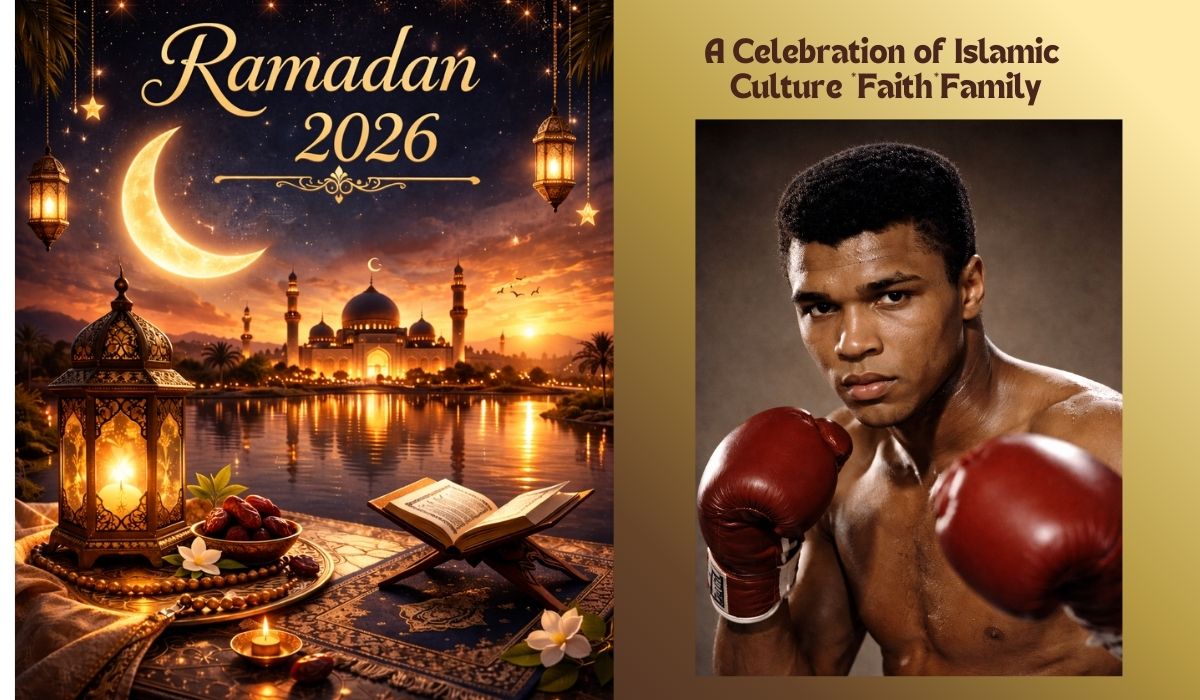
Ramadan is a month that calls people inward before it calls them outward. It is a season of restraint, humility, and recommitment to principles that often feel inconvenient in louder times. In the United States, few public figures embodied that kind of spiritual discipline under pressure more visibly than Muhammad Ali. To speak of Ali only as a heavyweight champion is to miss the deeper current that defined his life. During Ramadan, his example feels especially relevant because it was faith, not fame, that shaped his most difficult decisions.
Born Cassius Clay in Louisville, Kentucky, Ali embraced Islam in the 1960s during a period of profound social tension in America. His conversion was not a quiet, private shift; it was a public declaration at a time when doing so risked alienating sponsors, media institutions, and fans. Yet Ali’s journey into Islam was never about spectacle. It was about identity and accountability. Ramadan sharpened those commitments. Fasting, prayer, and charity were not symbolic gestures for him. They were anchors.
When Ali refused induction into the U.S. Army during the Vietnam War, citing religious conviction and moral objection, he sacrificed his heavyweight title and faced the possibility of imprisonment. The decision cost him years of his athletic prime. It is easy, decades later, to romanticize that stand. At the time, it was condemned by many political leaders and sports commentators. What stands out during Ramadan reflection is not simply that he resisted pressure, but that he did so grounded in faith. He often spoke about answering to God before answering to public opinion.
Ramadan is about self-restraint in the face of appetite. Ali practiced a broader version of that restraint in public life. He refused to let anger dictate his words, even when criticized harshly. He insisted that dignity was not negotiable. Later in life, as Parkinson’s disease slowed his once electric movements, he remained committed to humanitarian causes, supporting interfaith dialogue and charitable initiatives across the globe. The bravado of his youth softened into a quieter spiritual authority.
For Muslim Americans, Ali’s life is a reminder that faith and citizenship are not opposing forces. They can coexist in tension, but they do not cancel each other out. During Ramadan, when Muslims across the United States fast from dawn to sunset, volunteer in their communities, and gather for nightly prayers, Ali’s legacy echoes in the belief that spiritual conviction can guide public courage. His journey affirms that devotion is not weakness and that conscience has a cost.
Ramadan invites believers to measure success differently. Not in titles held, but in integrity maintained. Muhammad Ali understood that. He won championships in the ring, but his deeper victories were moral ones. As families break their fast this month in cities from New York to Los Angeles, his story offers a distinctly American testament to the power of faith lived openly and responsibly.
About The Author