In The Month of Ramadan, We Honor Marmaduke Pickthall
- TDS News
- Ramadan
- Trending News
- February 24, 2026
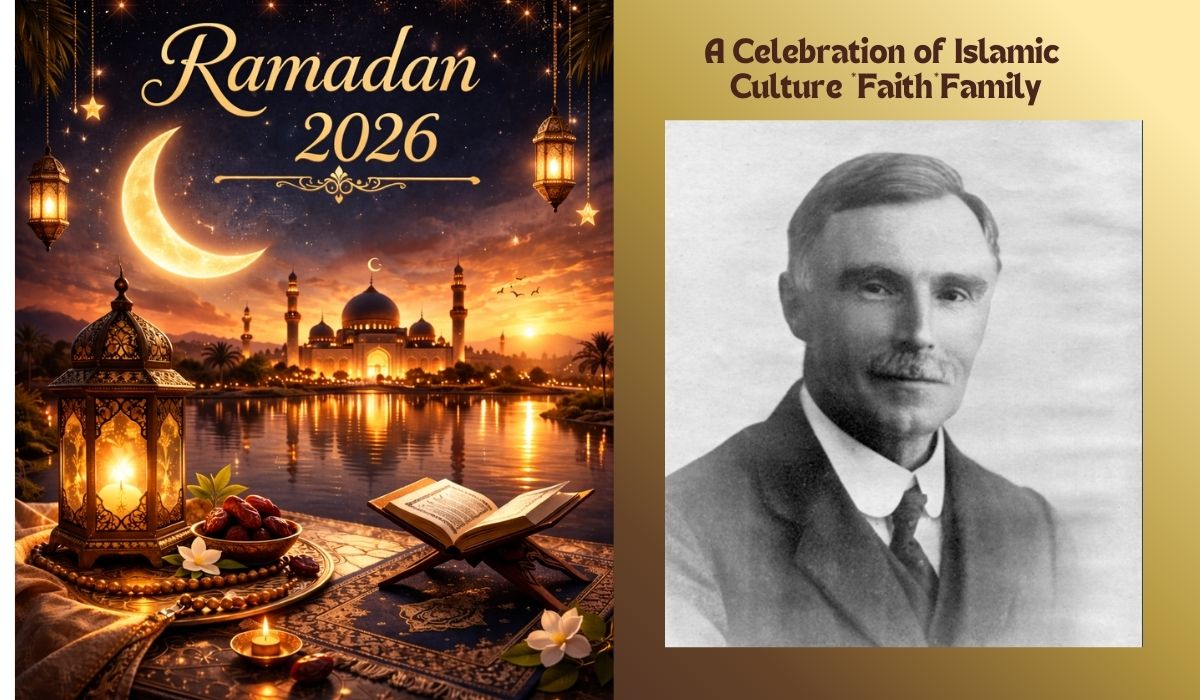
Britain’s Overlooked Islamic Voice
Each Ramadan brings forward stories of faith, scholarship, and transformation. Yet in Europe, one of the most intellectually significant Muslim figures remains largely absent from mainstream conversation: Marmaduke Pickthall. An English novelist, diplomat, and religious thinker, Pickthall became one of the earliest prominent British converts to Islam in the twentieth century and produced one of the most influential English translations of the Qur’an still read today.
Born in 1875 into an Anglican clerical family in London, Pickthall was educated at Harrow alongside future British leaders. His early life pointed toward a conventional path within Britain’s elite circles. However, extensive travel throughout the Middle East before the First World War transformed his worldview. He developed a deep admiration for Islamic civilization, not as an outsider romanticizing the East, but as a serious student of language, law, and theology.
His public declaration of Islam in 1917 was not a quiet personal shift. It was a bold intellectual stance in an era when colonial attitudes toward Muslim societies were often dismissive or hostile. Pickthall rejected the idea that Islam was incompatible with European identity. Instead, he argued that faith transcended ethnicity and empire. For British Muslims navigating questions of belonging even today, his life remains a powerful precedent.
During Ramadan, when the Qur’an takes center stage in daily devotion, Pickthall’s contribution becomes especially meaningful. His translation, titled “The Meaning of the Glorious Koran,” sought precision and dignity rather than simplification. He was careful to clarify that no translation could replicate the Arabic revelation, yet he aimed to preserve its rhythm and seriousness. For decades, his version stood as the standard English rendering used across Britain and beyond.
Pickthall also spent years in India, where he served as editor of influential Muslim publications and engaged in discussions about governance, reform, and education within Muslim communities under British rule. His political thought emphasized justice and ethical responsibility, challenging both colonial arrogance and internal stagnation.
What makes Pickthall particularly relevant in Europe today is the model he offered: a Muslim identity rooted firmly in European soil. He did not abandon his cultural background, nor did he frame Islam as foreign to Britain. Instead, he demonstrated that intellectual rigor, loyalty to one’s homeland, and commitment to Islamic principles could coexist.
Ramadan is a month of renewal, but it is also a month of remembrance. Remembering Marmaduke Pickthall broadens the narrative of Islam in Europe. It reminds us that European Muslim history is not limited to migration in the late twentieth century. It includes scholars, translators, and thinkers who shaped religious understanding from within Europe itself.
His name may not dominate headlines, yet his words continue to echo in mosques, homes, and academic institutions each Ramadan. In a time when identity debates often turn loud and divisive, Pickthall’s life offers something quieter but enduring: thoughtful conviction, scholarship, and bridge-building across cultures.
About The Author