In The Month of Ramadan, We Honor Dr. Mohammed Hassan,
- TDS News
- Trending News
- Ramadan
- February 25, 2026
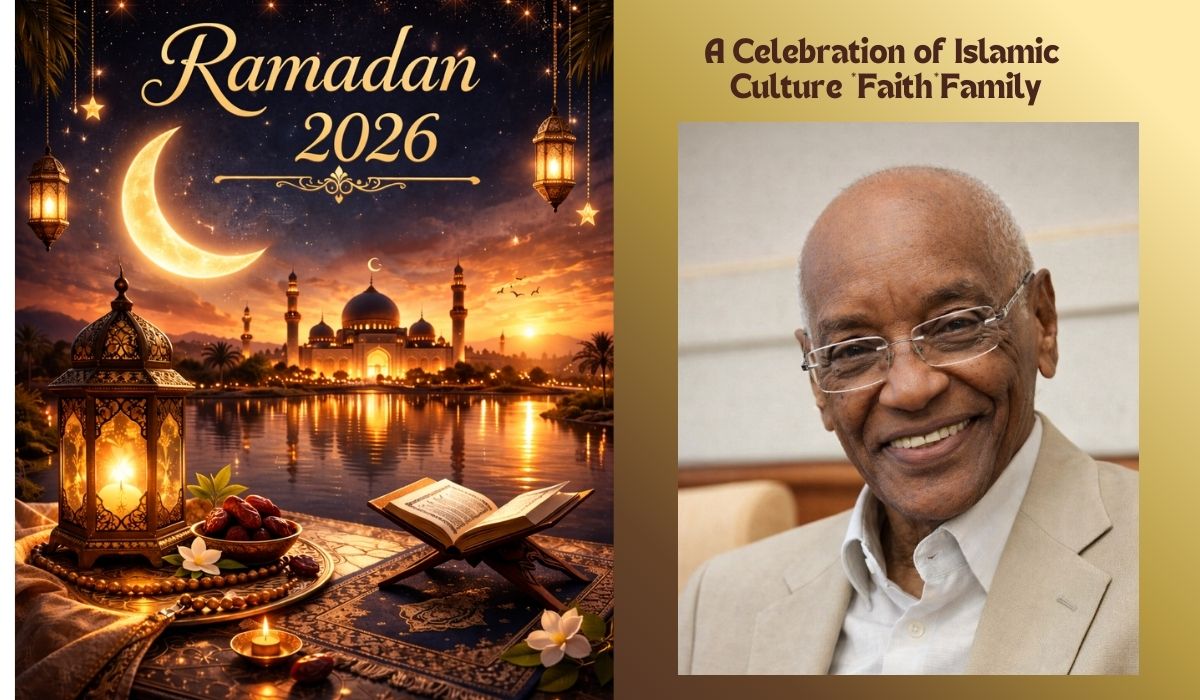
The Engineer Who Brought Light to the Desert
In the dry, sun-scorched plains of northern Sudan, long before renewable energy became fashionable in global capitals, a soft-spoken engineer was quietly changing lives. His name was Dr. Mohammed Hassan, and while he never sought celebrity, his influence rippled across continents.
Born in Sudan in 1947, Hassan grew up in a country rich in culture but limited in infrastructure. Electricity was unreliable. Scientific research opportunities were scarce. Yet from a young age, he was captivated by physics and mathematics. Education became both his path and his promise. After completing his early studies in Sudan, he earned advanced degrees abroad, immersing himself in plasma physics and energy research.
What set Hassan apart was not simply academic brilliance. It was his refusal to detach knowledge from responsibility. During Ramadan, he often spoke about the idea of stewardship. Fasting, he believed, was not only about abstaining from food and drink, but about renewing one’s obligation to society. Knowledge, like wealth, was a trust from God. It had to be shared.
Rather than settling permanently in elite Western institutions, Hassan dedicated much of his career to strengthening scientific capacity in developing nations. He became a leading figure within the Academy of Sciences for the Developing World, working tirelessly to create networks for researchers in Africa, Asia, and the Middle East. His mission was simple but radical: talent exists everywhere, but opportunity does not. Close that gap.
Under his leadership, young scientists from underfunded universities gained access to grants, mentorship, and global partnerships. Laboratories that once struggled for basic equipment began connecting with international research communities. Hassan championed renewable energy research long before climate change dominated headlines, understanding that sustainable power was essential for economic independence in poorer nations.
Ramadan often sharpens our awareness of inequality. When you break your fast at sunset, you feel gratitude, but you also feel the weight of those who live with hunger beyond a single month. Hassan saw energy poverty in much the same way. A village without electricity cannot refrigerate medicine, power schools, or build local industry. Light is not a luxury. It is dignity.
Despite his global influence, Hassan remained grounded in faith. He frequently spoke about how Islamic scholarship historically embraced science, medicine, and mathematics. For him, there was no contradiction between prayer and research, between the mosque and the laboratory. Both were spaces of reflection. Both required discipline.
His work earned international recognition, including major scientific awards and advisory roles with global institutions. Yet what mattered most were the thousands of young researchers who found a path because someone believed in their potential. In interviews, colleagues often described him as patient, humble, and unwavering in his conviction that knowledge must serve humanity.
Ramadan invites believers to recalibrate their lives. It asks difficult questions. What are you building. Who benefits from your success. What remains when your name is forgotten. Dr. Mohammed Hassan answered those questions not with speeches, but with systems. He built networks that will outlast him, empowering minds that may one day solve challenges we cannot yet imagine.
As families gather this month in Khartoum, Jakarta, Lagos, and beyond, the quiet hum of electricity in homes and universities tells a story. It is the story of faith translated into action, of intellect guided by conscience. It is the story of a man who understood that the truest form of devotion is to leave the world brighter than you found it.
About The Author