“If U.S. Bases Were Completely Destroyed, How Can There Be Only Eight American Deaths?”
- TDS News
- U.S.A
- March 11, 2026

By: Donovan Martin Sr, Editor in Chief
AI Image generate
What the American public is being told about casualties in the current U.S.–Israeli military campaign against Iran does not align with the scale of the conflict that is visibly unfolding across the Middle East. From the earliest days of the bombardment, official numbers released by Washington have remained strikingly low despite the intensity and geographic spread of the attacks.
According to statements attributed to the U.S. Department of War and U.S. Central Command, the initial public figures reported seven American service members killed and eight injured. As of yesterday, those numbers were updated to eight dead and roughly 150 wounded. On paper, that suggests that tens of thousands of American troops operating in one of the most heavily targeted combat environments in the world have somehow experienced only minimal losses.
The problem is that the battlefield reality everyone is watching tells a far more complex story.
Across the region, U.S. forces operate from a vast network of installations stretching from the Persian Gulf through Iraq, Syria, Jordan, and beyond. These are not small outposts or temporary camps. Many are sprawling military complexes that function like small cities. They contain airfields, radar installations, maintenance hangars, logistics depots, ammunition storage areas, housing compounds, medical facilities, command centres, and vehicle yards. Thousands of personnel may be stationed at a single base at any given time.
When a missile or drone strikes a facility of that scale, the damage is rarely confined to one small point of impact. Modern explosives generate enormous blast waves that travel through buildings, vehicles, and open ground. A high-explosive missile does not need to land directly beside a soldier to cause injury. The pressure wave alone can travel hundreds of metres, shattering windows, collapsing walls, and producing shockwaves powerful enough to cause internal injuries.
Military medicine has spent decades studying what these explosions do to the human body. The phenomenon of blast overpressure became widely documented during the wars in Iraq and Afghanistan, where thousands of soldiers suffered traumatic brain injuries despite never being struck by shrapnel. Pressure waves can rupture eardrums, damage lungs, and produce concussions that may not be immediately visible. Soldiers inside hardened structures are not immune. Shockwaves can travel through reinforced walls and floors, producing neurological injuries even when the building itself remains standing.
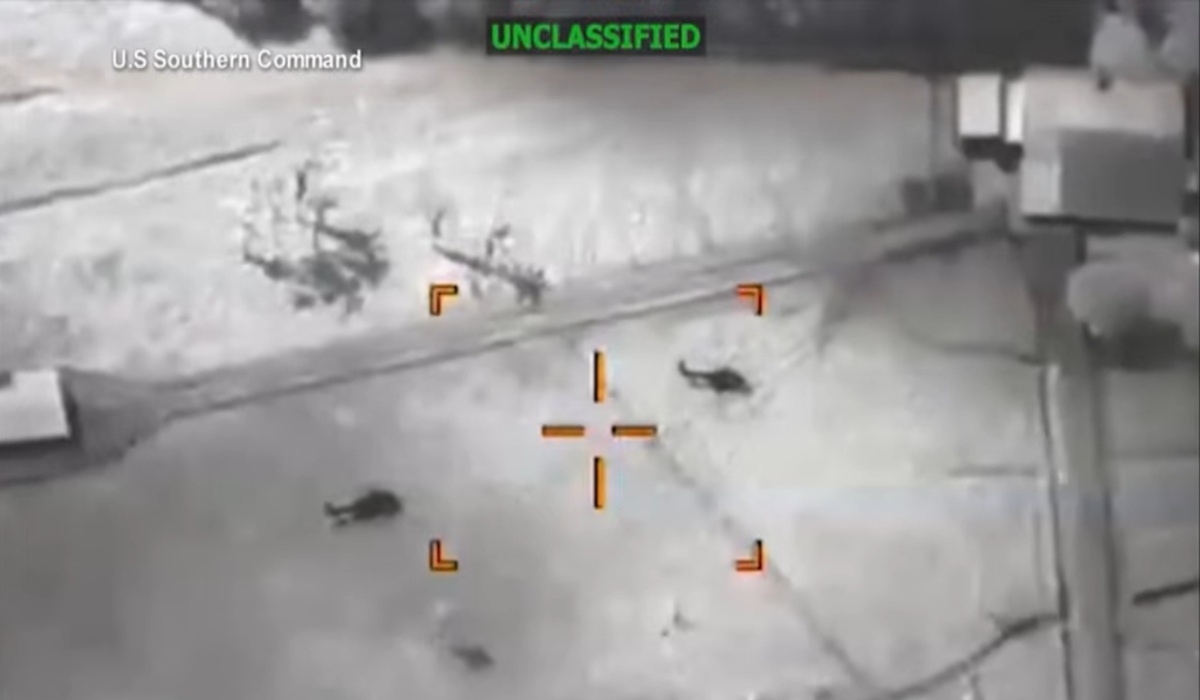
Now consider the scale of the current conflict. Tens of thousands of American troops are stationed across the Middle East. Multiple installations have reportedly been targeted with missiles, drones, or rocket attacks. Satellite imagery and widely circulated footage show explosions, intercepts, and secondary blasts occurring across different locations in the region.
When installations housing thousands of personnel experience repeated strikes, even near misses, the probability of injuries alone rises dramatically. Blast waves, flying debris, collapsing structures, and vehicle explosions create chaotic environments where people can be hurt without a direct hit ever landing on their position. In densely populated military bases, where housing, equipment, and operational areas are clustered together, the impact radius of a single strike can affect dozens of individuals.
History also teaches us that early casualty numbers in wartime are rarely the final figures. During previous American conflicts, initial reports often changed once medical evacuations were completed and injuries were fully assessed. Some wounded service members succumb to their injuries days or weeks later. Others develop neurological symptoms after exposure to blast waves that were not immediately recognized. The so-called fog of war means that battlefield information is often incomplete during the first hours and days following attacks.
This is where the current situation becomes difficult for many observers to reconcile.
The United States maintains a military presence of roughly forty thousand personnel across the broader Middle East region. Reports indicate that installations across several countries have experienced strikes or attempted strikes since the conflict escalated. Yet the official casualty figures remain astonishingly low when compared to the scale of activity that has been publicly documented.
Even basic probability raises questions. If dozens of bases housing thousands of troops experience missile or drone attacks, the statistical likelihood that only a handful of service members are killed or injured becomes difficult to reconcile with the physics of modern warfare. Explosions, shockwaves, fires, collapsing structures, and flying debris do not respect press briefings or political messaging. They affect anyone within range.
There are also structural reasons why casualty numbers in war can take time to emerge. Governments carefully manage battlefield information for reasons that include operational security, diplomatic pressure, and domestic morale. The Pentagon traditionally confirms casualties only after families have been notified, a process that can delay public announcements. Military commanders may also restrict damage assessments while operations are ongoing to avoid revealing vulnerabilities to adversaries.
But there is a difference between delayed information and numbers that appear inconsistent with the scale of events being witnessed around the world.
Behind every number released in a press briefing is a human life. American soldiers stationed overseas have families who watch the same footage the rest of the world sees. Parents, spouses, and children sit at home wondering whether their loved ones were inside those bases when the explosions occurred. When official figures seem disconnected from what people are watching unfold, it does not simply create skepticism. It creates fear, frustration, and a growing erosion of trust.
Democratic societies rely on transparency during times of war. Citizens do not expect battlefield updates to arrive instantly, but they do expect honesty about the human cost of military decisions carried out in their name. The men and women serving in uniform deserve that honesty. So do the families who wait for them to return home.
As this conflict continues to evolve, casualty figures may change as more information becomes available. That has been the pattern in nearly every war in modern history. The real question facing the American public is not simply how many casualties have been officially confirmed today. The deeper question is whether the full truth about the cost of this war will ultimately be shared with the people whose sons and daughters are standing in the blast radius.
About The Author